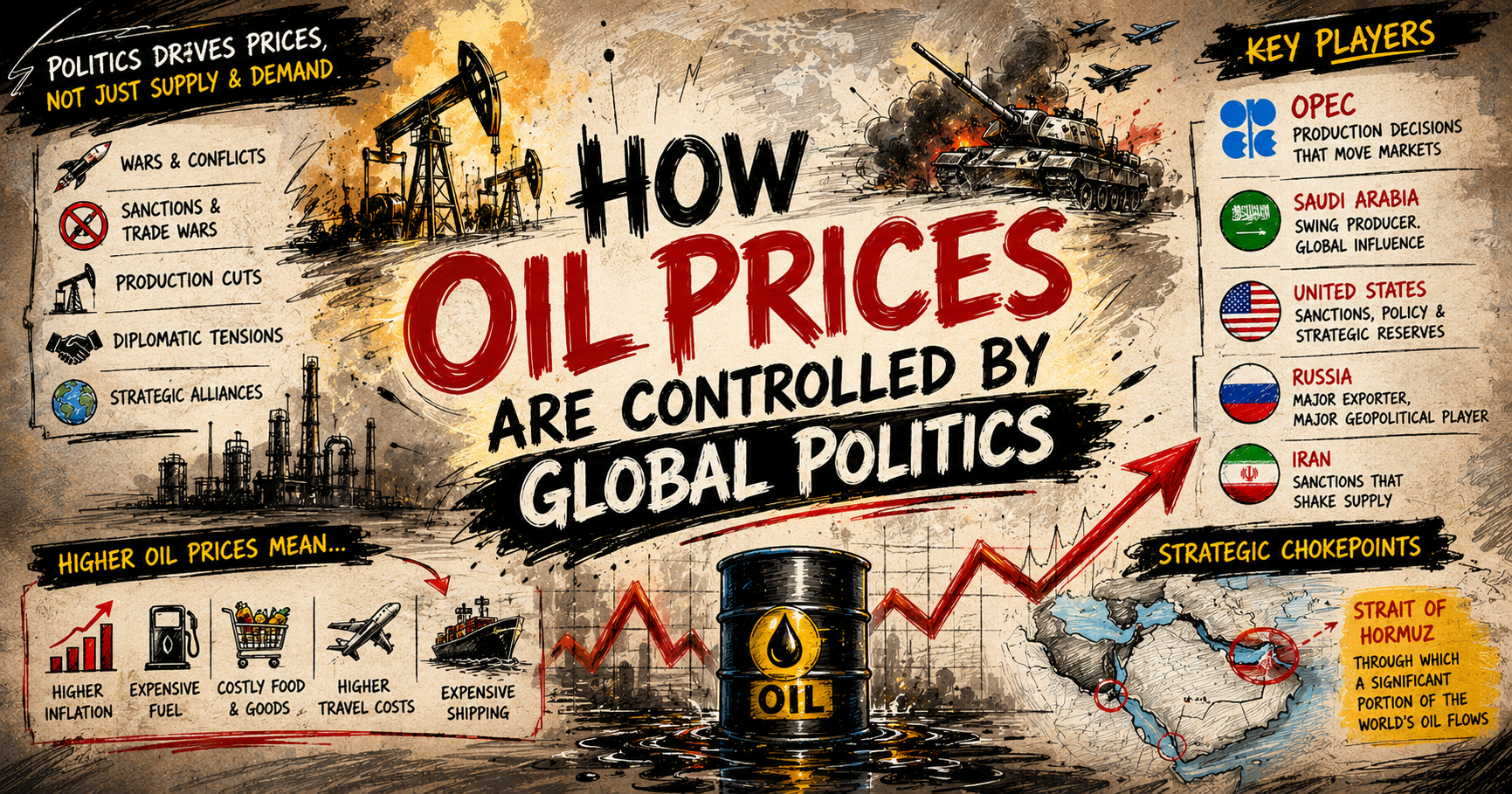

Most people notice oil prices only when petrol or diesel becomes more expensive.
But behind every rise or fall in fuel prices lies something much bigger than economics alone.
Wars, diplomatic tensions, sanctions, military conflicts, trade rivalries, and even political speeches can influence the price of oil within hours. In today’s world, oil is not just an energy resource — it is one of the most powerful geopolitical tools on the planet.
That is why global politics and oil prices are deeply connected.
A conflict in the Middle East can affect transportation costs in India. A production cut by oil-producing nations can increase inflation worldwide. A sanctions package announced in Washington can send energy markets into panic mode overnight.
Oil prices are shaped as much by geopolitics as they are by supply and demand.
Why Oil is the Focal Point of 2026
Despite the growth of renewable energy, the world still runs heavily on oil..
Oil powers:
- transportation
- aviation
- shipping
- manufacturing
- defense systems
- global trade networks
According to estimates from international energy agencies, the world consumes roughly 100 million barrels of oil every day.
That enormous demand means even small disruptions can create major economic consequences.
Countries depend on stable oil supplies not just for economic growth, but for national stability itself.
This is why oil-producing regions hold such strategic importance globally.
The Middle East Remains Central to Oil Politics
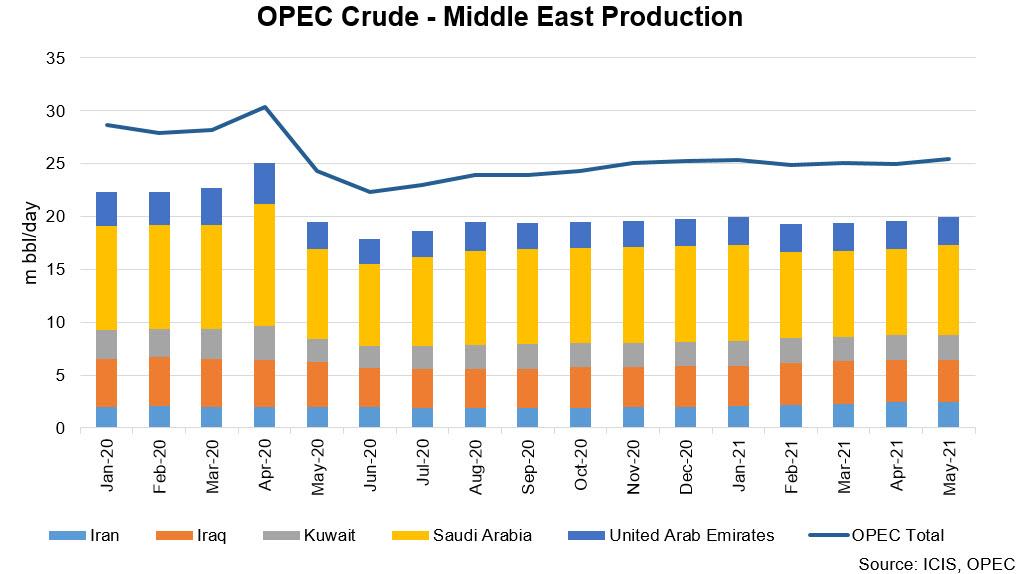
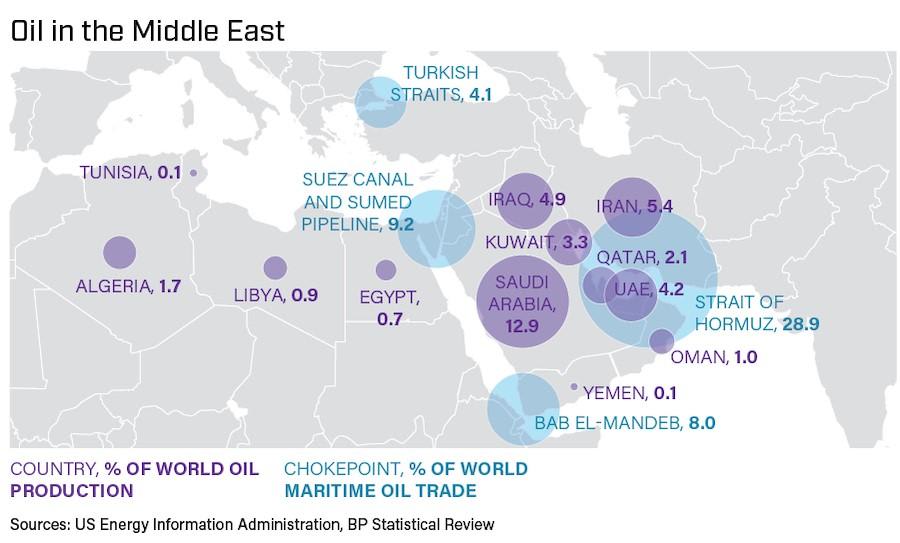
The Middle East continues to dominate global energy politics because it holds some of the world’s largest oil reserves.
Countries like:
- Saudi Arabia
- Iran
- Iraq
- United Arab Emirates
play a major role in determining global oil supply.
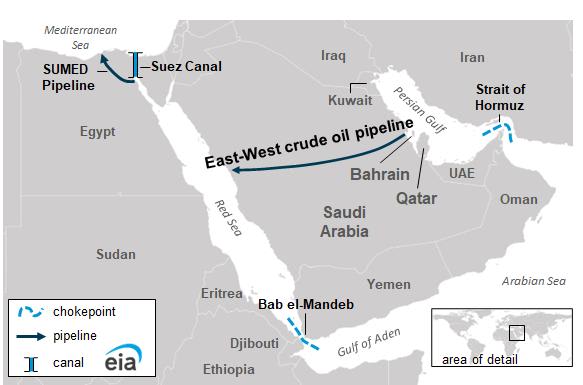
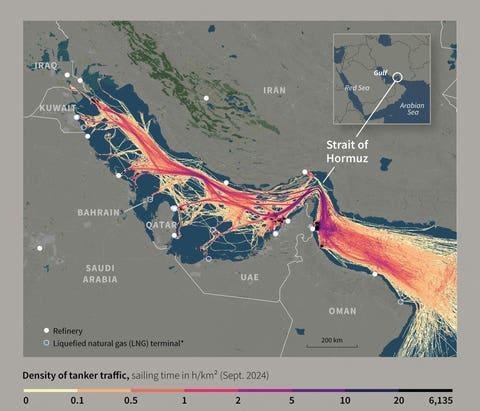
One of the most important locations in the world economy is the Strait of Hormuz — a narrow waterway through which a significant portion of global oil shipments passes every day.
Whenever tensions rise near this region:
- oil markets react immediately
- prices often rise sharply
- investors fear supply disruptions
Even the possibility of conflict can affect global energy prices.
This explains why geopolitical instability in the Middle East always becomes international economic news.
OPEC Has Massive Influence Over Oil Prices
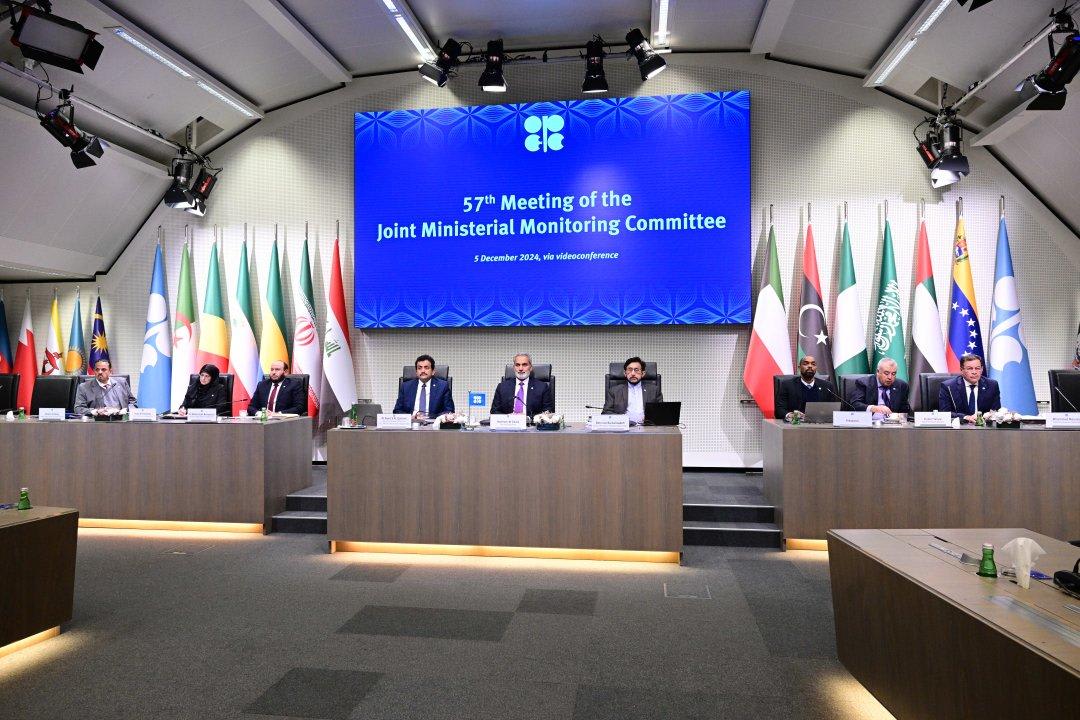
OPEC is one of the most influential groups in the global oil market.
The organization includes several major oil-producing countries that coordinate production policies.
Here’s why that matters:
Oil prices depend heavily on supply.
If OPEC reduces production:
- less oil enters the market
- prices usually rise
If production increases:
- supply expands
- prices may fall
Saudi Arabia, one of the world’s largest oil exporters, often plays a particularly powerful role in these decisions.
This means oil pricing is not simply determined by “the market.” Political coordination between oil-producing countries strongly shapes outcomes.
Wars and Conflicts Can Instantly Shake Oil Markets
Oil markets react extremely quickly to geopolitical risk.
For example:
- conflicts in the Middle East
- attacks on oil facilities
- military tensions near shipping routes
- sanctions on oil exporters
can all create fears of supply shortages.
Even when oil production itself is not directly affected, uncertainty alone can push prices upward.
Investors worry about:
- future disruptions
- transportation risks
- export restrictions
- broader regional instability
This is why oil prices often surge during geopolitical crises.
Russia’s Role Changed Global Energy Politics
Russia is one of the world’s largest energy exporters.
After the Ukraine conflict and Western sanctions, global energy markets experienced major disruption.
European countries began reducing dependence on Russian energy. Oil supply routes shifted. New trade relationships emerged.
The consequences included:
- higher energy prices
- inflation spikes
- increased shipping costs
- economic pressure across Europe and beyond
This showed how deeply politics and energy markets are connected.
A geopolitical conflict in one region can affect fuel prices globally within weeks.
The United States Also Shapes Oil Prices
United States remains one of the world’s most influential players in energy markets.
America affects oil prices through:
- sanctions
- strategic petroleum reserves
- diplomatic pressure
- military presence
- domestic production policies
The US is also one of the world’s largest oil producers due to shale oil expansion.
This gives Washington enormous influence over global energy dynamics.
For example:
- sanctions on Iran reduce oil availability
- restrictions on Russia reshape trade flows
- US diplomatic deals can stabilize markets
Oil is deeply tied to American foreign policy strategy.
Oil Prices Affect Everyday Life More Than People Realize
When oil prices rise, the effects spread through the entire economy.
Higher fuel prices can increase:
- transportation costs
- food prices
- airline tickets
- electricity costs
- manufacturing expenses
- inflation
For countries like India, which imports a large portion of its oil, global price changes have direct domestic impact.
Even people who never follow geopolitics feel the consequences through:
- petrol prices
- grocery bills
- delivery costs
- public transportation expenses
That is why oil remains politically sensitive in almost every country.
Renewable Energy Is Growing — But Oil Still Dominates
Renewable energy is expanding rapidly worldwide, but oil remains central to the global economy.
Electric vehicles, solar power, and clean energy investments are increasing, yet global transportation and industrial systems still rely heavily on fossil fuels.
This means oil-producing countries continue to hold enormous geopolitical leverage.
And as long as oil remains critical to global trade and transportation, politics will continue influencing energy prices.
Oil Is More Than Just a Commodity
Oil is not simply bought and sold like an ordinary product.
It is tied to:
- military strategy
- diplomatic alliances
- sanctions
- trade wars
- regional conflicts
- global economic stability
That is why energy markets react so strongly to political developments.
A single geopolitical event can move billions of dollars across financial markets within hours.
And in many ways, oil remains one of the clearest examples of how economics and international politics are impossible to separate in the modern world.
Rising instability in the Middle East continues to create fears about disruptions in global oil supply and energy security.