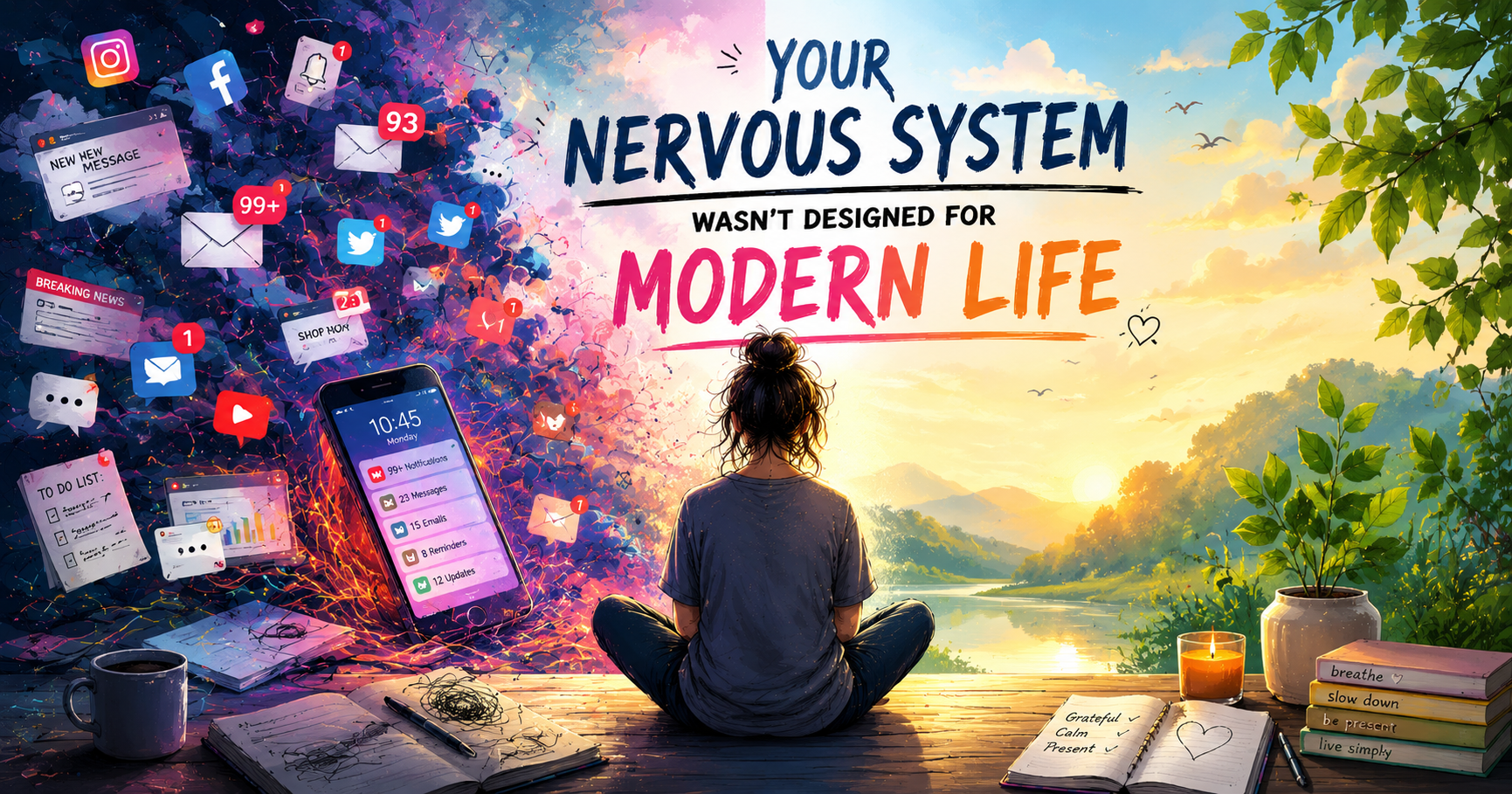

How Social Media, Notifications, and Information Overload Are Fueling the Modern Anxiety Epidemic
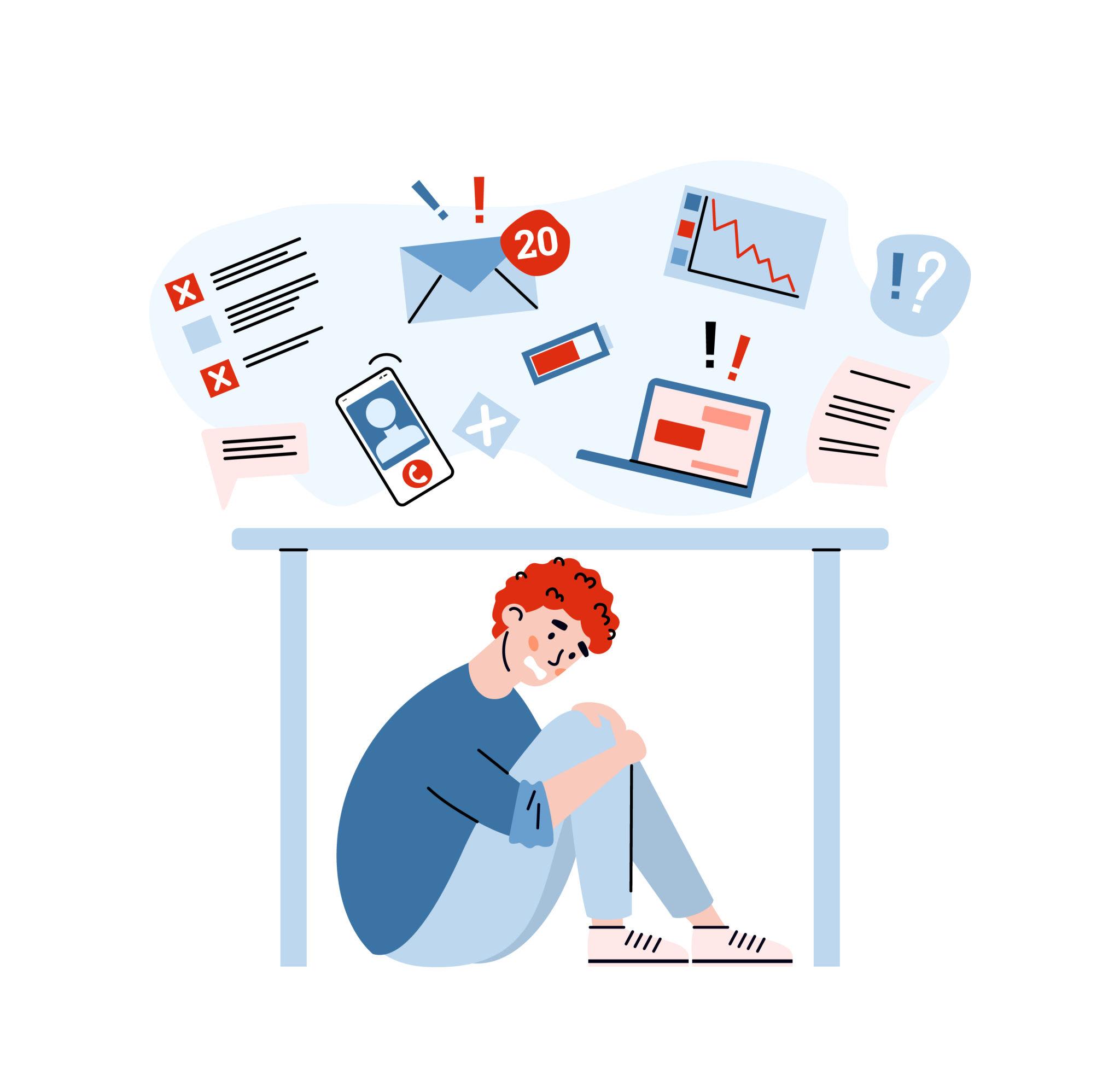
Have you ever felt exhausted despite doing very little physically?
Your body is sitting on a couch, but your mind feels like it has run a marathon.
A notification appears. You check it.
A news alert follows.
Then an email.
Then a text message.
Then a social media post that somehow reminds you of something you should be doing.
Before you know it, your attention has been pulled in dozens of directions—and it's only 10 AM.
Many people assume this constant mental fatigue is normal. After all, this is simply how modern life works.
But there is a growing realization among psychologists and neuroscientists: our nervous systems were never built for the world we live in today.
The Human Brain Was Designed for a Very Different Environment
For most of human history, the brain evolved to handle immediate, physical threats.
Thousands of years ago, danger usually looked like:
- predators
- harsh weather
- food scarcity
- physical conflict
These threats appeared, were dealt with, and eventually passed.
Today's threats are different.
Instead of a tiger, we face:
- unread emails
- endless notifications
- financial worries
- social comparison
- breaking news
- workplace pressure
- information overload
The problem is that the nervous system often reacts to psychological threats in ways that are surprisingly similar to physical threats.
Your body doesn't always distinguish between a charging animal and a stressful email.
Both can activate the stress response.
We Are Processing More Information Than Ever Before

According to research from the University of California, San Diego, the average person consumes the equivalent of roughly 34 gigabytes of information daily, a figure that has increased dramatically over recent decades.
Our brains are being asked to process more data, more opinions, more content, and more decisions than previous generations ever faced.
Think about a typical morning:
Before breakfast, many people have already:
- checked multiple apps
- responded to messages
- viewed headlines
- consumed videos
- compared themselves to strangers online
The brain receives more stimulation in an hour than it once received in days.
The result?
Mental fatigue becomes the default state.
Notifications Keep the Nervous System on Standby
The Hidden Cost of Constant Alerts
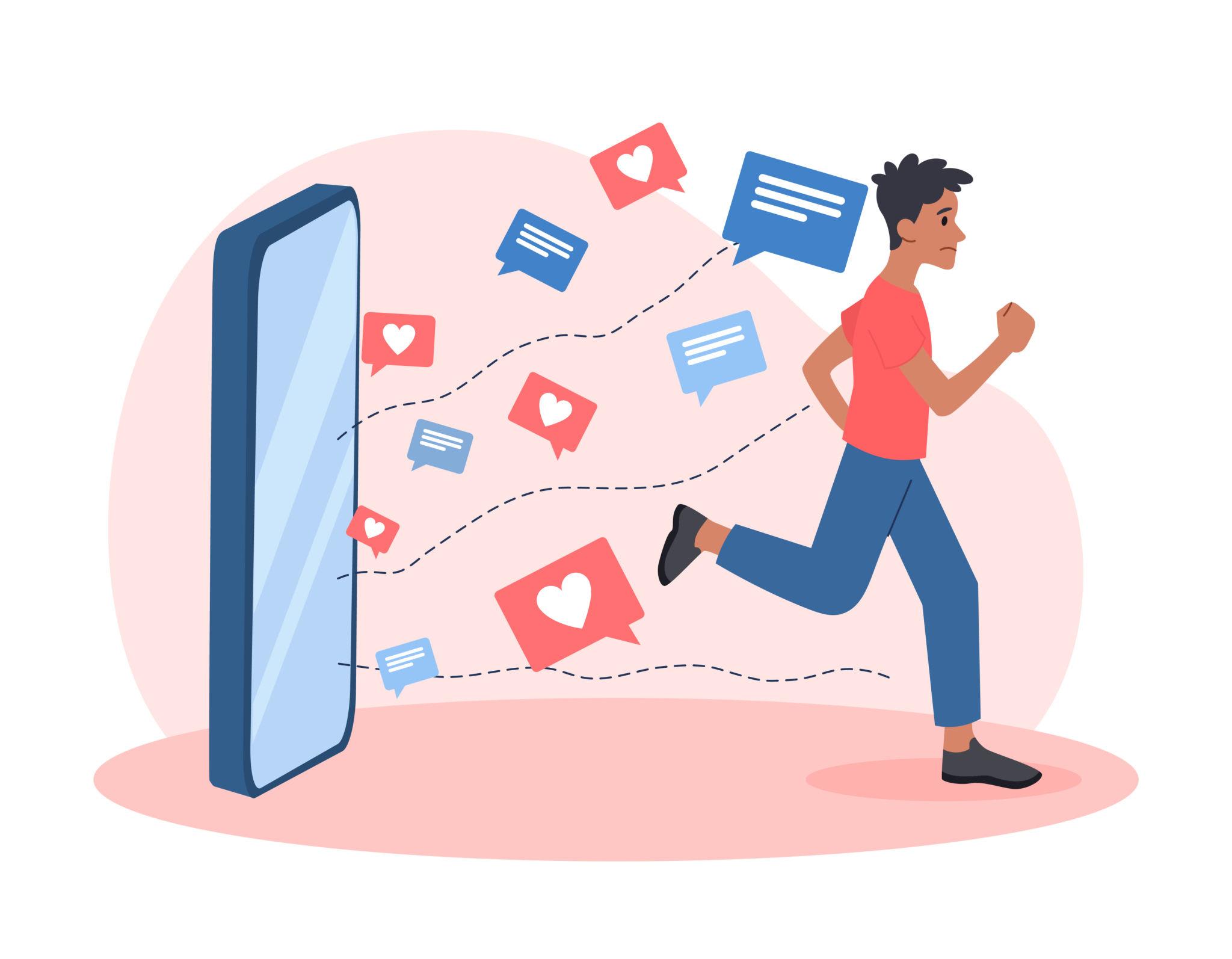
Every notification creates a tiny interruption.
On its own, it seems harmless.
But dozens—or even hundreds—of interruptions each day force the brain into a continuous cycle of attention switching.
Research has shown that frequent digital interruptions can increase stress, reduce concentration, and make people feel less in control of their time.
The nervous system never fully settles.
It remains in a low-level state of anticipation.
Waiting.
Checking.
Expecting.
Responding.
Many people are not resting anymore.
They are simply moving from one form of stimulation to another.
Social Media Is Fueling Comparison Anxiety
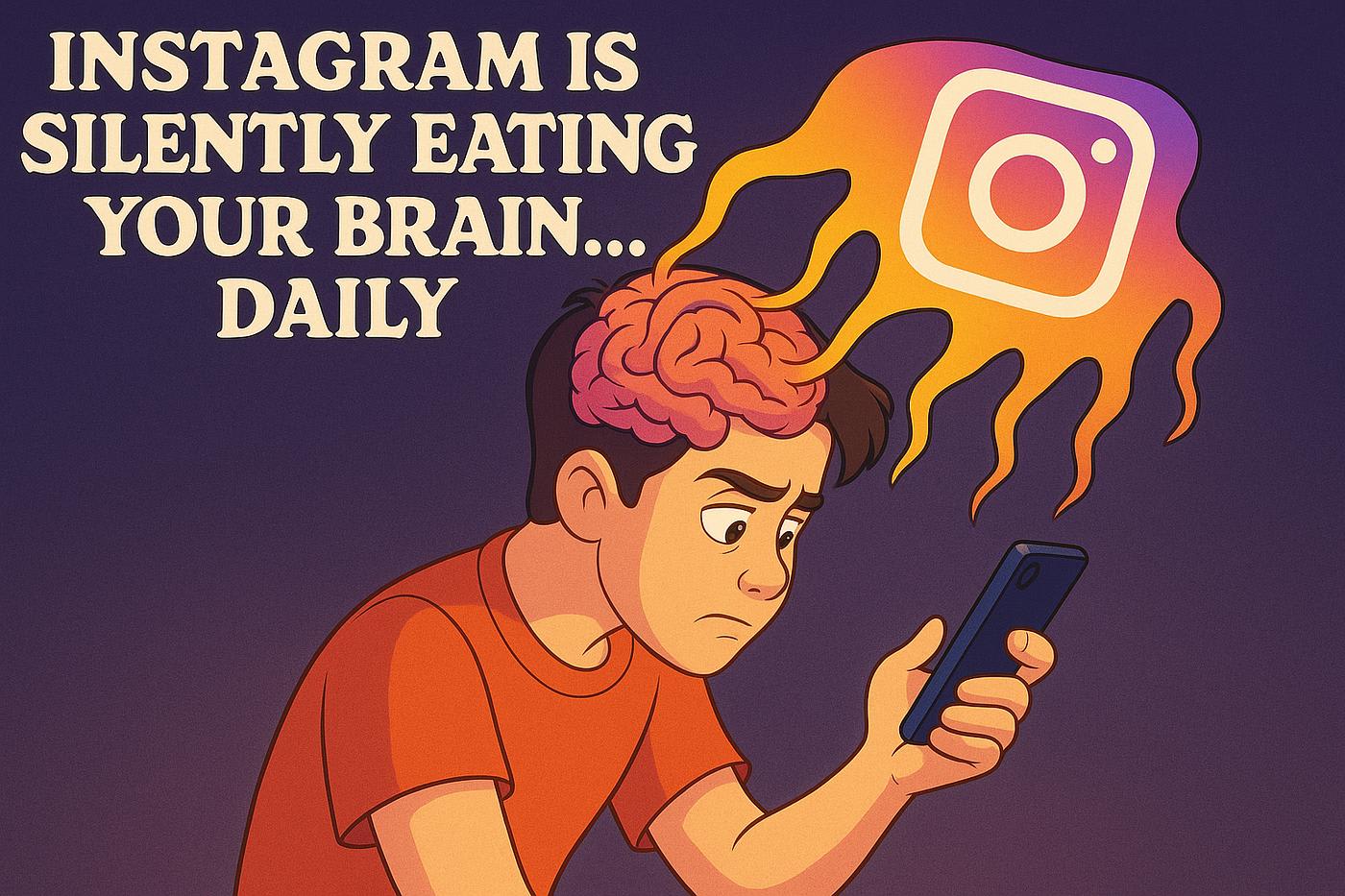
Social media is not inherently harmful.
It helps people connect, learn, and discover ideas.
But it also exposes us to an unprecedented amount of comparison.
Previous generations compared themselves to neighbors or coworkers.
Today, people compare themselves to thousands of carefully curated lives every day.
Research published by the American Psychological Association has linked excessive social media use with increased symptoms of anxiety, depression, and lower self-esteem, particularly among young adults.
The brain begins asking questions it was never meant to answer repeatedly:
- Am I successful enough?
- Am I attractive enough?
- Am I productive enough?
- Am I falling behind?
These questions create a background layer of stress that many people carry without realizing it.
Why Anxiety Feels More Common Today
It is not necessarily because people have become weaker.
In many ways, modern life asks more of the nervous system than ever before.
We are expected to:
- stay available 24/7
- absorb constant information
- manage digital identities
- process global news
- make endless decisions
- maintain productivity
The human brain evolved for survival.
It did not evolve for thousands of notifications, infinite scrolling, and constant exposure to the lives of millions of other people.
When the nervous system becomes overwhelmed, anxiety is often the result.
Signs Your Nervous System May Be Overloaded
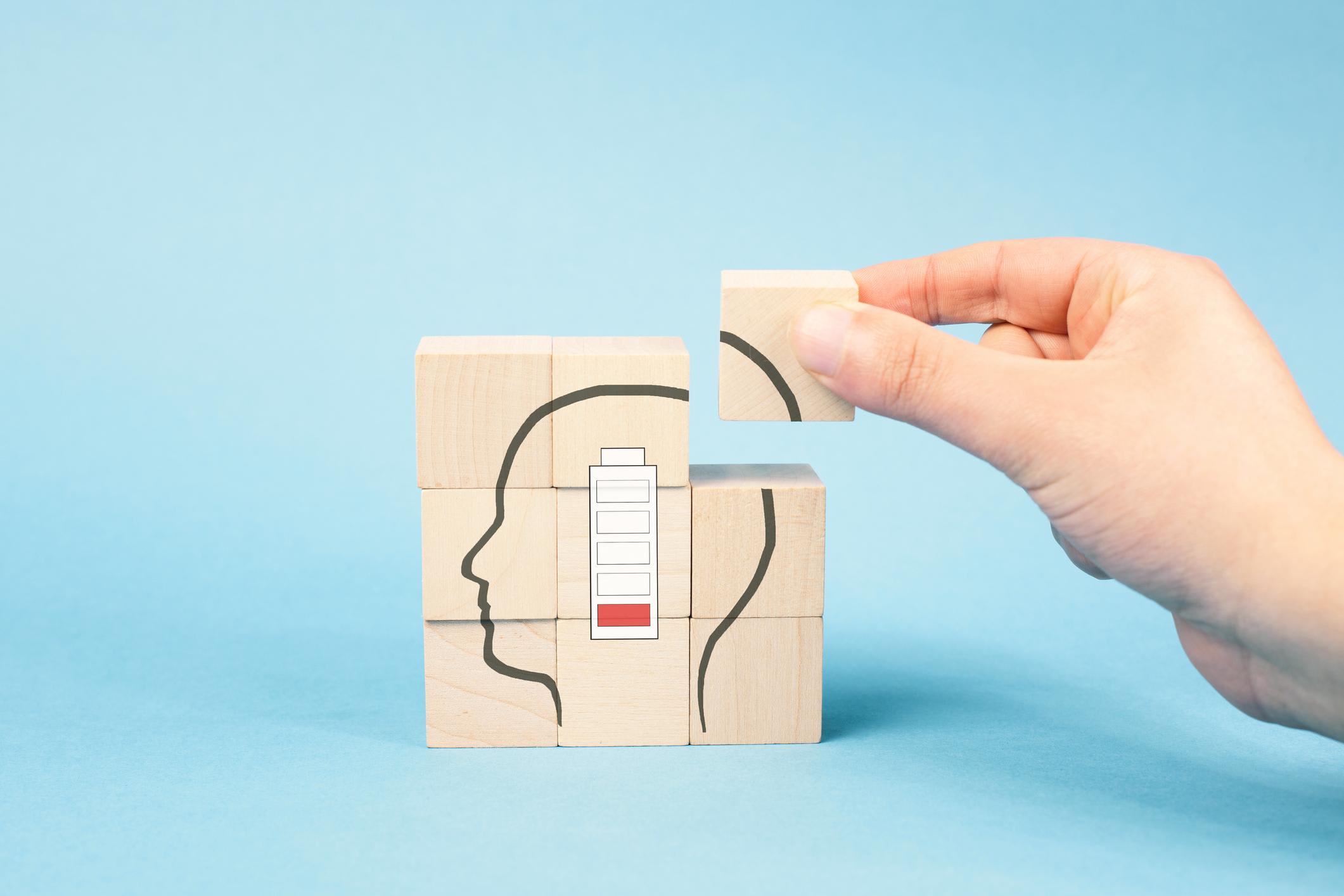
You might notice:
- difficulty relaxing
- racing thoughts
- constant phone checking
- poor sleep
- irritability
- brain fog
- emotional exhaustion
- feeling "busy" even during downtime
These are often signs that the nervous system has been absorbing more stimulation than it can comfortably process.
How to Give Your Nervous System a Break

The solution is not abandoning technology.
Most people cannot—and do not need to.
Instead, focus on creating moments where the nervous system can recover.
1. Create Notification-Free Time
Even 30–60 minutes without alerts can reduce mental noise.
2. Spend Time Away From Screens
Walking, reading, gardening, exercising, or simply sitting outdoors gives the brain fewer inputs to process.
3. Try Mindful Breathing
Slow breathing signals safety to the nervous system and can help reduce physiological stress.
4. Use Tools That Promote Calm
Products that naturally fit this topic include:
- Weighted Blankets for relaxation and grounding
- Blue-Light Blocking Glasses for reducing evening screen strain
- Guided Anxiety Journals for processing thoughts offline
- White Noise Machines for better sleep
- Meditation Cards or Mindfulness Decks for daily mental resets
These products are not cures, but they can support healthier habits and create moments of calm in a highly stimulating world.
The Bottom Line
The modern world has brought incredible convenience.
But it has also created an environment of constant stimulation that our ancestors never experienced.
Your nervous system was designed to handle occasional threats—not endless notifications, nonstop information, and perpetual comparison.
If you feel mentally exhausted, distracted, anxious, or overwhelmed, it does not automatically mean something is wrong with you.
It may simply mean your nervous system is trying to operate in a world it was never designed for.
Sometimes the most powerful thing you can do is not add another productivity tool, another app, or another source of information.
Sometimes the answer is giving your mind permission to be quiet.
An overstimulated nervous system can make ordinary problems feel urgent and overwhelming. If you've ever felt like every issue needs immediate attention, read Why Anxiety Makes Everything Feel Like an Emergency.