
Almost everyone gets headaches occasionally. Sometimes it’s a dull pressure behind the eyes after a long day. Other times, it feels sharp, throbbing, or impossible to ignore. Most people treat headaches as a minor inconvenience-take a tablet, drink some coffee, move on.
But recurring headaches are often more than random discomfort. They can be your body’s way of signaling that something is off: dehydration, poor sleep, stress overload, eye strain, nutritional deficiencies, or even hormonal changes.
Understanding the pattern behind your headaches can help you manage the root cause instead of repeatedly masking the symptoms.
Not All Headaches Are the Same

The first thing to understand is that headaches vary in type and cause.
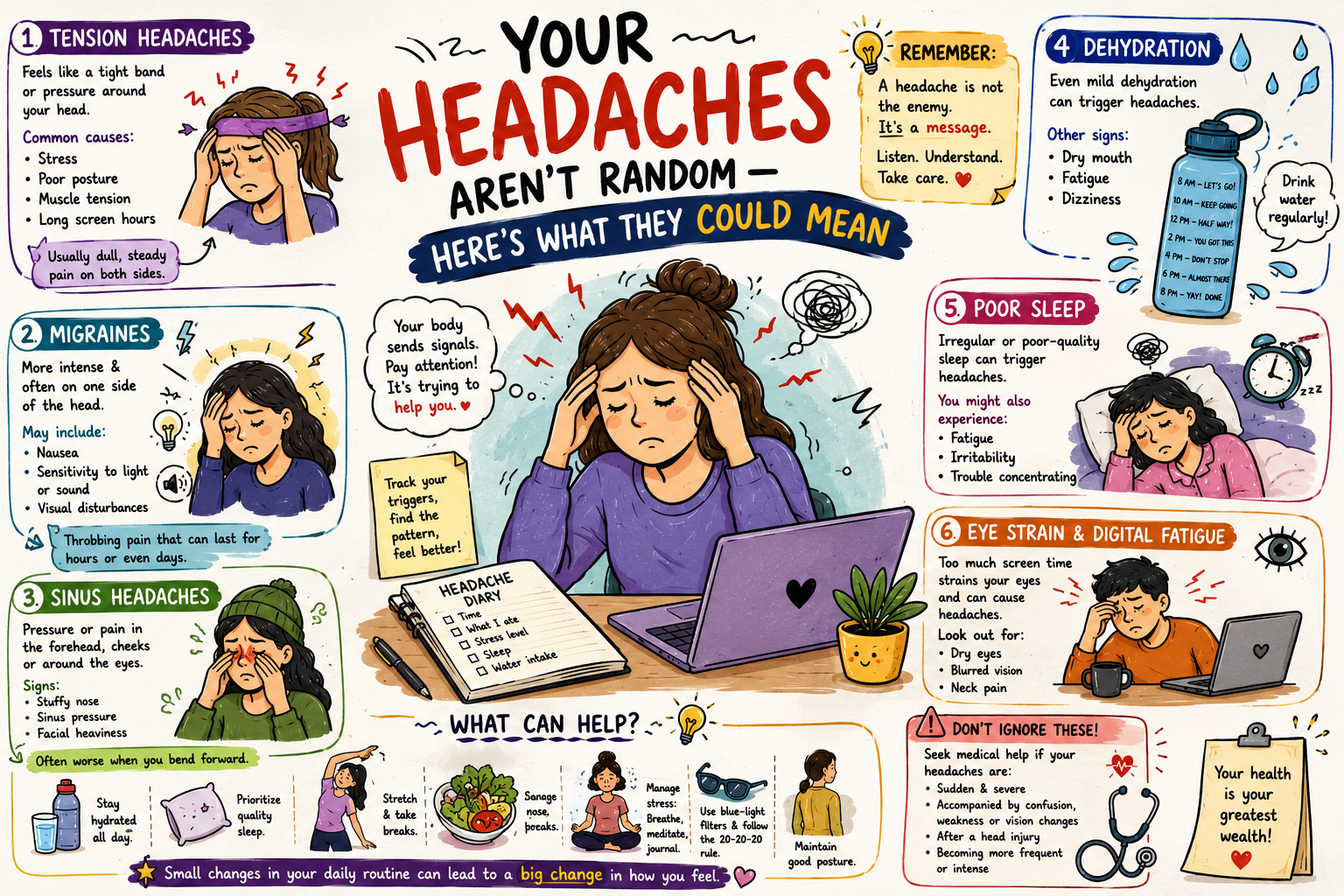
Tension Headaches
These are the most common. They usually feel like a tight band around the head or pressure near the forehead and neck.
They are often linked to:
- stress
- poor posture
- long screen hours
- muscle tension
Tension headaches tend to build gradually and worsen through the day.
Migraine Headaches

Migraines are more intense and can involve:
- throbbing pain
- nausea
- sensitivity to light or sound
- visual disturbances
Triggers differ from person to person and may include sleep disruption, hormonal shifts, dehydration, or certain foods.
Sinus-Related Headaches
Pressure around the cheeks, nose, or forehead may point toward sinus congestion or allergies.
These headaches are often accompanied by:
- facial pressure
- blocked nose
- heaviness around the eyes
Dehydration Is a Bigger Trigger Than Most People Realize
One of the most overlooked causes of headaches is dehydration.
When your body lacks enough fluids, blood flow and oxygen delivery can be affected, which may trigger head pain. Hot weather, caffeine, excessive sweating, and long hours without water can all contribute.
Even mild dehydration can cause:
- dizziness
- fatigue
- difficulty concentrating
- headaches
If your headaches improve after hydrating, your body may simply be asking for better fluid balance.
Your Sleep Habits Matter More Than You Think
Poor sleep quality is strongly connected to headaches.
Both too little sleep and irregular sleep schedules can increase sensitivity in the nervous system. Waking up with headaches may also be linked to:
- jaw clenching
- poor sleep posture
- interrupted sleep
- excessive screen use before bed
Consistent sleep timing often reduces headache frequency significantly.
Eye Strain and Digital Fatigue

Modern lifestyles place constant pressure on the eyes.
Hours spent staring at laptops, phones, and bright screens force eye muscles to work continuously. Over time, this can lead to headaches around the forehead and temples.
Signs of screen-related headaches include:
- dry eyes
- blurred vision
- neck stiffness
- pain after long work sessions
Simple adjustments like screen breaks, proper lighting, and updated vision prescriptions can make a major difference.
Stress Often Shows Up Physically
Stress does not stay in the mind alone-it affects the body physically.
When stress levels rise, muscles around the neck, jaw, and shoulders tighten. Breathing may become shallow, and the nervous system stays in a heightened state.
For many people, headaches are one of the earliest physical signs of chronic stress.
If your headaches appear during emotionally demanding periods, your nervous system may be overloaded rather than physically ill.
Nutritional Factors Can Also Play a Role
Skipping meals, low blood sugar, or nutrient deficiencies may contribute to recurring headaches.
Common nutritional triggers include:
- low magnesium
- dehydration
- excessive caffeine
- irregular eating patterns
Some people are also sensitive to processed foods, alcohol, or artificial sweeteners.
Tracking when headaches happen can help identify patterns.
When You Shouldn’t Ignore a Headache
Most headaches are manageable, but some require medical attention.
Seek professional help if headaches are:
- sudden and severe
- accompanied by confusion or weakness
- associated with vision loss
- occurring after head injury
- becoming more frequent over time
Persistent headaches deserve proper evaluation rather than self-diagnosis.
Helpful Products You Can Add to Your Routine
These tools may help reduce common headache triggers:
- blue-light filtering glasses
- ergonomic office chairs
- reusable water bottles with hydration markers
- magnesium supplements
- cooling eye masks
- neck support pillows
Lifestyle improvements often work best when supported consistently.
The Bottom Line
Headaches are easy to dismiss because they’re common—but common doesn’t always mean harmless.
Your body often sends signals long before bigger health problems develop. A recurring headache may not simply mean “take a painkiller.” It may reflect stress, dehydration, poor sleep, eye strain, or nutritional imbalance.
Instead of only silencing the pain, pay attention to the pattern behind it.
Sometimes the headache itself is not the real problem—it’s the message.
Read more about health here: 7 Reasons Why You're Always Tired In the Afternoon