
World's Largest and Oldest Whale Graveyard Discovered in the Indian Ocean: A 5-Million-Year-Old Underwater Mystery
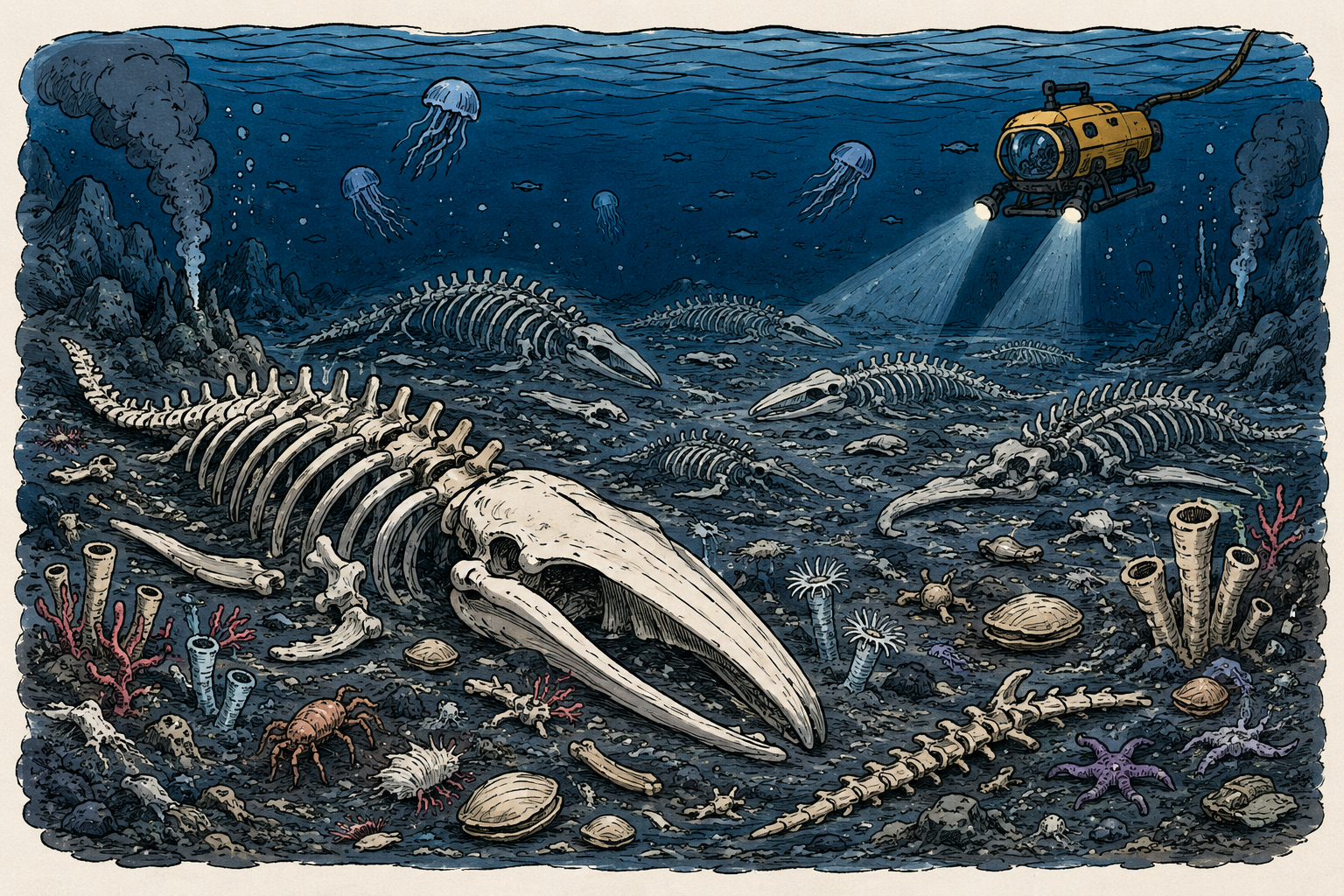
The deep oceans of Earth continue to surprise scientists with discoveries that challenge our understanding of life, evolution, and the planet's hidden history. In one of the most remarkable marine discoveries of recent years, researchers have uncovered what is now considered the world's largest, deepest, and oldest whale graveyard beneath the Indian Ocean. This extraordinary underwater necropolis contains hundreds of whale fossils and skeletons dating back more than 5 million years.
Located in the remote Diamantina Fracture Zone of the southeastern Indian Ocean, this massive graveyard stretches nearly 1,200 kilometers across the ocean floor and lies at depths reaching over 7,000 meters. The discovery has opened an entirely new chapter in marine science and deep-sea ecology.
What Exactly Is a Whale Graveyard?
A whale graveyard is a location where the remains of numerous whales accumulate over thousands or even millions of years. When a whale dies and sinks to the ocean floor, the carcass becomes what scientists call a "whale fall." These whale falls create unique ecosystems that can sustain marine life for decades.
What makes the newly discovered Indian Ocean site extraordinary is not just the number of whale remains, but their age, depth, and concentration. Scientists documented hundreds of fossilized whale skeletons alongside more recent whale carcasses that are still supporting deep-sea ecosystems.
The Discovery Beneath the Indian Ocean
The whale graveyard was discovered in the Diamantina Zone, a deep-sea region formed by ancient tectonic activity between the Australian and Antarctic plates. Researchers conducted 32 deep-sea submersible dives to explore the area and map the distribution of whale remains.
Their findings were astonishing:
- More than 485 whale fossil sites identified.
- Fossils dating back over 5.3 million years.
- Five modern whale-fall ecosystems still supporting marine life.
- Depths ranging from 4,600 to more than 7,000 meters.
- A whale-bone corridor extending approximately 1,200 kilometers.
Scientists described the site as a "deep-sea fossil megasite" unlike anything previously recorded.
Why Did So Many Whales End Up Here?
Researchers believe several factors contributed to the formation of this giant whale cemetery.
1. Ancient Migration Routes
Evidence suggests that the region may have been a major whale migration corridor for millions of years. Whales traveling through the area would occasionally die from natural causes, causing their bodies to sink into the same geological zone.
2. Unique Ocean Geography
The V-shaped topography of the Diamantina Fracture Zone may have acted like a natural funnel, concentrating whale remains in one region instead of dispersing them across the ocean floor.
3. Perfect Fossil Preservation Conditions
The deep ocean environment contains extremely low sediment accumulation, low oxygen levels, and immense pressure. These conditions helped preserve whale bones for millions of years, creating an unparalleled fossil archive.
Discovery of a New Extinct Whale Species
One of the most exciting outcomes of the expedition was the identification of a previously unknown extinct whale species called Pterocetus diamantinae.
The fossil remains provide valuable clues about whale evolution and how ancient whale species adapted to deep-ocean environments. Scientists believe additional undiscovered species may still be hidden within the graveyard.
A Thriving Ecosystem in Total Darkness
Despite being located in one of the harshest environments on Earth, the whale graveyard is far from lifeless.
Researchers found thriving communities of:
- Bone-eating worms (Osedax worms)
- Tubeworms
- Sea cucumbers
- Brittle stars
- Deep-sea clams
- Squat lobsters
- Rare jellyfish species
Many of these organisms may be entirely new to science. Whale carcasses provide food and habitat for decades, creating islands of life in an otherwise barren deep-sea landscape.
Why This Discovery Matters
This whale graveyard is more than a collection of ancient bones. It serves as a biological time capsule that records millions of years of ocean history.
Scientists hope the site will help answer critical questions about:
- Whale evolution.
- Ancient ocean ecosystems.
- Deep-sea biodiversity.
- Climate changes over millions of years.
- How life survives in extreme environments.
The discovery also highlights how little humanity knows about the deep ocean. Experts estimate that vast portions of the seafloor remain unexplored, meaning similar graveyards may still await discovery elsewhere around the globe.
The Future of Exploration
Researchers plan to continue studying the Diamantina whale necropolis using advanced submersibles and deep-sea mapping technology. Every expedition has the potential to uncover new fossil species, unknown marine organisms, and clues about Earth's distant past.
As exploration continues, the Indian Ocean whale graveyard may become one of the most important marine paleontology sites ever discovered.
Final Thoughts
The discovery of the world's largest and oldest whale graveyard beneath the Indian Ocean is a reminder that our planet still holds incredible secrets. Hidden more than 7 kilometers below the surface, this underwater cemetery preserves millions of years of natural history while supporting vibrant ecosystems in complete darkness.
From ancient whale fossils to newly discovered species, the Diamantina whale graveyard stands as one of the most extraordinary scientific discoveries of the decade—revealing that even in the deepest parts of our oceans, life and history continue to thrive.