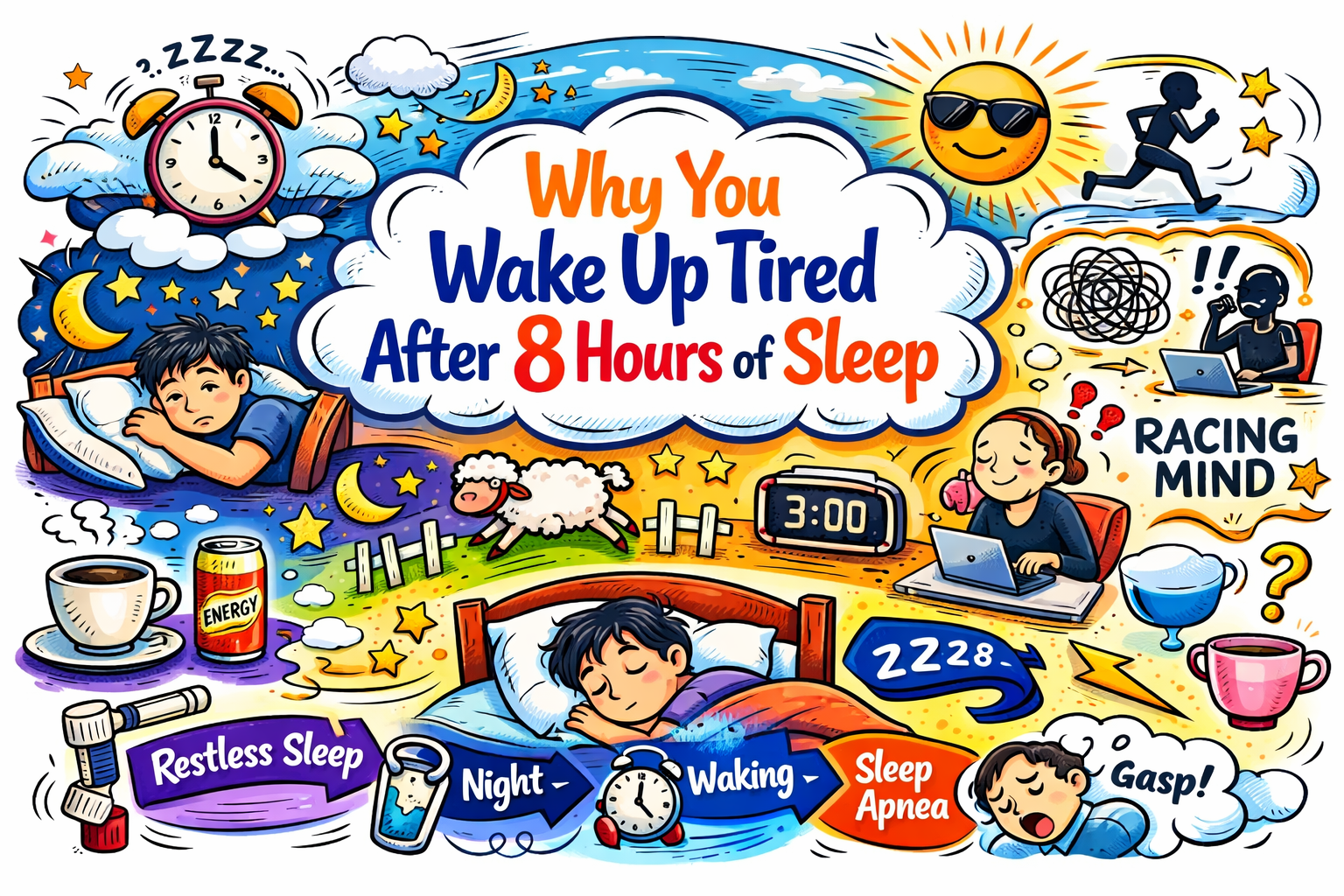

You slept for eight hours. On paper, that should be enough. Yet you wake up feeling foggy, heavy, and already drained before the day begins. If this sounds familiar, you’re not alone.
Many people assume sleep duration is the only factor that matters. In reality, sleep quality, lifestyle habits, stress levels, and underlying health issues play a much bigger role in how rested you feel. Eight hours of poor-quality sleep can leave you just as exhausted as four hours of interrupted rest.
If you consistently wake up tired despite getting enough time in bed, your body may be signaling that something deeper needs attention.
It’s Not Just About Hours-It’s About Sleep Cycles
Sleep happens in cycles, moving through light sleep, deep sleep, and REM sleep. Each stage has a different role in physical restoration, brain function, and emotional balance.
If these cycles are disrupted—even if you stay asleep—you may not get enough deep or REM sleep, which are the stages most responsible for feeling refreshed.
Common disruptors include:
- stress
- alcohol
- late-night meals
- excessive screen time
- noisy environments
- irregular sleep schedules
Stress Can Keep Your Body Alert at Night
Even when you’re physically resting, stress can keep your nervous system activated.
If your mind is constantly processing worries, deadlines, or emotional tension, your body may remain in a low-grade state of alertness. This can prevent restorative sleep, leading to morning fatigue.
People under chronic stress often experience:
- frequent waking
- vivid dreams
- shallow sleep
- jaw clenching
- waking up already anxious
The body may be asleep, but it is not fully recovering.
Poor Sleep Timing Matters
Going to bed at different times each night confuses your internal clock.
Your circadian rhythm regulates sleep hormones, body temperature, and energy cycles. If your schedule is inconsistent, your body struggles to enter restorative sleep efficiently.
Even if you sleep for eight hours, poor timing can reduce sleep quality.
A stable bedtime and wake-up time often improves energy more than simply increasing sleep duration.
Nutrient Deficiencies Can Mimic Sleep Problems
Sometimes the issue is not sleep itself—it’s what your body lacks during the day.
Low levels of iron, vitamin B12, vitamin D, magnesium, and zinc can contribute to fatigue even when sleep appears adequate.
These nutrients are involved in oxygen transport, nervous system health, muscle recovery, and energy production.
If you regularly wake up tired, checking for deficiencies may be worth considering.
Hidden Sleep Disorders May Be Involved
Conditions like sleep apnea, restless leg syndrome, or chronic insomnia can disrupt sleep without obvious signs.
Sleep apnea, for example, causes repeated breathing interruptions throughout the night. Many people are unaware they have it.
Warning signs include:
- loud snoring
- dry mouth in the morning
- headaches upon waking
- daytime drowsiness
- difficulty concentrating
If fatigue persists despite lifestyle changes, professional evaluation may be necessary.
Your Evening Routine Shapes Your Morning Energy
What you do in the final hours before bed directly impacts how you feel when you wake up.
Helpful habits include:
- avoiding caffeine late in the day
- reducing screen exposure before sleep
- keeping the bedroom cool and dark
- eating lighter dinners
- creating a consistent wind-down routine
Small changes in evening behavior often create noticeable improvements in sleep quality.
Products That Can Support Better Sleep
If you want practical tools to improve recovery, consider:
- Carbamide magnesium glycinate supplements
- sleep masks or blackout curtains
- white noise machines
- blue-light blocking glasses
- ergonomic pillows
- smart sleep trackers
These products can support better sleep habits when paired with lifestyle adjustments.
The Bottom Line
Waking up tired after eight hours of sleep is not something to normalize.
Your body should feel restored after rest. If it doesn’t, the issue may lie in sleep quality, stress, deficiencies, or hidden disruptions—not simply the number of hours slept.
Pay attention to patterns, improve your evening routine, and address possible underlying causes.
Because real rest is not measured by time in bed—it’s measured by how well your body actually recovers.
Read more here: 7 Simple Ways to Reduce Stress from a Busy Life