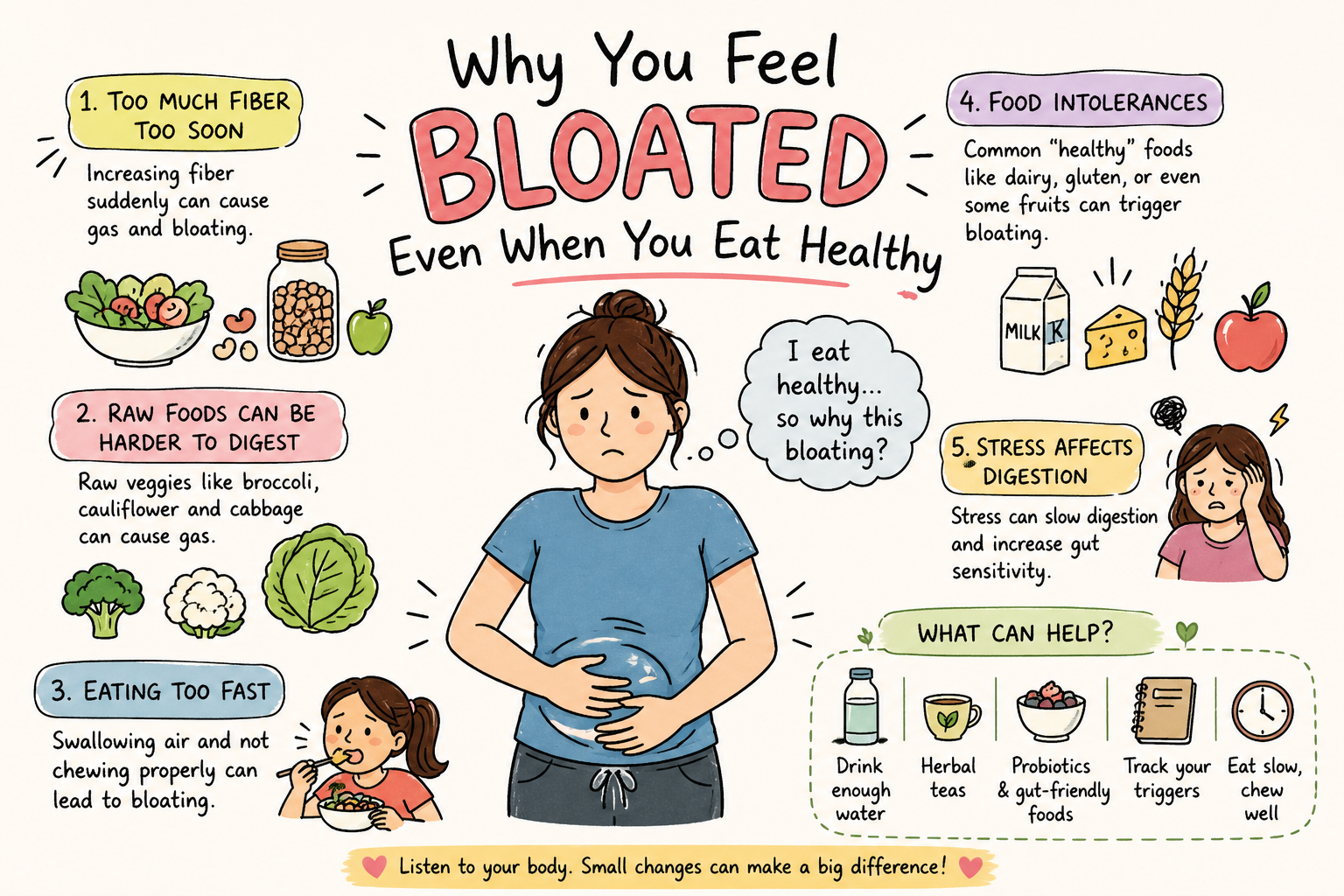

You’re eating salads, smoothies, fruits, whole grains, and drinking enough water—so why does your stomach still feel swollen, heavy, or uncomfortable?
Bloating is often associated with unhealthy eating, but the truth is, even nutritious foods can cause digestive discomfort depending on how, when, and how much you eat. If you constantly feel bloated despite making healthy choices, your body may be reacting to factors beyond just the food itself.
What Is Bloating, Really?
Bloating is the sensation of fullness, tightness, or swelling in the abdomen. It can be caused by excess gas, water retention, slow digestion, or sensitivity to certain foods.
In many cases, bloating isn’t about eating “bad” foods—it’s about how your digestive system handles otherwise healthy ingredients.
Common Reasons You Feel Bloated Even on a Healthy Diet
1. You Increased Fiber Too Quickly
Foods like oats, beans, lentils, vegetables, and fruits are rich in fiber—which is excellent for gut health. But suddenly eating large amounts of fiber can overwhelm your digestive system.
Your gut bacteria ferment fiber, producing gas in the process. If your body isn’t used to it, bloating becomes more noticeable.
What helps: Increase fiber gradually and drink enough water to support digestion.
2. Raw Foods Can Be Harder to Digest
Raw salads, cruciferous vegetables, and smoothies may seem like the healthiest options, but they can be harder for some people to break down.
Vegetables like broccoli, cauliflower, cabbage, and kale contain compounds that can cause gas—especially when eaten raw.
What helps: Try lightly steaming vegetables instead of eating them raw all the time.
3. You’re Eating Too Fast
Even healthy meals can lead to bloating if you rush through them.
Eating quickly causes you to swallow more air, which contributes to gas buildup. It also reduces awareness of fullness signals.
What helps: Slow down, chew thoroughly, and eat without distractions.
4. Food Intolerances Can Hide in Healthy Foods
Dairy, gluten, artificial sweeteners, and even some fruits can trigger bloating in sensitive individuals.
Common “healthy” culprits include yogurt, protein bars, apples, onions, and legumes.
What helps: Track symptoms and identify recurring triggers.
When Stress Affects Digestion
Your gut and nervous system are closely connected.
Stress can slow digestion, increase gut sensitivity, and cause bloating even when your diet is balanced.
If you eat while anxious, multitasking, or under pressure, your digestive system may not function optimally.
What helps: Practice calm eating—sit down, relax, and give your body time to process meals.
Products That May Support Digestive Comfort
- Well Being Nutrition Probiotic capsules or fermented foods
- Herbal teas like peppermint or ginger
- Glass water bottles with intake markers
- Gut-friendly food journals for tracking triggers
The Bottom Line
Healthy eating doesn’t automatically guarantee easy digestion.
Bloating can come from food combinations, eating habits, stress levels, or simply how your body responds to certain ingredients.
Instead of assuming your diet is the problem, pay attention to patterns. Small adjustments often make a bigger difference than drastic changes.
Sometimes the healthiest approach is not eating “cleaner”—but eating in a way your body can actually handle.