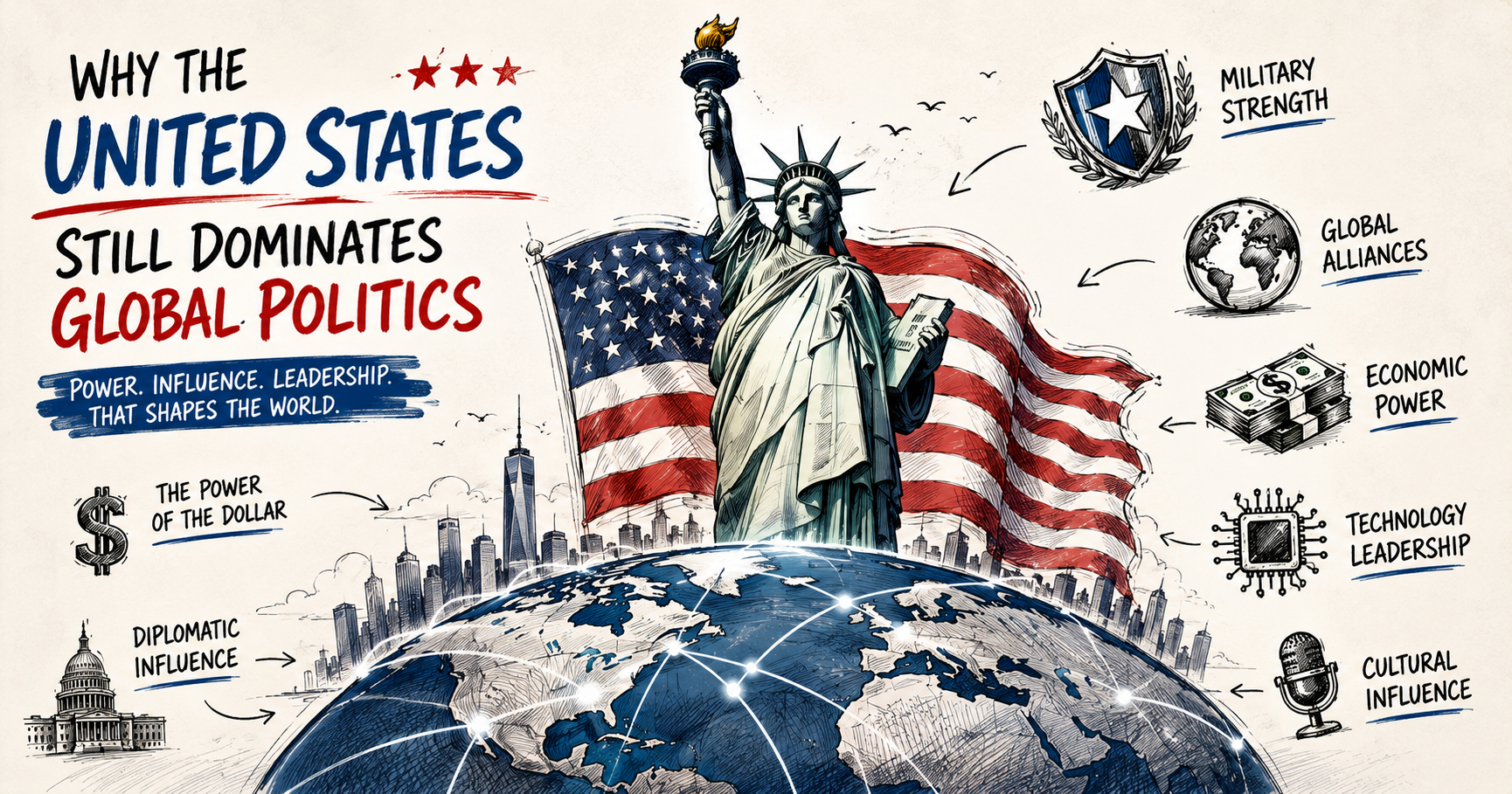

For years, people around the world have debated whether American dominance is declining.
China is rising. BRICS is expanding. Russia continues challenging Western influence. Regional powers are becoming more assertive.
And yet, despite all these changes, one reality remains difficult to ignore:
The United States still sits at the center of global politics more than any other country.
When wars begin, markets react to Washington.
When sanctions are imposed, global economies feel it.
When America changes interest rates, financial systems across the world respond.
And when geopolitical crises emerge — whether in Europe, the Middle East, or Asia — the United States almost always becomes deeply involved.
This dominance is not based on military strength alone.
It comes from a combination of economic power, global alliances, technology leadership, financial influence, military reach, and cultural impact that no other country has fully matched yet.
America’s Economy Still Shapes the World
One of the biggest reasons for US dominance is economic power.
The United States remains the world’s largest economy by nominal GDP, valued at more than $29 trillion in recent estimates.
That number matters because the American economy influences:
- global trade
- investment flows
- stock markets
- technology industries
- international banking systems
Many of the world’s biggest companies are American:
- Apple
- Microsoft
- Amazon
- NVIDIA
These companies do not just dominate business sectors — they shape global communication, artificial intelligence, cloud computing, digital infrastructure, and financial systems.
Even countries that politically disagree with America still rely heavily on technologies created or controlled by American firms.
The Dollar Gives America Massive Global Influence
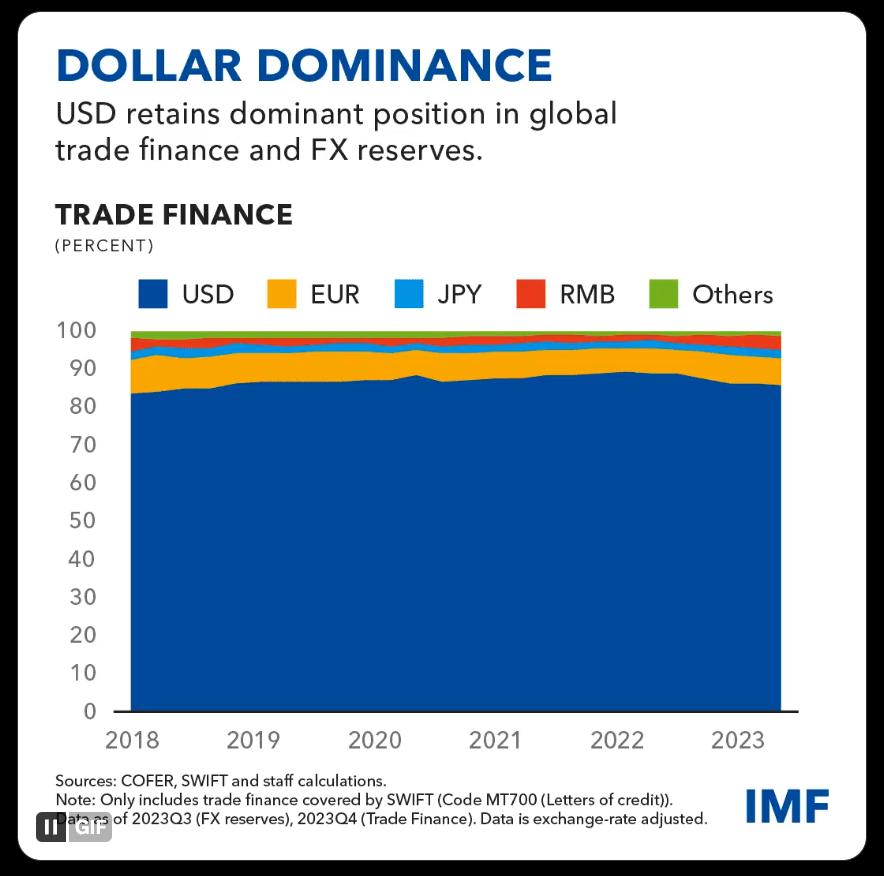
The US dollar may be America’s most powerful geopolitical weapon.
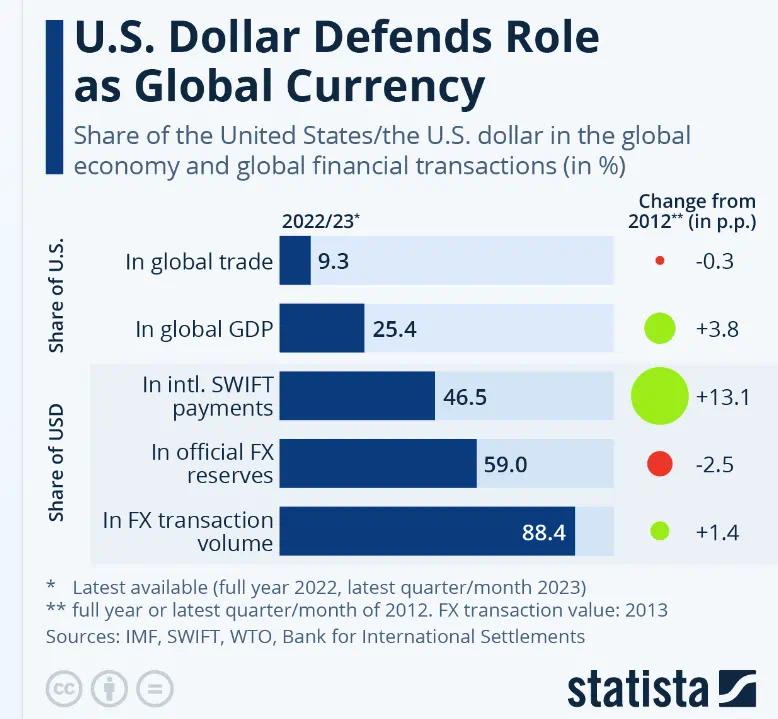
Today, most global trade — especially oil trade — still happens in dollars.
According to international financial estimates:
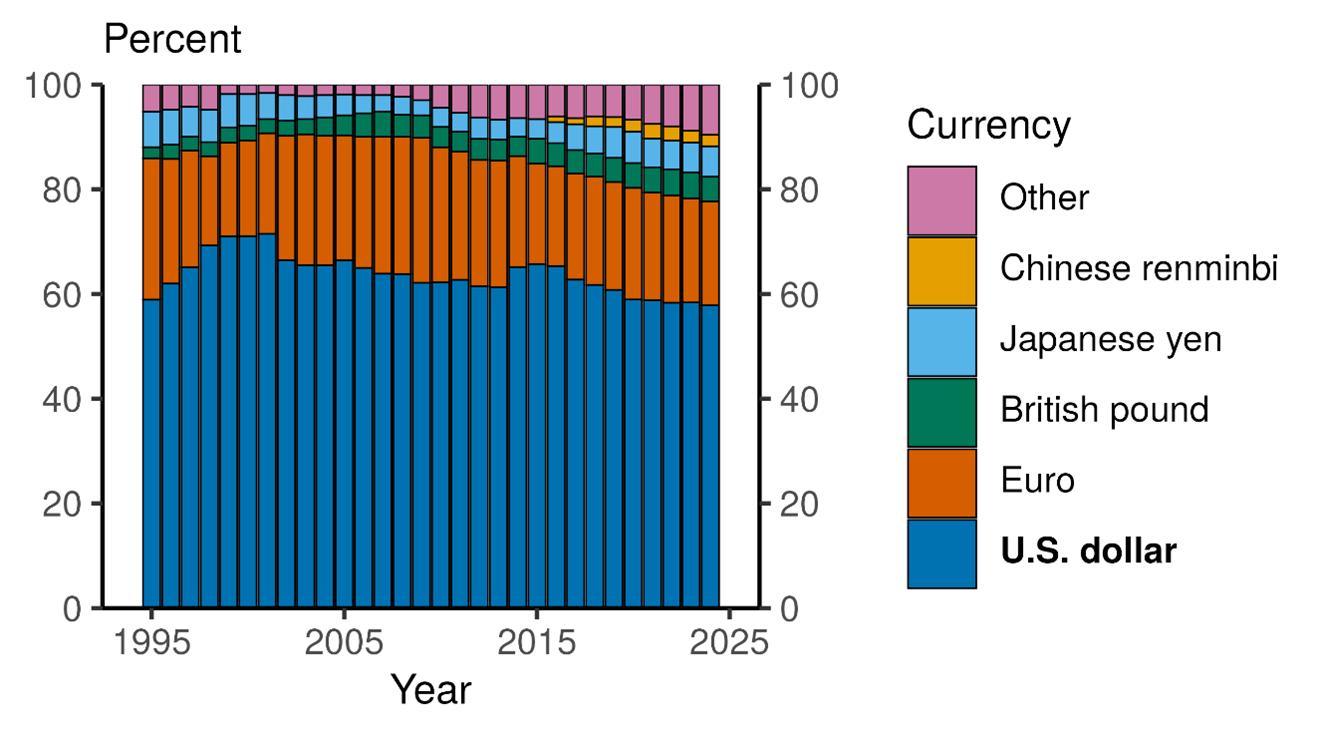
- nearly 60% of global foreign exchange reserves are held in US dollars
- most international transactions still depend on dollar-based systems
This gives Washington extraordinary leverage.
If the United States imposes sanctions:
- banks can be restricted
- countries can lose access to dollar systems
- global businesses may avoid sanctioned economies
This is why American sanctions on countries like:
- Russia
- Iran
carry such enormous global impact.
No other country currently possesses this level of financial influence.
America Has the World’s Most Powerful Military Network
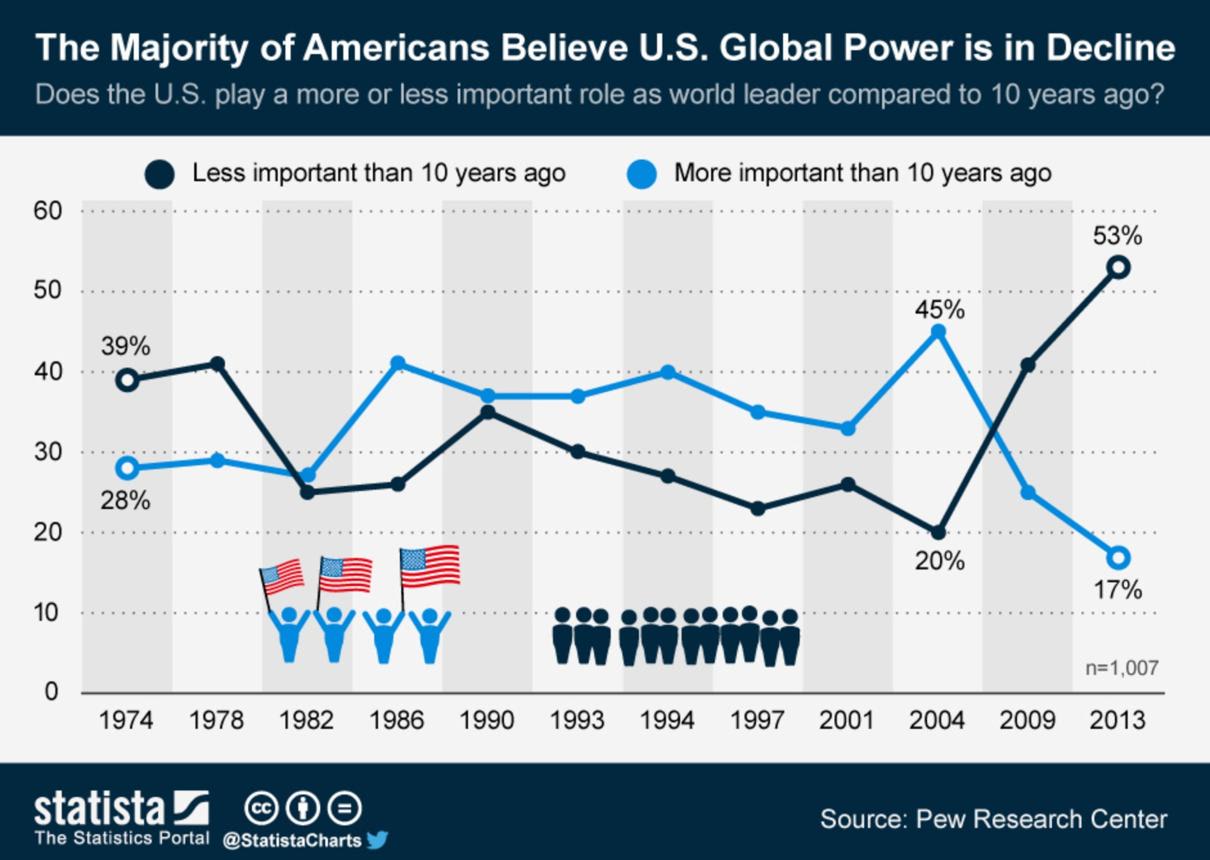
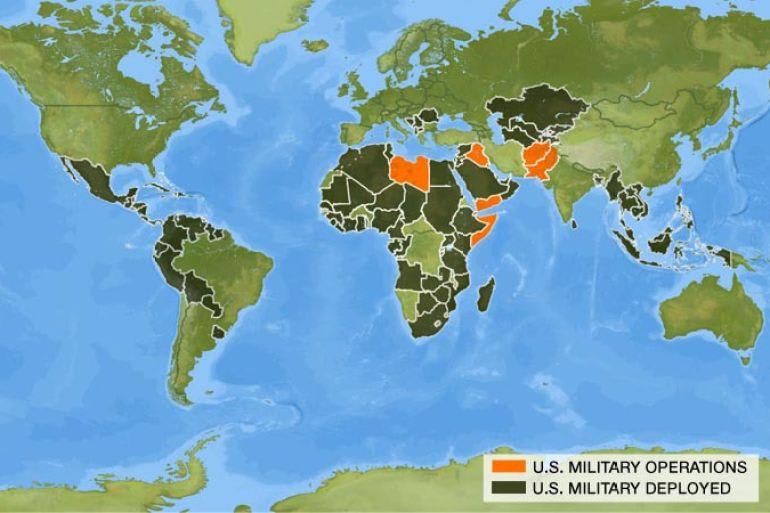
The US military remains unmatched in terms of global reach.
America spends more on defense than the next several countries combined. Recent estimates place US military spending above $850 billion annually.
The country operates:
- hundreds of overseas military facilities
- advanced naval fleets
- global intelligence systems
- strategic alliances across continents
The United States also leads NATO, the world’s most powerful military alliance.
This allows Washington to project influence in:
- Europe
- the Middle East
- the Indo-Pacific
- Africa
No other country currently maintains military presence at this scale globally.
The US Still Leads in Technology and Innovation
America’s dominance is also deeply technological.
The modern digital world was largely built around American innovation.
From Silicon Valley to artificial intelligence research, the US continues leading in:
- AI development
- semiconductor technology
- cloud computing
- advanced defense systems
- biotech
- space technology
The AI race between America and China has become one of the defining geopolitical competitions of the 21st century.
But even China’s rise has not fully replaced America’s technological ecosystem.
The world still depends heavily on American-designed platforms, software, chips, and research networks.
Hollywood, Media, and Culture Also Matter
Global influence is not only military or economic.
American culture remains enormously powerful worldwide.
Hollywood films, American music, streaming platforms, social media companies, sports leagues, and universities shape global trends and public opinion.
This cultural reach creates what experts call “soft power.”
Millions of people worldwide:
- consume American entertainment
- study at American universities
- follow American technology trends
- engage with American social platforms
That influence strengthens America’s global position far beyond politics alone.
Global Crises Usually Pull America In
One reason the United States remains central to global politics is because major international crises almost always involve Washington in some way.
Examples include:
- the Russia-Ukraine war
- Taiwan tensions
- Middle East conflicts
- NATO expansion
- global sanctions
- trade wars with China
Whether countries support or oppose America, they still react to American policy decisions.
That alone shows the scale of US geopolitical influence.
China Is Rising — But America Still Holds Advantages
China is undeniably becoming more powerful economically and militarily.
China leads in manufacturing, infrastructure expansion, and industrial scale. It has also expanded global influence through trade and investment projects.
However, the United States still maintains several major advantages:
- stronger military alliances
- global reserve currency dominance
- broader financial influence
- stronger soft power
- deeper global institutional presence
China is rising quickly, but replacing America’s global network completely is an entirely different challenge.
Why the World Still Watches Washington
Financial markets respond to decisions from the US Federal Reserve.
Oil prices react to American foreign policy.
Technology regulations in Washington influence global companies.
Sanctions imposed by America affect international trade.
Even countries trying to reduce dependence on the United States still structure major economic decisions around American actions.
That is what global dominance looks like.
Is American Dominance Permanent?
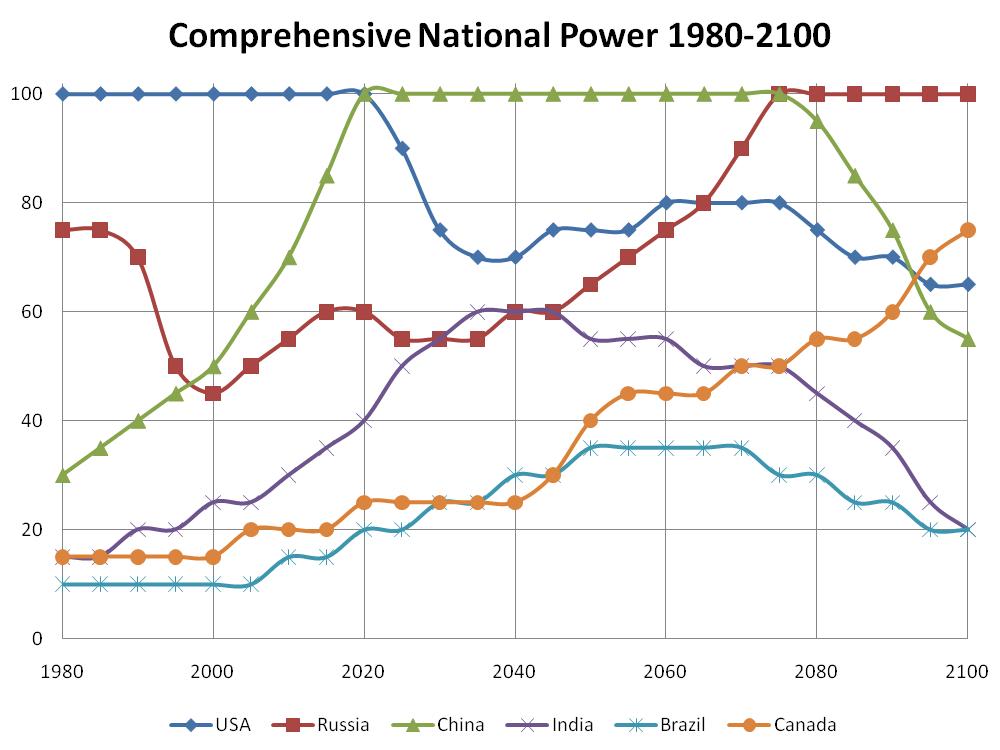
Probably not.
History shows that every major power eventually faces challenges.
The British Empire once dominated global politics. Before that, other empires controlled trade and military influence.
The rise of:
- China
- BRICS
- regional alliances
- alternative trade systems
suggests the global balance of power is gradually evolving.
But evolution is not the same as replacement.
Right now, no country combines:
- economic scale
- military reach
- financial influence
- technological leadership
- cultural power
as effectively as the United States does.
America’s Biggest Strength May Be Adaptability
The most important reason America remains dominant may not be wealth or weapons alone.
It is adaptability.
The United States has repeatedly reinvented itself during major global shifts:
- after World War II
- during the Cold War
- during the internet revolution
- during globalization
- during the AI boom
Its political system is often criticized, but its ability to innovate economically and technologically remains unusually strong.
That flexibility continues helping America maintain influence even as the world becomes more multipolar.
The World Is Changing -But America Still Sits at the Center
Global politics today is more competitive than it was twenty years ago.
Power is spreading across multiple regions. New alliances are forming. Emerging economies are becoming more influential.
But despite all these changes, most major geopolitical stories still connect back to one country in some way:
The United States.
And that is why America continues to dominate global politics even in a rapidly changing world.
The Russia-Ukraine war once again showed how deeply American foreign policy affects the global economy and international alliances.