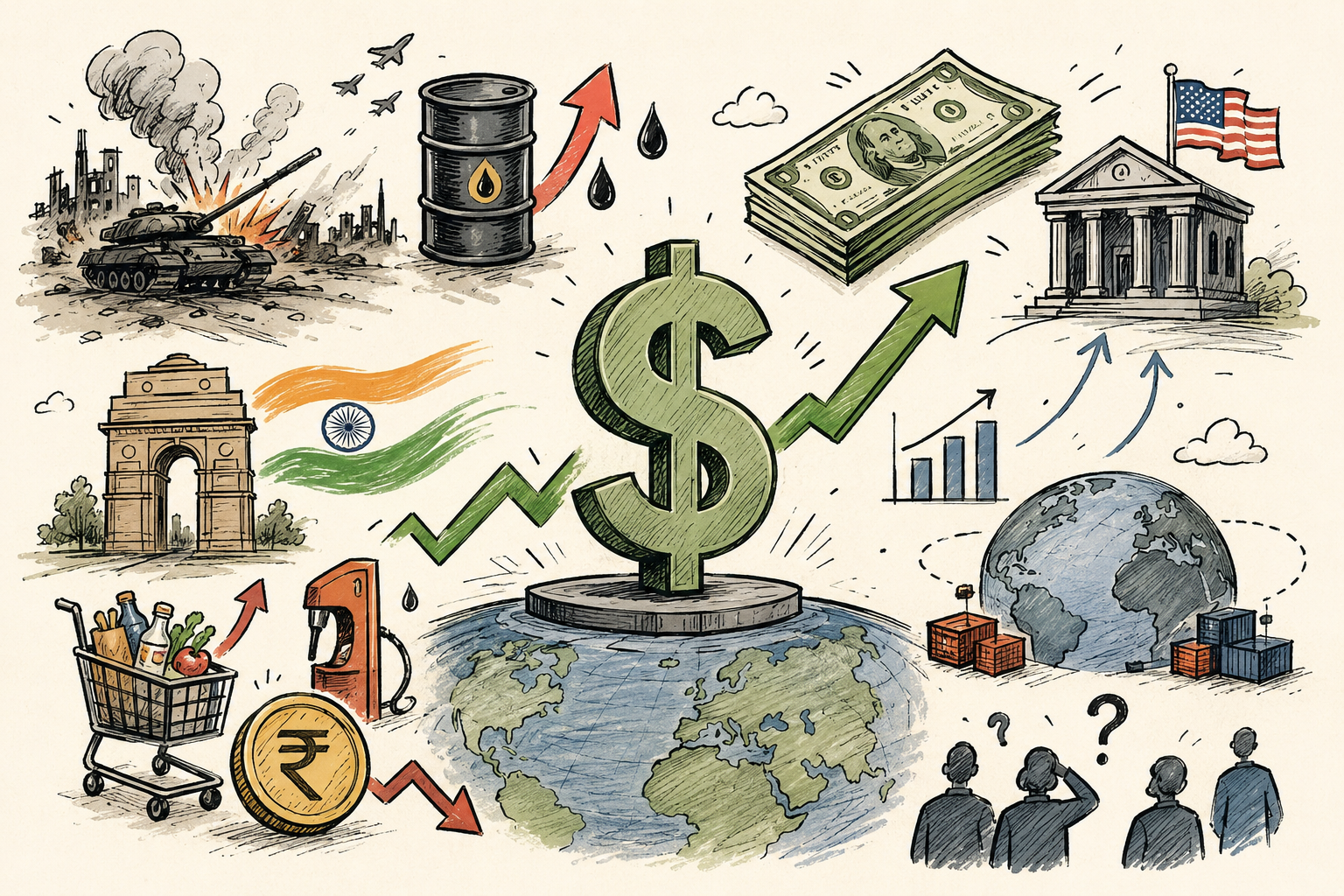


The U.S. dollar is climbing rapidly, and with every increase, economies across the globe are feeling the pressure. For some, it means market instability. For others, it means rising fuel prices, expensive groceries, weaker currencies, and growing uncertainty about the future.
And in countries like India, the impact is no longer hidden inside economic reports. It is showing up in daily life.
From petrol pumps to stock markets, from imported gadgets to household budgets, the strong dollar is quietly changing the rhythm of the economy.

But this is not happening in isolation.
Wars, geopolitical tensions, inflation fears, oil shocks, and investor panic are all feeding the rise of what analysts are once again calling the “King Dollar.”
Why Is the Dollar Becoming Stronger?
Whenever the world becomes uncertain, investors run toward what feels safest. And for decades, the U.S. dollar has been treated as the world’s financial shelter during storms.
Right now, that storm is geopolitical.
The ongoing conflicts and tensions in West Asia — especially involving Iran, the United States, and global oil routes — have shaken international markets. Oil prices have surged because traders fear disruptions in crucial shipping channels like the Strait of Hormuz. Since oil is traded globally in dollars, demand for the U.S. currency automatically rises.
But that is only half the story.
The U.S. Federal Reserve has also kept interest rates relatively high to control inflation. Higher interest rates mean global investors can earn better returns by putting money into American assets.
And money follows profit.
So billions of dollars are flowing into the United States while many emerging economies are watching capital move out.
It is a modern financial migration — invisible, fast, and powerful.
What Does This Mean for India?

For India, the effects are immediate.
India imports nearly 85% of its crude oil needs. That means every time the dollar rises, India has to spend more money just to buy the same amount of fuel.
Think about it this way:
If the rupee weakens and oil prices rise together, India gets hit twice.
And once fuel becomes expensive, everything else follows.
Transportation costs rise. Food prices increase. Air travel becomes costlier. Imported electronics become expensive. Manufacturing slows because raw materials cost more. Even small businesses feel the pressure.

Suddenly, the “strong dollar” stops sounding like a distant economic term.
It becomes the reason your grocery bill feels heavier.
Economists often describe inflation as a silent thief. A rising dollar gives that thief more power.
The Hidden Fear Behind Global Markets

There is another reason investors are nervous: war uncertainty.
History shows that global conflicts almost always strengthen the dollar initially. During crises, investors pull money out of risky markets and move it into U.S. Treasury bonds, gold, and dollar-based assets.
It happened during the 2008 financial crisis. It happened during the COVID-19 panic. And it is happening again now.

But this time, the anxiety feels deeper because the world economy is already fragile.
Europe is struggling with energy concerns. China’s economic slowdown continues to worry investors. Developing nations with large dollar debts are under pressure because repayments become more expensive when the dollar rises.
A stronger dollar may help America in the short term, but globally, it acts like gravity — pulling weaker economies downward.
India’s Challenge: Stability in a Restless World
India is trying to walk a very careful line.
The Reserve Bank of India has stepped in multiple times to stabilize the rupee and prevent panic in currency markets. At the same time, the government is attempting to protect growth while controlling inflation.
And despite the pressure, India still remains one of the fastest-growing major economies in the world.
That matters.
Because while global investors may temporarily chase the safety of the dollar, long-term economic strength still depends on productivity, innovation, infrastructure, and domestic growth — areas where India continues to expand rapidly.
Still, uncertainty remains.
If wars intensify or oil prices keep rising, the pressure on the rupee could continue for months. And if global investors remain cautious, emerging economies may face even more volatility ahead.
More Than Just Economics

What makes this story fascinating is that it is not only about money.
It is about power.
Currencies are not just pieces of paper or digital numbers on trading screens. They represent trust, political influence, military strength, and global confidence.
Right now, the world is sending a message: In times of fear, people still trust the dollar the most.

But there is another side to this story too.
Every time the dollar rises sharply, countries begin searching for alternatives. Nations talk about trading in local currencies. Global alliances shift. Economic strategies change. The rise of the dollar often plants the seeds of future financial realignments.
And that may become one of the defining economic battles of the next decade.
Because behind every currency chart is a larger question:
Who truly controls the global economy?
At the moment, the answer still seems clear.
The dollar does.