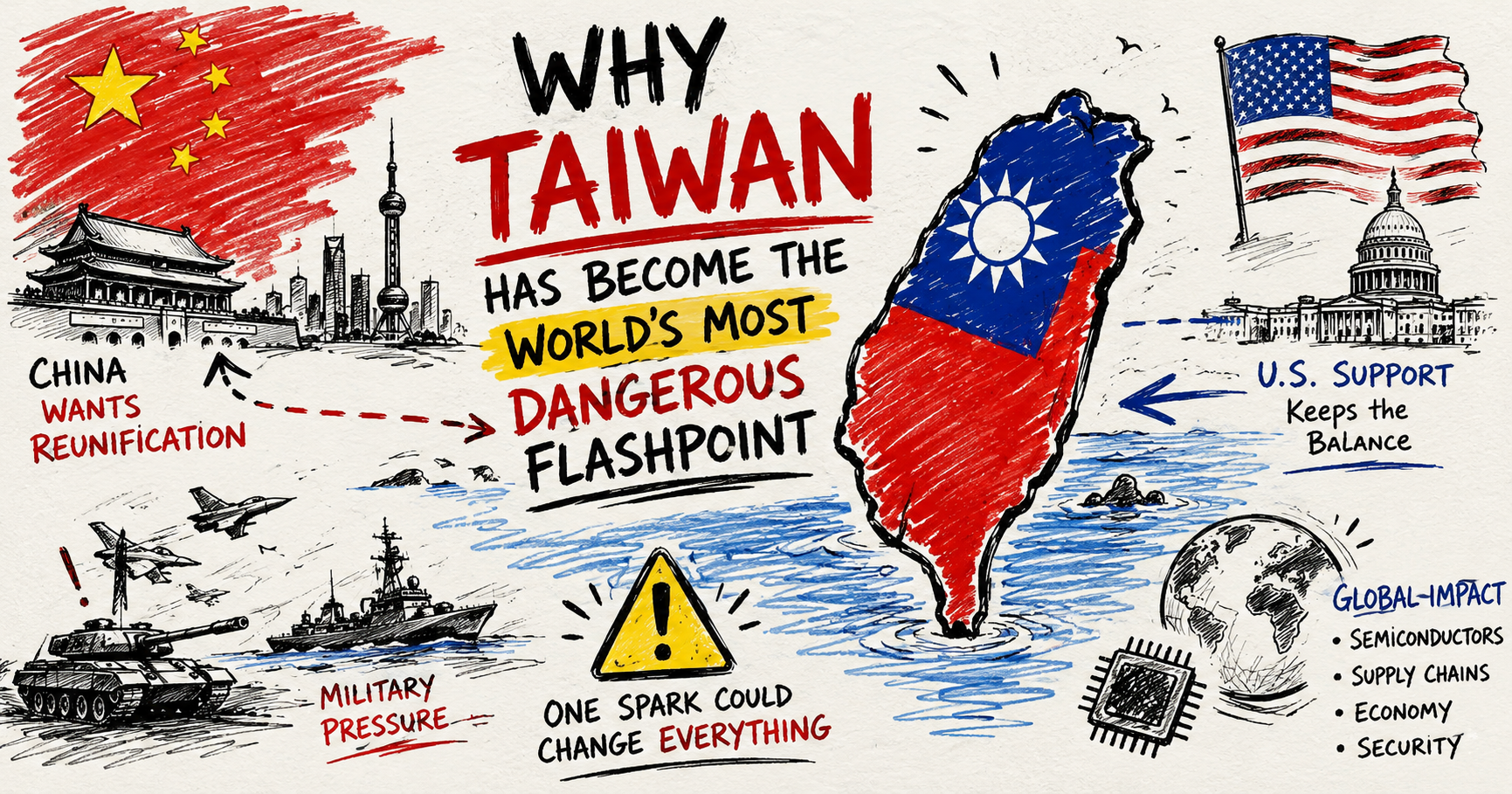

Most global conflicts stay limited to one region.
Taiwan is different.
A crisis involving Taiwan would not just affect Asia — it could shake the entire global economy, disrupt technology industries, pull major military powers into confrontation, and completely reshape international politics.
That is why many foreign policy experts now describe Taiwan as the world’s most dangerous geopolitical flashpoint.
The tension surrounding Taiwan is no longer just about territory. It has become a complicated battle involving nationalism, military strategy, technology, trade, and global power itself..
And every year, the situation appears to grow more sensitive.
Why China Sees Taiwan as So Important
China considers Taiwan part of its territory under its “One China” policy.
Beijing has repeatedly stated that reunification with Taiwan is a long-term national goal, and Chinese leaders have not ruled out the possibility of using force if necessary.
For China, the issue is deeply political and symbolic.
Taiwan represents:
- territorial integrity
- national identity
- regional influence
- China’s rise as a global power
Chinese President Xi Jinping has made it increasingly clear that Taiwan remains one of Beijing’s top strategic priorities.
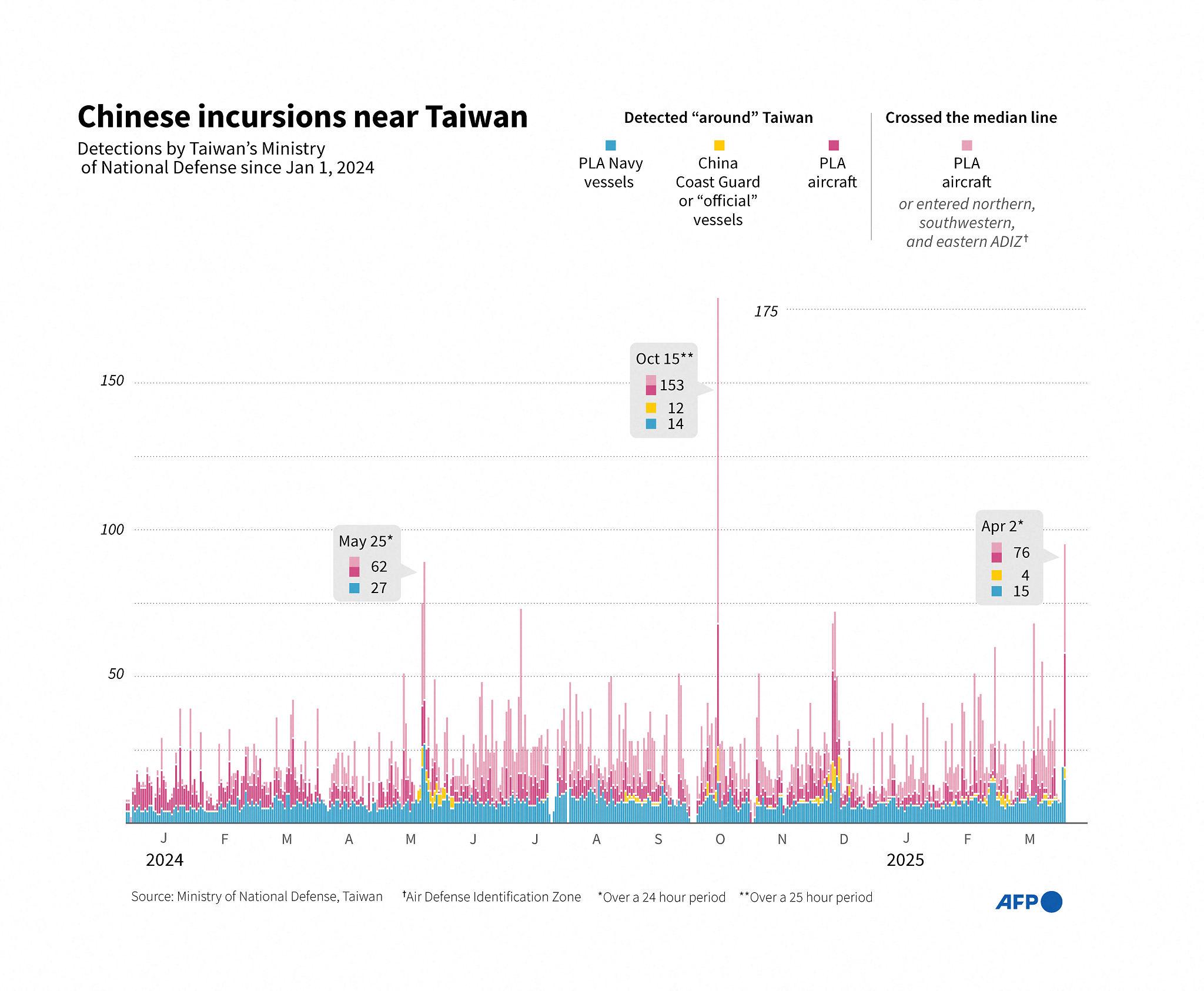
This is why China has increased military activity around the Taiwan Strait in recent years, including naval exercises, air force patrols, and military drills.
Taiwan Is Not Just Another Island
Taiwan’s global importance goes far beyond politics.
The island sits at the center of the modern technology economy.
TSMC, headquartered in Taiwan, produces many of the world’s most advanced semiconductor chips — the tiny components powering:
- smartphones
- laptops
- AI systems
- cars
- military equipment
- data centers
Without Taiwan’s semiconductor industry, large parts of the global economy could face massive disruption.
This is one reason why the Taiwan issue worries governments and businesses worldwide.
A military conflict near Taiwan could severely damage global supply chains overnight.
Why the United States Is Involved
United States officially follows the “One China” policy, but it also maintains close strategic relations with Taiwan.
Washington continues to:
- supply weapons to Taiwan
- support Taiwan’s self-defense capabilities
- maintain military presence in the Indo-Pacific region
America sees Taiwan as strategically important for maintaining regional balance in Asia.
For the US, allowing China to take control of Taiwan could dramatically expand Beijing’s military and geopolitical influence in the Pacific.
This has created a dangerous situation where both China and the United States consider Taiwan strategically critical.
And that makes compromise extremely difficult.
The Taiwan Strait Has Become Increasingly Militarized
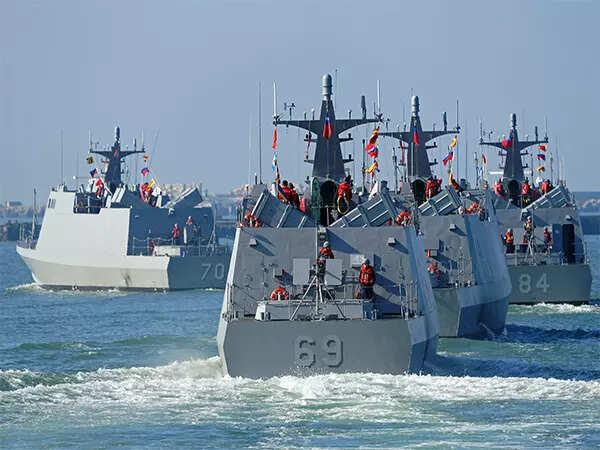
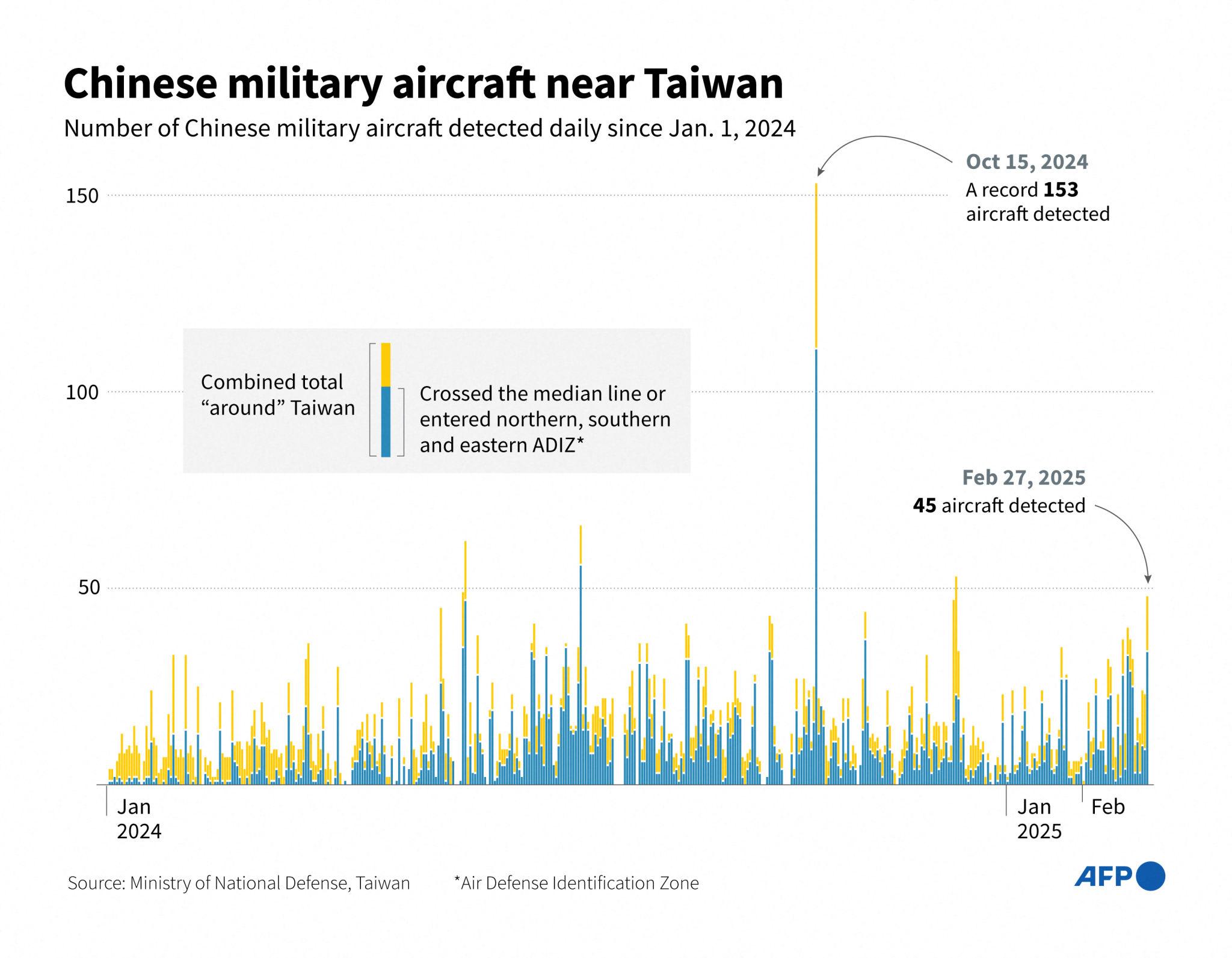
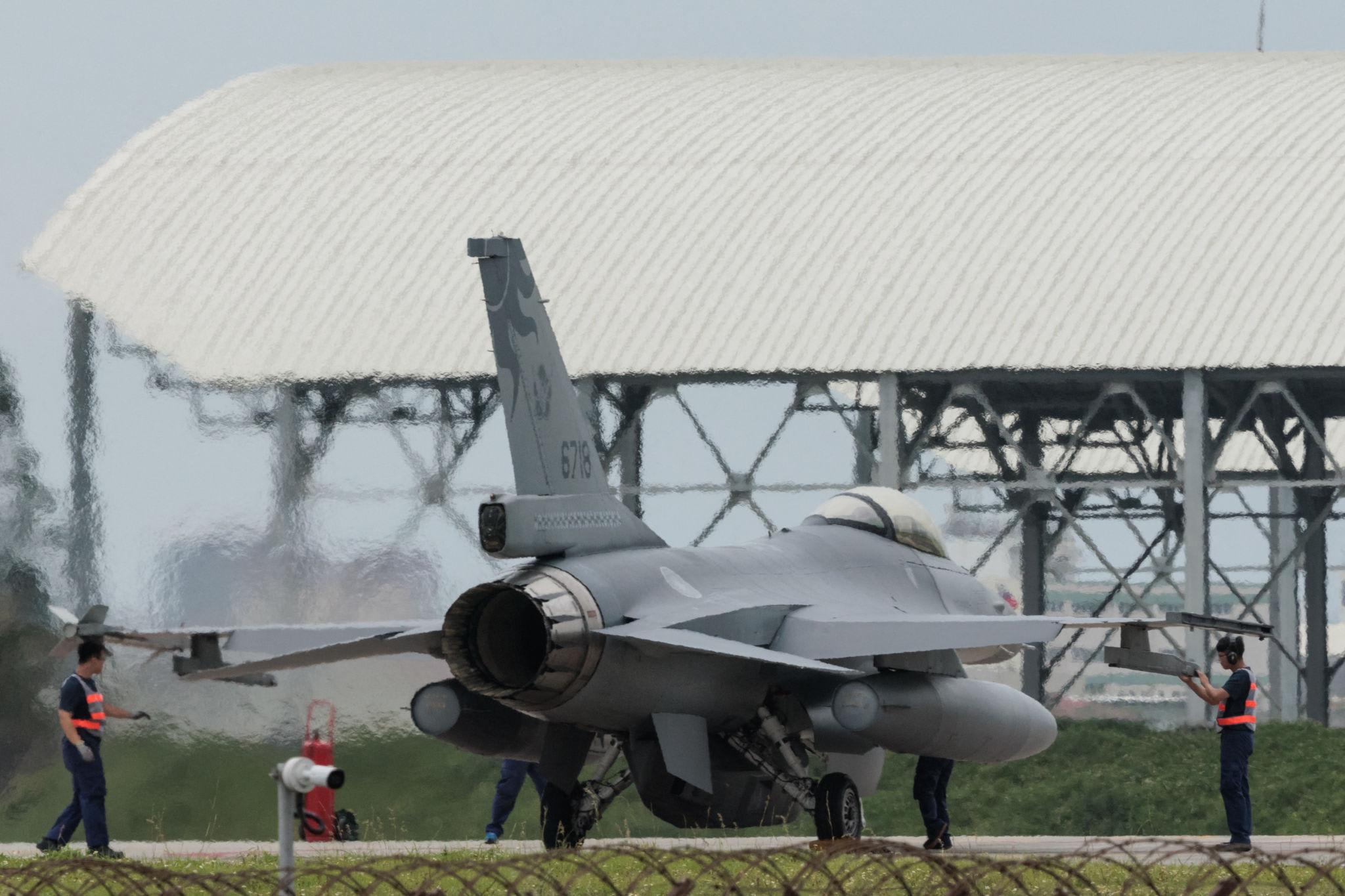
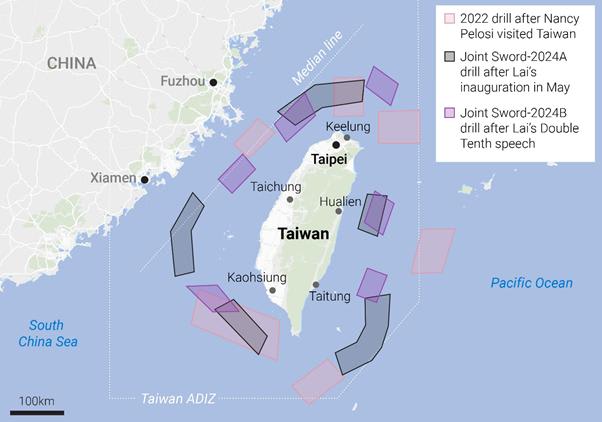
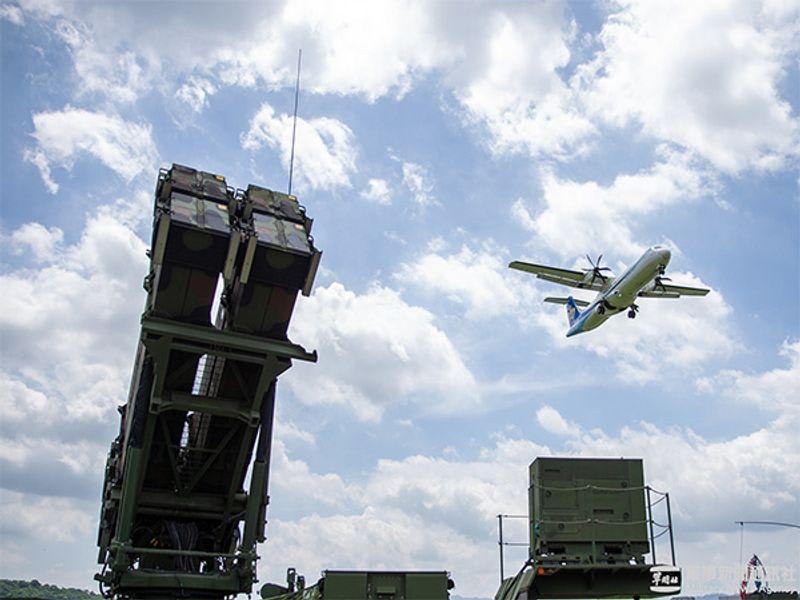
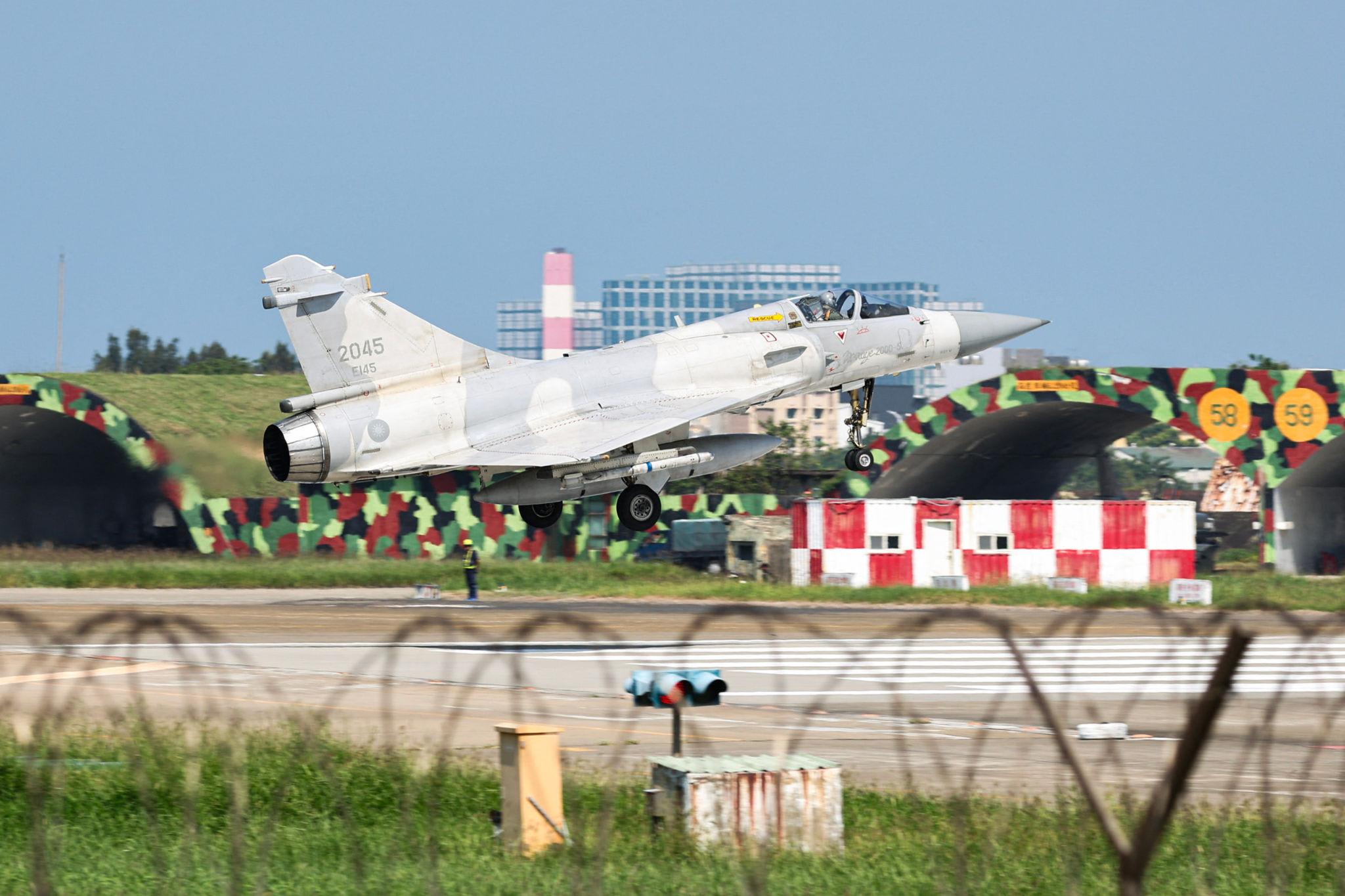
The waters surrounding Taiwan have become one of the most militarized regions in the world.
Chinese military aircraft frequently enter Taiwan’s air defense identification zone. American warships continue operating through nearby waters. Regional allies like Japan are also paying close attention to the situation.
The danger is not only intentional conflict.
Many experts worry about:
- military accidents
- miscalculations
- sudden escalation
- political pressure during crises
Even a small confrontation in the Taiwan Strait could rapidly spiral into a much larger international conflict.
The Entire World Has Economic Stakes in Taiwan
Taiwan’s importance is also economic.
The island plays a central role in global manufacturing and technology supply chains. Countries across Europe, Asia, and North America rely heavily on Taiwanese semiconductor production.
If conflict disrupts Taiwan’s chip industry:
- electronics production could slow globally
- AI development could suffer
- automobile manufacturing could be affected
- financial markets could panic
This explains why investors react nervously whenever tensions rise between Beijing and Taipei.
Taiwan may be geographically small, but its economic importance is enormous.
Why This Situation Feels More Dangerous Today
The Taiwan issue is becoming more serious because global politics itself has become more confrontational.
Relations between China and the United States are already strained over:
- trade wars
- artificial intelligence
- military influence
- cybersecurity
- technology restrictions
Taiwan now sits directly in the middle of this broader rivalry.
At the same time, nationalism has grown stronger in many countries, making diplomatic compromise politically harder.
That combination — military buildup, economic competition, and political pressure — creates an extremely fragile environment.
Could a Conflict Actually Happen?
Most governments still hope conflict can be avoided.
A war over Taiwan would carry devastating consequences not just for Asia, but for the entire global economy.
However, the concern among analysts is that tensions continue rising without any clear long-term solution.
China does not want permanent separation.
Taiwan wants to protect its democratic system and autonomy.
The United States wants to maintain regional influence and stability.
Those three objectives increasingly collide with one another.
Taiwan Is No Longer a Regional Issue
Years ago, Taiwan was viewed mostly as a regional dispute.
That is no longer true.
Today, Taiwan sits at the intersection of:
- global technology
- military strategy
- economic security
- US-China rivalry
- international diplomacy
What happens in the Taiwan Strait could shape the future balance of power in the 21st century.
And that is exactly why the world is watching so closely.
The Taiwan issue continues to remain one of the biggest tensions shaping modern US-China relations, something that was also visible during Trump’s recent China visit.