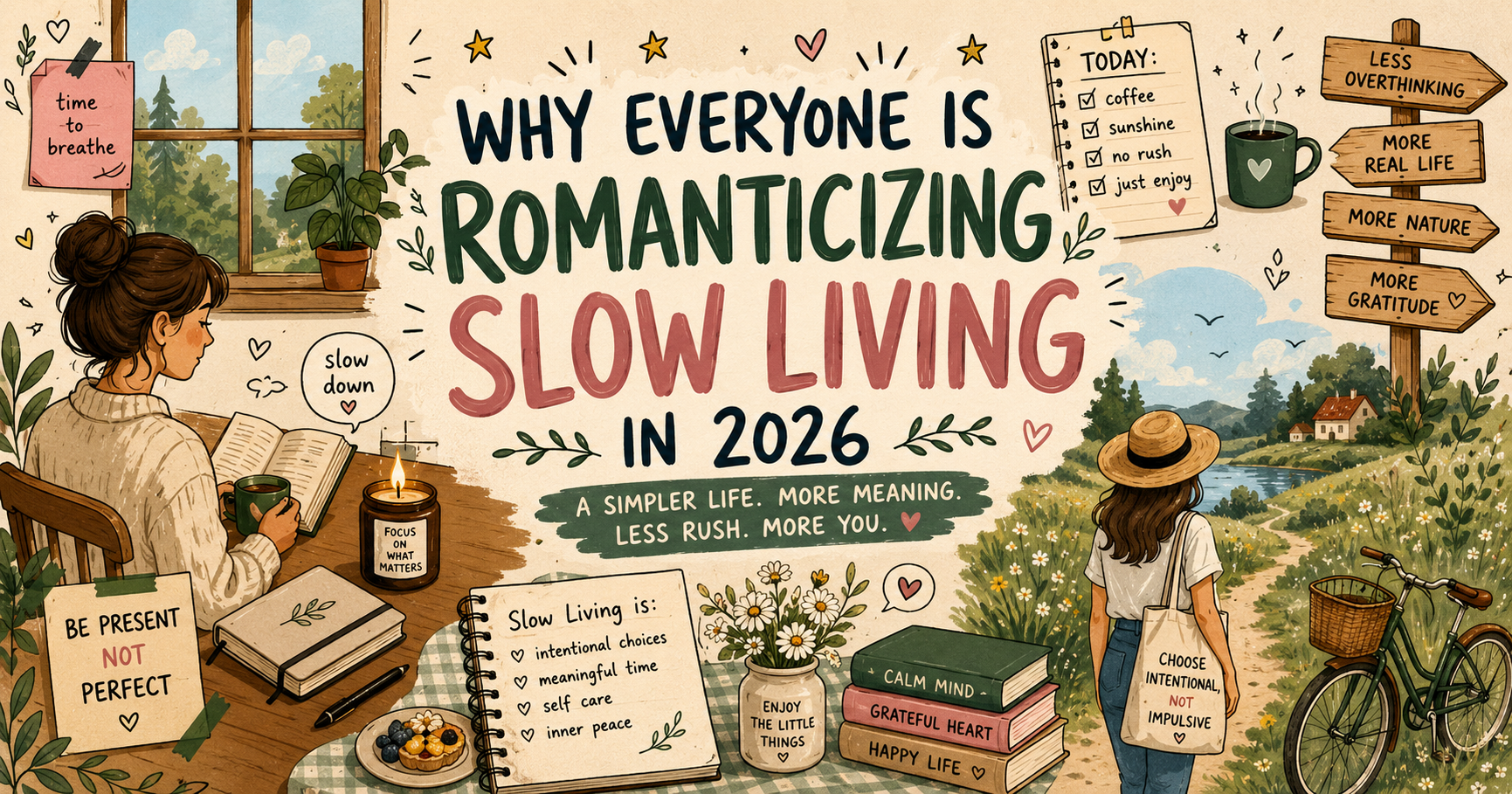

There was a time when being busy was seen as a badge of honor. Long workdays, packed schedules, and constant notifications became symbols of ambition and success. But in 2026, that mindset is beginning to change.
Across social media, people are sharing videos of quiet mornings, homemade meals, handwritten journals, gardening, reading books, and long walks without checking their phones. The hashtag isn't about doing more—it's about doing less, but with greater intention.
This growing movement is known as slow living, and it's quickly becoming one of the biggest lifestyle trends of 2026.
But why is everyone suddenly embracing a slower pace of life? Is it just another social media trend, or does it reflect a deeper shift in the way people want to live?
Let's take a closer look at why slow living in 2026 is capturing so much attention and how it could reshape the way we think about work, success, and happiness.
What Is Slow Living?
Slow living is a lifestyle that encourages people to be more intentional with their time, energy, and attention. It doesn't mean avoiding work, giving up ambition, or living in the countryside.
Instead, slow living focuses on making thoughtful choices instead of constantly rushing through life.
Someone embracing a slow living lifestyle might:
- Prepare meals instead of relying on fast food.
- Spend time outdoors without distractions.
- Limit unnecessary screen time.
- Focus on meaningful relationships.
- Buy fewer but higher-quality products.
- Prioritize experiences over constant productivity.
At its core, slow living is about creating a life that feels fulfilling rather than simply busy.
Why Is Slow Living Trending in 2026?
Several cultural and technological changes have made slow living more appealing than ever.
1. Burnout Has Become a Common Experience
Many people spent years juggling demanding jobs, endless notifications, and the pressure to always be available.
While technology made work more flexible, it also blurred the boundaries between professional and personal life.
As a result, more people are asking an important question:
"Is being constantly busy actually making me happier?"
For many, the answer is no.
Slow living offers an alternative that values balance over burnout.
2. Digital Overload Is Pushing People Offline
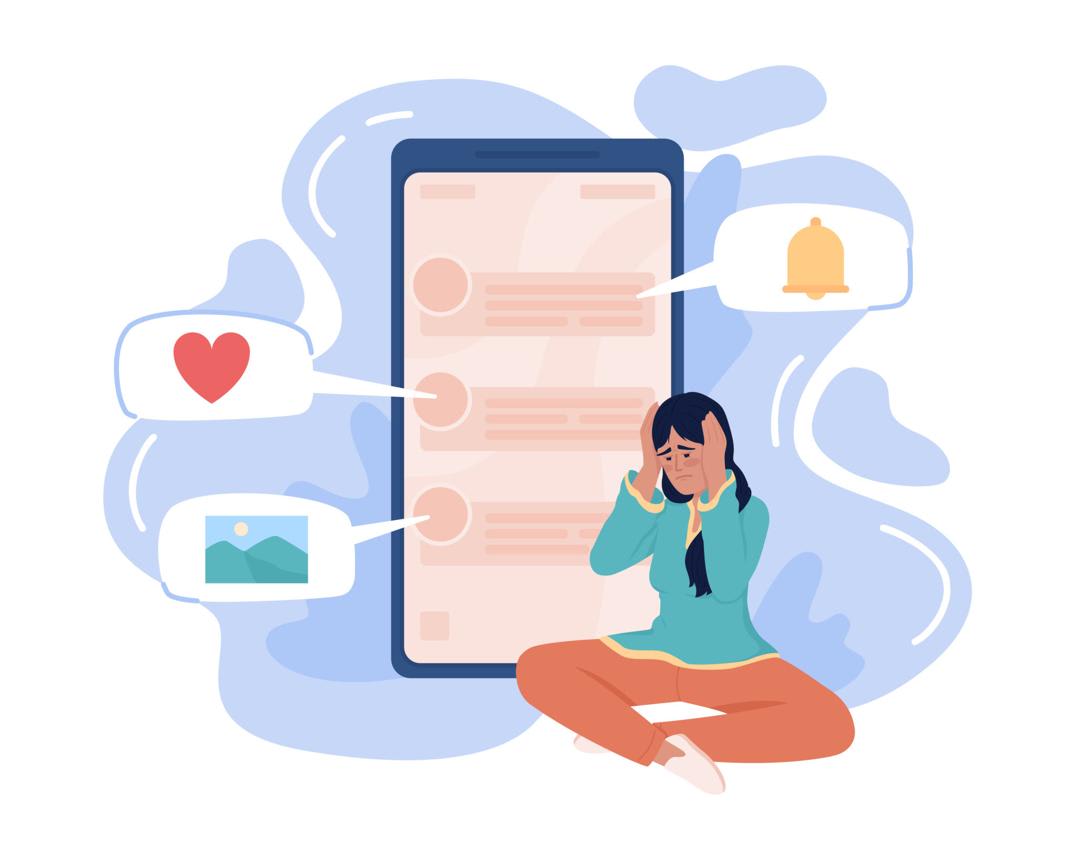
The average person now interacts with dozens of apps, notifications, emails, and social media updates every day.
This constant stream of information can leave the brain feeling overwhelmed.
That's why activities like:
- Reading physical books
- Gardening
- Baking
- Journaling
- Painting
- Walking in nature
are becoming increasingly popular.
They provide something that's becoming surprisingly rare: uninterrupted attention.
3. Success Is Being Redefined
For years, success was often measured by promotions, expensive cars, luxury vacations, and working long hours.
In 2026, many people are redefining success.
Today, success might look like:
- Having time for family.
- Finishing work on schedule.
- Sleeping well.
- Cooking dinner at home.
- Spending weekends without checking emails.
The focus has shifted from "having more" to "living better."
4. Social Media Is Surprisingly Helping the Slow Living Movement
It might seem ironic, but platforms like Instagram, Pinterest, and TikTok have helped popularize slow living.
Instead of only showcasing luxury lifestyles, creators now share content featuring:
- Cozy morning routines
- Minimalist homes
- Home gardens
- Freshly baked bread
- Tea rituals
- Quiet cafés
- Handwritten journals
These videos often emphasize calmness rather than perfection, inspiring viewers to slow down in their own lives.
The Psychology Behind Slow Living
Slow living isn't just aesthetically pleasing—it also aligns with several psychological principles.
1. It Reduces Decision Fatigue
Every day, your brain makes hundreds of small decisions.
From choosing what to wear to responding to notifications, each decision consumes mental energy.
By simplifying routines and reducing unnecessary choices, people often feel less mentally exhausted.
2. It Encourages Mindfulness
Mindfulness involves paying attention to the present moment without constantly worrying about the past or future.
Whether you're enjoying a cup of coffee or taking a quiet walk, slow living encourages being fully present rather than mentally multitasking.
3. It Supports Better Mental Well-Being
While slow living isn't a treatment for mental health conditions, many of its habits—such as spending time outdoors, maintaining routines, reducing digital distractions, and prioritizing rest—are associated with improved overall well-being and reduced stress.
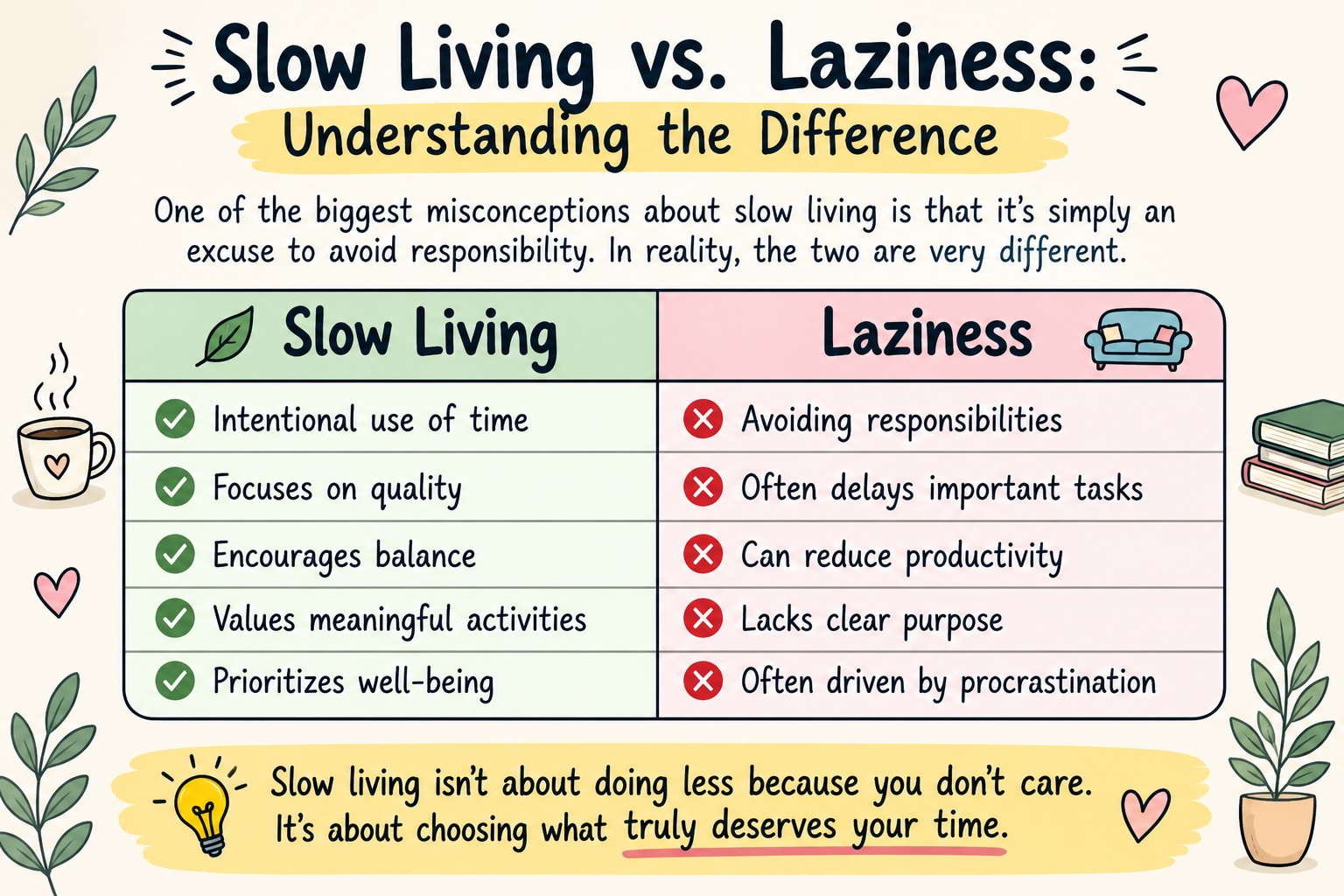
Slow Living vs. Laziness: Understanding the Difference
One of the biggest misconceptions about slow living is that it's simply an excuse to avoid responsibility.
In reality, the two are very different.
Everyday Habits That Make Slow Living Easier
You don't have to move to a quiet village or completely change your lifestyle to embrace slow living.
Small habits can make a meaningful difference.
1. Start Your Morning Without Your Phone
Instead of checking notifications immediately after waking up, spend a few minutes stretching, journaling, or simply enjoying your morning.
2. Create Screen-Free Hours
Choose one hour each day without social media or unnecessary screen time.
Many people notice improved focus and better sleep after making this small change.
3. Cook More Meals at Home
Preparing food can become a relaxing daily ritual rather than another chore.
Cooking also encourages healthier eating habits and mindful consumption.
4. Spend More Time Outdoors
Whether it's walking through a park or sitting on your balcony with a book, spending time outside helps break the cycle of constant digital stimulation.
Buy Less, Choose Better
Instead of impulse shopping, focus on purchasing items that are durable, useful, and meaningful.
This mindset aligns with both slow living and sustainable consumption.
Why Younger Generations Are Embracing Slow Living
Millennials and Gen Z have grown up in a world filled with smartphones, social media, and constant connectivity.
While technology has created incredible opportunities, it has also increased feelings of comparison and information overload.
Many younger adults now prioritize:
- Flexible work schedules
- Better work-life balance
- Mental well-being
- Sustainable lifestyles
- Quality relationships
- Personal fulfillment
Slow living reflects these changing priorities.
Is Slow Living Just Another Trend?

Every few years, a new lifestyle trend dominates social media.
But slow living feels different.
Rather than encouraging people to buy more products or chase unrealistic goals, it promotes habits that are timeless:
- Reading
- Cooking
- Walking
- Spending time with loved ones
- Being present
These practices existed long before social media—and they'll likely remain valuable long after trends fade.
How to Start Living More Slowly Today
If you're interested in slowing down, start with one simple change rather than trying to transform your entire routine overnight.
You could:
- Take a 20-minute walk without your phone.
- Read a chapter of a book before bed.
- Keep a small gratitude journal.
- Turn off non-essential notifications.
- Schedule regular breaks during your workday.
- Eat one meal without watching a screen.
Small, consistent habits often have the greatest long-term impact.
The Bottom Line
The growing interest in slow living in 2026 isn't about rejecting ambition or productivity. It's about creating a healthier relationship with time.
As more people recognize the effects of burnout, digital overload, and constant busyness, they're choosing a lifestyle built around intention rather than urgency.
Slow living reminds us that a meaningful life isn't measured by how much we can fit into a day, but by how fully we experience the moments that matter.