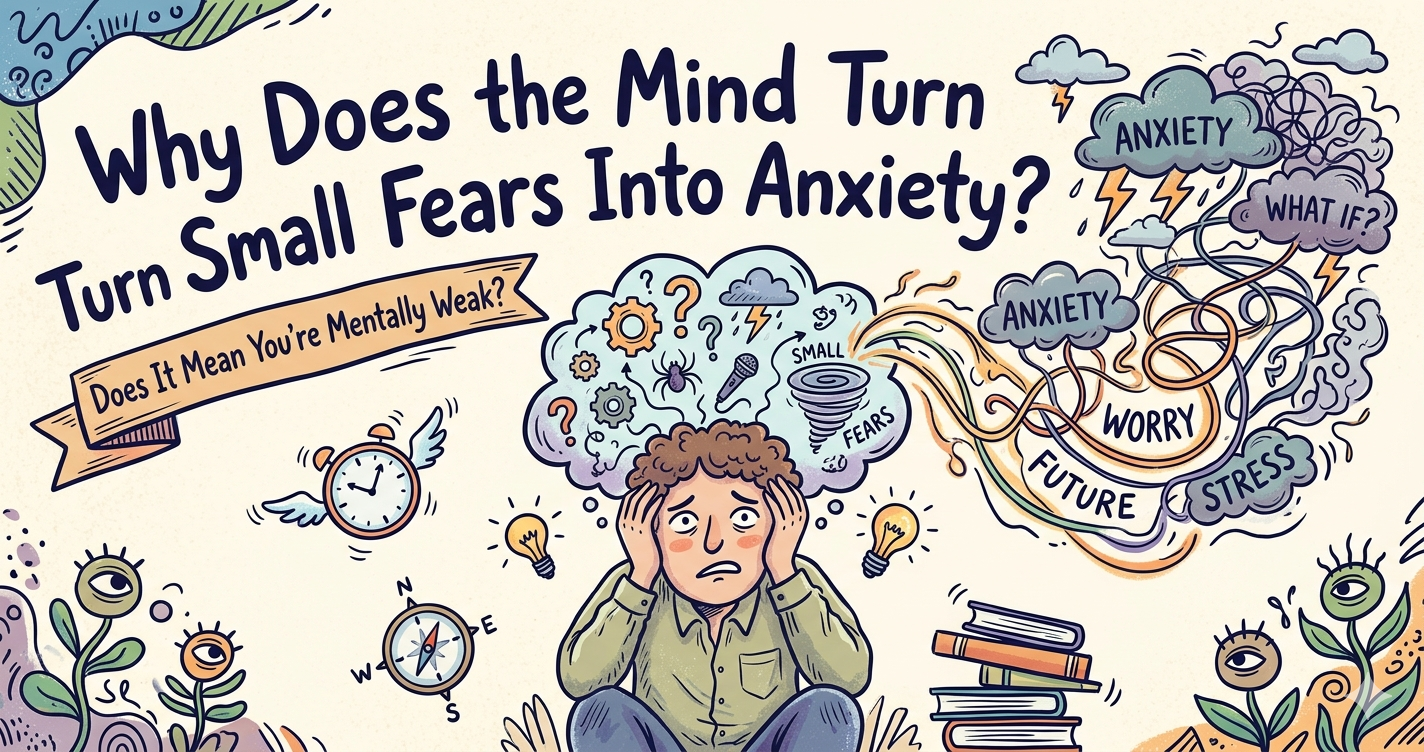

Sometimes anxiety begins with something so small that it feels irrational even to the person experiencing it.
A delayed text. A short reply. A mistake during a conversation. An unopened email. A minor physical symptom.
What starts as a tiny concern suddenly grows into overthinking, physical tension, restlessness, and fear.
And eventually, many people ask themselves the same painful question:
“Why am I reacting like this? Am I mentally weak?”
It is a deeply human question—but the answer is more complicated than people think.
Because anxiety is not simply about weakness. In many cases, it is about a nervous system that has become overly alert to possible danger.
The Brain Is Designed to Notice Threats
The human brain is built for survival.
Its primary job is not to keep you relaxed or emotionally balanced. Its job is to protect you.
That means the brain constantly scans for possible threats, problems, rejection, embarrassment, uncertainty, or emotional pain.
For some people, this system becomes more sensitive over time.
Stress, burnout, past emotional experiences, pressure, perfectionism, criticism, unstable environments, or chronic overthinking can all increase mental vigilance.
The result is that even small situations begin to feel emotionally significant.
The brain stops reacting only to danger—it starts reacting to the possibility of danger.
Small Fears Often Represent Bigger Emotional Fears
Most anxious reactions are not really about the small event itself.
A delayed message may not just feel like a delayed message.
It may unconsciously trigger:
- fear of rejection
- fear of abandonment
- fear of failure
- fear of being judged
- fear of losing control
This is why anxiety can seem disproportionate.
The mind is not reacting to the surface situation—it is reacting to what the situation emotionally represents.
That reaction can feel immediate and intense because the nervous system interprets emotional uncertainty as potential danger.
Does Anxiety Mean Someone Is Mentally Weak?
No.
Anxiety does not automatically mean someone is mentally weak.
In fact, many anxious people are mentally exhausted precisely because they have been trying to stay strong for too long.
People with anxiety are often:
- highly self-aware
- emotionally sensitive
- deeply analytical
- responsible
- hyper-observant
The problem is not lack of strength.
The problem is that the mind rarely switches off.
Constant mental alertness can eventually overwhelm the nervous system.
What people call “overreacting” is often a body and mind stuck in protection mode for too long.
Why Sensitive Minds Become More Vulnerable to Anxiety
Sensitive people tend to process experiences deeply.
They notice tone changes, emotional shifts, facial expressions, silence, and uncertainty more intensely than others.
While this sensitivity can create empathy and emotional intelligence, it can also make the mind more vulnerable to overstimulation.
The brain begins analyzing everything for hidden meaning.
And when the mind stays in analysis mode constantly, small fears become magnified.
This does not make someone weak.
It means their emotional processing system is highly active.
Anxiety Often Grows in Silence
One reason anxiety becomes so powerful is that people often judge themselves for having it.
Instead of understanding the fear, they shame themselves for feeling it.
That creates another layer of distress:
- anxiety about anxiety
- fear of losing control
- embarrassment over emotional reactions
The mind becomes trapped in self-criticism.
And self-criticism rarely calms the nervous system.
It usually intensifies it.
What Actually Helps
Healing anxiety does not begin by insulting yourself into being stronger.
It begins by understanding what your mind is trying to do.
An anxious mind is often trying to protect you—even if it is doing so imperfectly.
The goal is not to eliminate all fear. That would be impossible.
The goal is to teach the nervous system that not every uncertainty is dangerous.
That process takes:
- emotional awareness
- nervous system regulation
- healthier self-talk
- rest
- boundaries from overstimulation
- patience with yourself
Small consistent changes calm the mind more effectively than harsh self-judgment ever will.
The Bottom Line...
When the mind turns small fears into anxiety, it does not automatically mean someone is weak.
It often means the brain has become overly focused on protection, anticipation, and emotional survival.
Anxiety can make ordinary situations feel emotionally enormous. But that reaction is usually rooted in sensitivity, stress, past experiences, or chronic mental overload—not personal failure.
The important thing is not shaming yourself for feeling anxious.
It is learning how to understand the fear without letting it completely control you.
Because strength is not the absence of anxiety.
Sometimes strength is continuing to function while carrying battles nobody else can see.
Anxiety is not always just mental. Sometimes the body reacts before the mind fully understands what it feels.