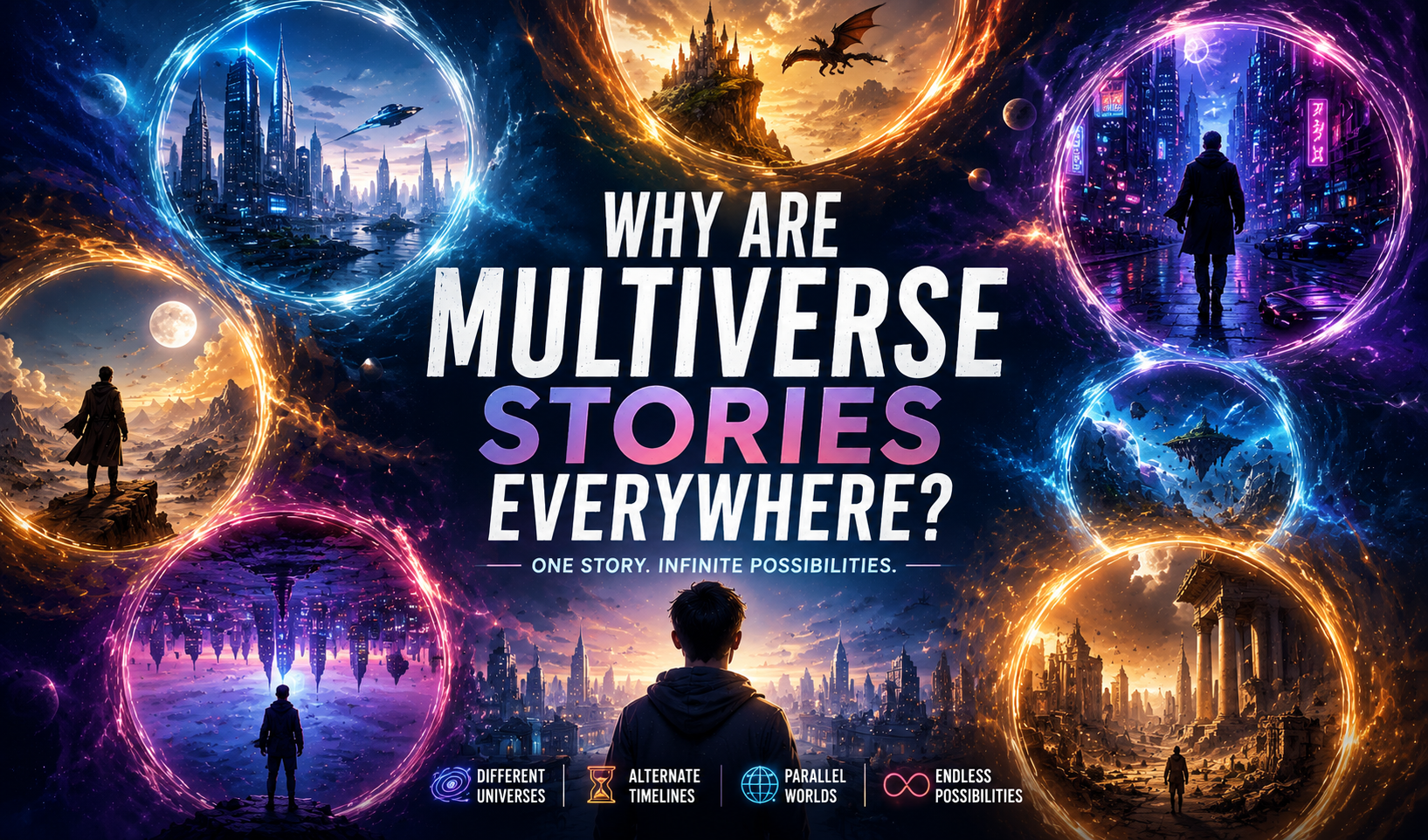

A few years ago, multiverse stories felt like a rare science fiction concept reserved for die-hard comic book readers or physics theorists. Today, they seem to be everywhere.
Whether you are watching live-action superhero blockbusters, streaming award-winning animated films, playing major video game titles, or browsing the newest fiction releases, alternate timelines and parallel universes have officially conquered the mainstream.
So, why has the multiverse become one of the biggest storytelling trends of the decade? Let's dive into the psychology, mechanics, and industry trends behind this pop culture phenomenon.
What Is a Multiverse?
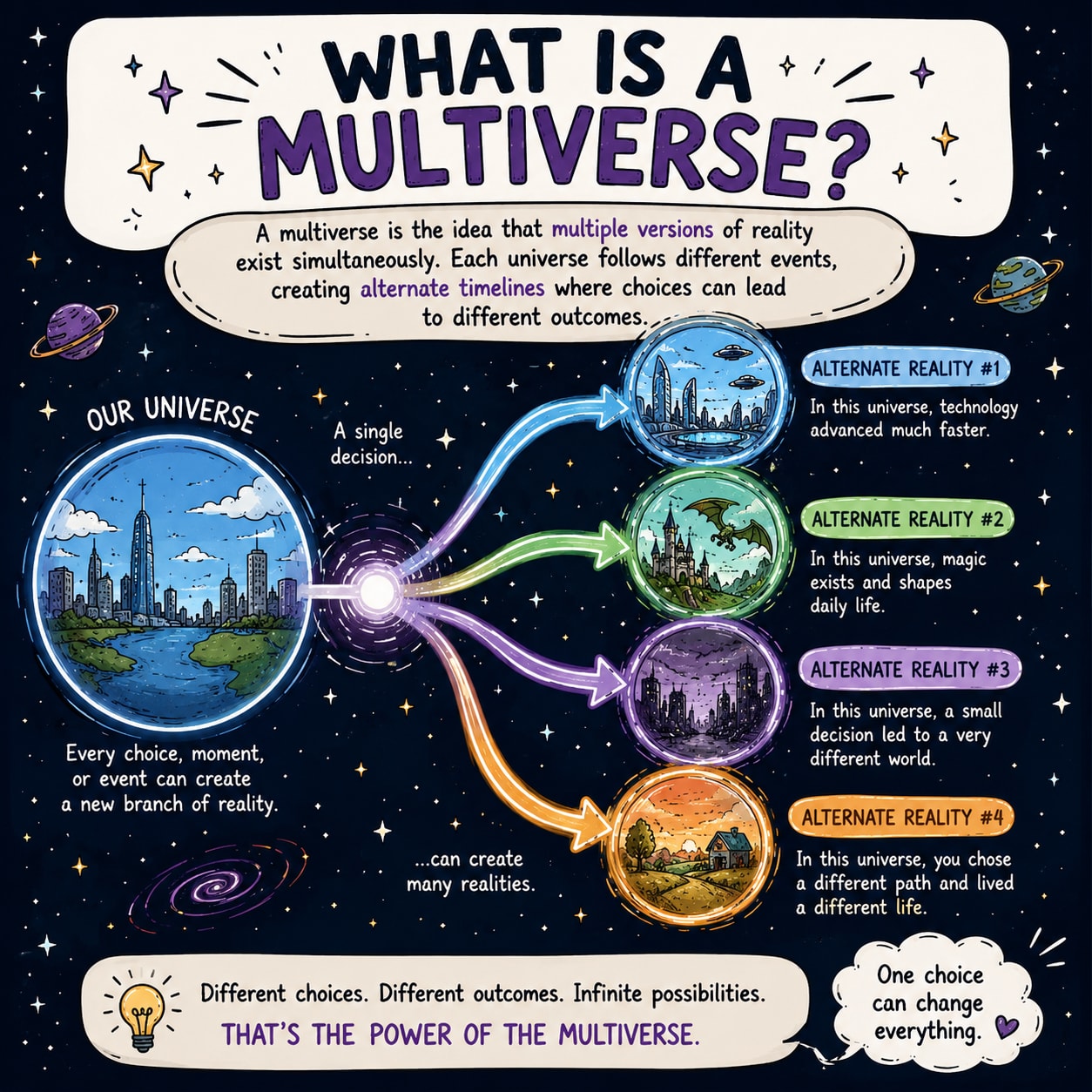
A multiverse is the idea that multiple versions of reality exist simultaneously. Each separate universe follows a different trajectory of events, creating alternate timelines where characters make different choices, historical outcomes shift, or entirely different laws of physics apply.
In plain English, think of the multiverse as a cosmic "Choose Your Own Adventure" book where every single choice creates a brand-new branch of reality. If you wore a blue shirt instead of a red shirt today, a parallel universe split off where that choice happened. Scale that concept up to cosmic proportions, and you have an infinite web of coexisting realities.
Why Are Multiverse Stories So Popular?
The explosion of this trend isn't an accident. Fictional blockbusters rely on the multiverse format because it solves several creative and business challenges at once.
1. Endless Creative Possibilities
When a story is confined to a single, linear timeline, writers are constrained by the rules and history they’ve already established. The multiverse completely shatters these boundaries.
Writers can reinvent classic characters, explore radical "what if" scenarios, and kill off major protagonists without permanently destroying a multi-million-dollar franchise. If a creative risk fails, they can simply hop back to the "prime" timeline.
2. Nostalgia Meets New Stories
The multiverse serves as the ultimate bridge between eras. It allows studios to bring back beloved, retired actors to play older versions of their famous characters alongside fresh faces.
Fans aren’t just treated to a standard sequel; they get to witness historic, cross-generational callbacks. Seeing different eras of a franchise collide on screen triggers a massive dopamine hit of nostalgia while still advancing a new narrative.
3. They Reward Long-Time Fans
In an era dominated by sprawling fictional universes, keeping up with decades of lore can feel like homework. Multiverse narratives flip this on its head by turning deep-cut lore into a reward. Long-time viewers are treated to subtle Easter eggs, hidden background references, and variant characters that make their years of fandom feel deeply validated.
4. They Make Big Franchises Bigger
The scale of modern entertainment demands higher stakes with every passing year. Once a hero has saved their neighborhood, their city, and their planet, where do they go next? The multiverse allows franchises to expand across genres seamlessly:
- Superheroes: Can fight variant versions of themselves or cosmic threats threatening trillions of lives across dimensions.
- Sci-Fi: Can blend hard quantum theory with surreal, abstract world-building.
- Fantasy: Can introduce parallel magical realms with completely distinct mythologies.
5. They Encourage Fan Theories
A massive driver of modern media success is the "second screen" experience—the discussions, breakdowns, and theories shared on Reddit, TikTok, and YouTube. Multiverse storylines are built-in theory engines. By leaving breadcrumbs about alternate worlds, creators fuel endless internet speculation, which keeps the property trending long after the credits roll.
6. They Reflect Modern Life
There is a fascinating psychological angle to our current obsession with parallel realities. Modern life is inherently overwhelming; we live in a highly digital world where algorithms curate distinct "alternate realities" for each person's feed.
Furthermore, we live with a constant undercurrent of choices. People constantly wonder: What if I had chosen a different career? What if I hadn't moved away? What if I texted them back? The multiverse externalizes our collective anxiety, regret, and curiosity, making it one of the most emotionally relatable concepts in modern fiction.
Movies and Shows That Popularized the Multiverse
While comic book movies have leaned heavily into the concept, the trend spans far beyond a single sub-genre. A diverse mix of indie darlings, animated masterpieces, and sci-fi hits have built this topical authority:
- Everything Everywhere All at Once: The indie darling that went on to dominate the Academy Awards. It used the multiverse as a brilliant metaphor for depression, generational trauma, and ADHD, proving the concept works as a deeply human drama.
- Spider-Man: Into the Spider-Verse & Across the Spider-Verse: These films revolutionized modern animation techniques while demonstrating how multiple variants of a classic hero could tell a cohesive, emotionally resonant story.
- Doctor Strange in the Multiverse of Madness: Pushed the visual boundaries of how chaotic, terrifying, and distinct parallel dimensions could look in a live-action blockbuster format.
- Loki: A critically acclaimed streaming series that introduced audiences to the bureaucratic nightmare of managing timelines, cementing concepts like "variants" into everyday slang.
- Rick and Morty: Long before blockbusters adopted the trend, this adult animated sci-fi sitcom used a portal gun to explore the dark, nihilistic comedy of infinite realities.
- The Flash: Explored the classic "Flashpoint" narrative, showcasing how changing one minor event in the past can ripple outward and completely restructure the future of an entire cinematic universe.
Are We Getting Too Many Multiverse Stories?
As with any major trend in Hollywood, the threat of over-saturation is real. A balanced look at the landscape shows that audience sentiment is beginning to split.
Many viewers are experiencing multiverse fatigue. When a story establishes that death is meaningless because a writer can grab an identical copy of a character from Earth-B, the dramatic stakes drop significantly. If nothing is permanent, it becomes harder for audiences to emotionally invest.
Additionally, keeping track of different timelines, rules, and anchor points can leave casual viewers feeling confused and overwhelmed. For the multiverse to retain its magic, creators must ensure the emotional stakes remain grounded, even if the setting is infinite.
What's Next After the Multiverse?
Pop culture moves in cycles. As the multiverse peak eventually levels off, what storytelling trends are poised to take its place?
- AI and Synthetic Consciousness Stories: As real-world AI rapidly evolves, narratives are pivoting toward the existential, intimate questions of human identity versus machine intelligence.
- Simulated realities & Virtual Worlds: Moving away from parallel cosmic dimensions and focusing instead on hyper-isolated digital landscapes, gaming realities, and corporate-owned metaverses.
- Time-Loop Narratives: Swapping the massive scale of infinite worlds for the hyper-focused, repetitive psychological puzzle of a single day or event replayed over and over.
- Interactive Storytelling: Leveraging advancing technology to let audiences actively dictate the narrative branching paths themselves, turning passive viewers into true multiversal choice-makers.
Wrapping Up...
Multiverse stories aren't tearing up the box office simply because they are visually exciting or packed with CGI action. They work because they allow creators to explore identity, choice, regret, possibility, and hope—all themes that resonate deeply with modern audiences navigating an increasingly complex world.
Whether the trend continues to expand or eventually fades into the next big narrative cycle, the multiverse has permanently reshaped the architecture of modern storytelling.