
For years, people have felt pressure to keep up with expensive dinners, luxury vacations, trendy gadgets, and social media lifestyles. Even when money was tight, many chose to spend beyond their means rather than admit they couldn't afford something.
But a new financial trend is challenging that mindset.
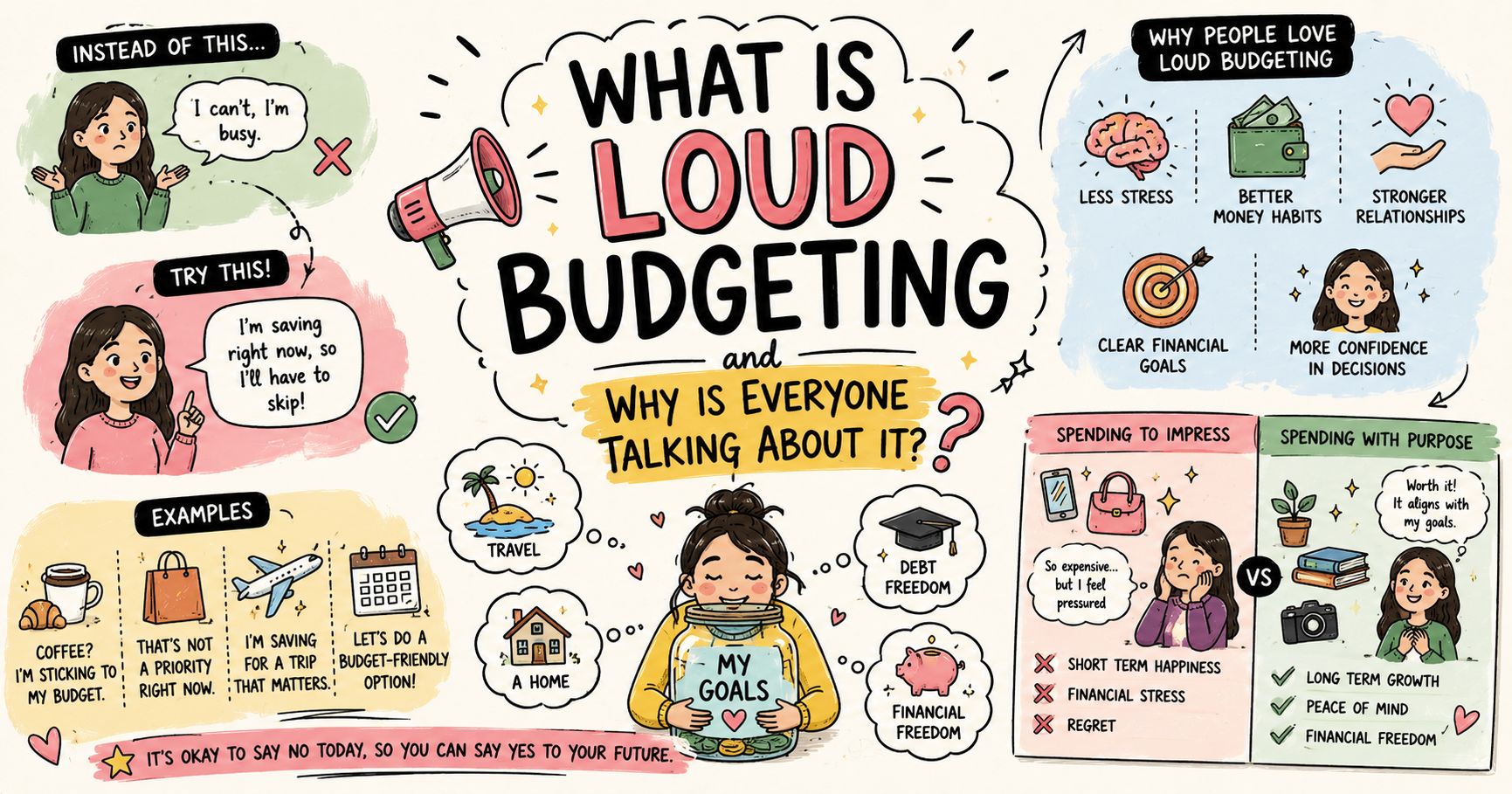
It's called loud budgeting, and it's quickly becoming one of the most talked-about money habits among Gen Z and Millennials. Instead of hiding financial limitations, loud budgeting encourages people to openly discuss their spending priorities and say "no" to unnecessary expenses without guilt or embarrassment.
So what exactly is loud budgeting, and why has it become such a cultural phenomenon?
What Is Loud Budgeting?
Loud budgeting is the practice of being honest and transparent about your financial goals and limitations.
Rather than making excuses for declining an invitation or avoiding a purchase, people practicing loud budgeting simply state the truth:
- "I'm saving money right now."
- "That's not in my budget."
- "I'd rather spend that money on something more important."
- "I'm prioritizing paying off debt."
The concept challenges the idea that people should hide financial concerns or spend money to maintain appearances.
At its core, loud budgeting is about removing the stigma around responsible money management.
Where Did Loud Budgeting Come From?
The term gained popularity on social media after creator Lukas Battle discussed the idea in a viral video.
His message resonated with millions of people who were tired of feeling pressured to spend money on things they didn't actually value.
The concept quickly spread across platforms like TikTok, Instagram, and X, becoming part of a larger conversation about financial wellness, consumerism, and changing attitudes toward money.
Why Is Loud Budgeting Trending Right Now?

The timing isn't accidental.
Several economic and social factors have made loud budgeting particularly appealing.
Rising Cost of Living
Housing, groceries, transportation, and everyday expenses have become significantly more expensive in recent years.
Many people are finding it harder to maintain their previous lifestyles while also saving for the future.
Economic Uncertainty
Concerns about inflation, job security, and economic slowdowns have encouraged people to become more intentional with their spending.
Social Media Fatigue
For years, social media encouraged a culture of comparison.
Luxury vacations, designer fashion, and expensive dining experiences became symbols of success.
Many people are now pushing back against the pressure to constantly showcase a perfect lifestyle.
Growing Financial Awareness
Younger generations are increasingly interested in personal finance topics such as:
- Investing
- Saving
- Budgeting
- Debt repayment
- Financial independence
Loud budgeting aligns naturally with these goals.
Loud Budgeting vs. Traditional Budgeting
Traditional budgeting often happens behind the scenes.
You create a spending plan, track expenses, and make financial decisions privately.
Loud budgeting takes it a step further by openly communicating those decisions.
For example:
Traditional Budgeting
You decline a weekend trip and say you're busy.
Loud Budgeting
You decline the trip and explain that you're saving for a house or building your emergency fund.
The difference isn't the budget itself—it's the transparency.
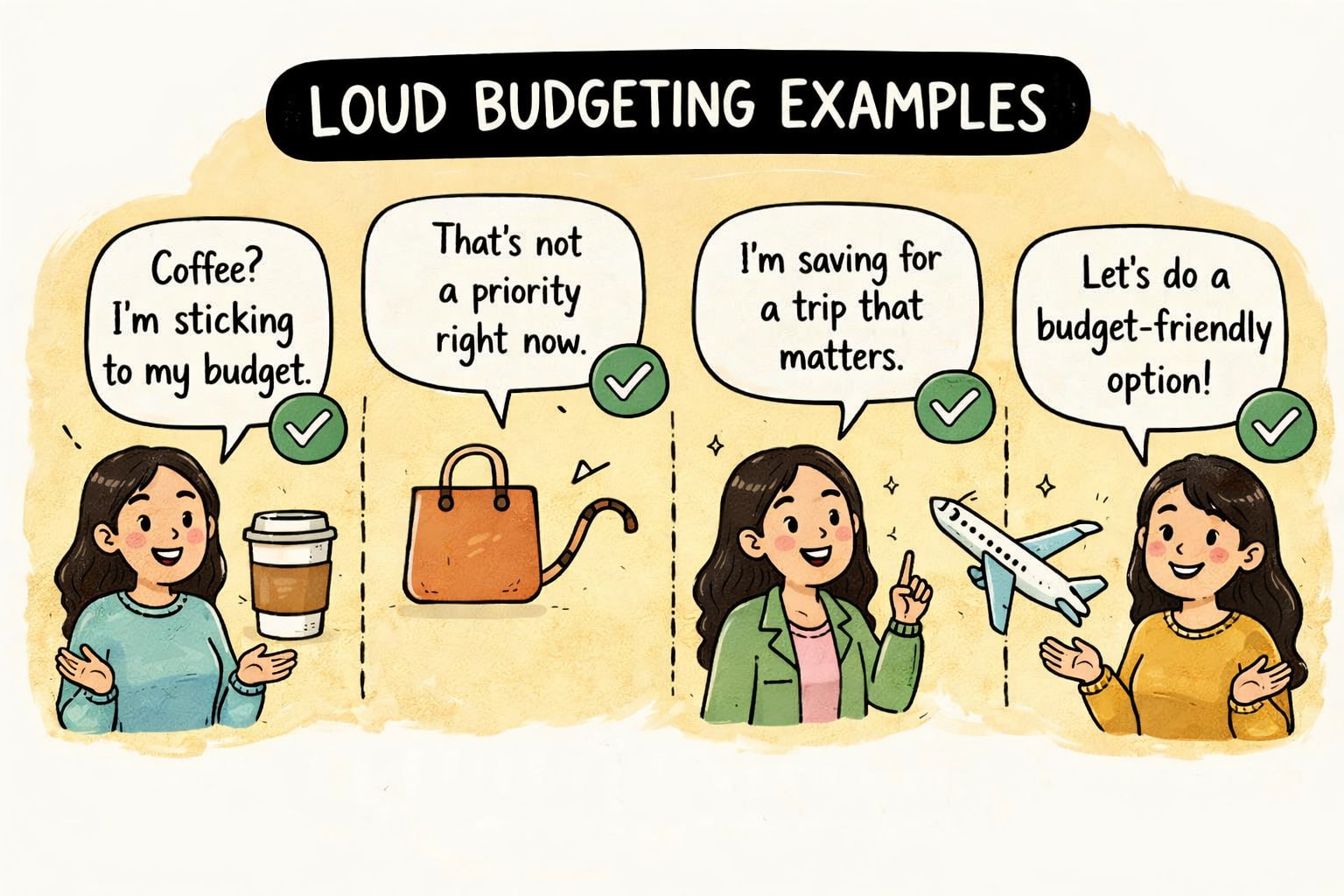
Real-Life Examples of Loud Budgeting
Loud budgeting can be applied to everyday situations.
1. Dining Out
Instead of spending ₹2,000 on a restaurant meal you don't really want, you might say:
"I've set a dining budget this month, so I'll skip this one."
2. Shopping
Rather than purchasing an expensive gadget because everyone else has one, you might say:
"I don't need it right now, and I'd rather save the money."
3. Travel
Instead of joining every group vacation, you may choose to focus on a future trip that's more meaningful to you.
4. Social Events
You can suggest lower-cost alternatives like:
- Coffee dates
- Home gatherings
- Picnics
- Movie nights
The goal isn't to avoid spending entirely—it's to spend intentionally.
Benefits of Loud Budgeting
1. Reduced Financial Stress
Being honest about your finances removes the pressure to keep up with others.
2. Better Savings Habits
When financial goals become public, many people find it easier to stay accountable.
3. Healthier Relationships
Open conversations about money often lead to stronger friendships and fewer misunderstandings.
4. Less Impulse Spending
Loud budgeting encourages people to evaluate purchases based on personal priorities rather than social expectations.
5. Greater Financial Confidence
People become more comfortable making decisions that align with their values rather than seeking approval from others.
Criticisms of Loud Budgeting
Like any trend, loud budgeting has its critics.
Some people argue that discussing finances openly can feel uncomfortable or overly personal.
Others believe the concept is simply traditional budgeting with a new name.
While those criticisms have merit, supporters argue that the real value lies in normalizing conversations about money and reducing the shame often associated with financial boundaries.
Is Loud Budgeting Just a Gen Z Trend?
Although Gen Z helped popularize the concept, loud budgeting appeals to people of all ages.
Anyone who wants to:
- Save more money
- Reduce unnecessary spending
- Avoid lifestyle inflation
- Focus on long-term financial goals
can benefit from the approach.
In many ways, loud budgeting reflects a broader cultural shift toward authenticity and intentional living.
How to Start Loud Budgeting
If you'd like to try loud budgeting, start with these simple steps:
1. Define Your Financial Goals
Know what you're saving for, whether it's:
- An emergency fund
- Travel
- A home
- Debt repayment
- Retirement
2. Practice Honest Communication
When declining an expense, explain your reasoning clearly and confidently.
3. Stop Apologizing
You don't need to feel guilty for prioritizing your financial well-being.
4. Focus on Your Values
Spend money on what genuinely matters to you and cut back on what doesn't.
5. Find Like-Minded People
Surrounding yourself with friends who respect financial boundaries makes the process much easier.
Final Thoughts
Loud budgeting is more than a social media trend. It's a response to rising living costs, economic uncertainty, and the pressure to maintain appearances in a highly connected world.
By encouraging honest conversations about money, loud budgeting helps people spend with intention, save for meaningful goals, and reduce financial stress.
As more people prioritize financial health over social expectations, loud budgeting may become less of a trend and more of a lasting shift in how we think about money.