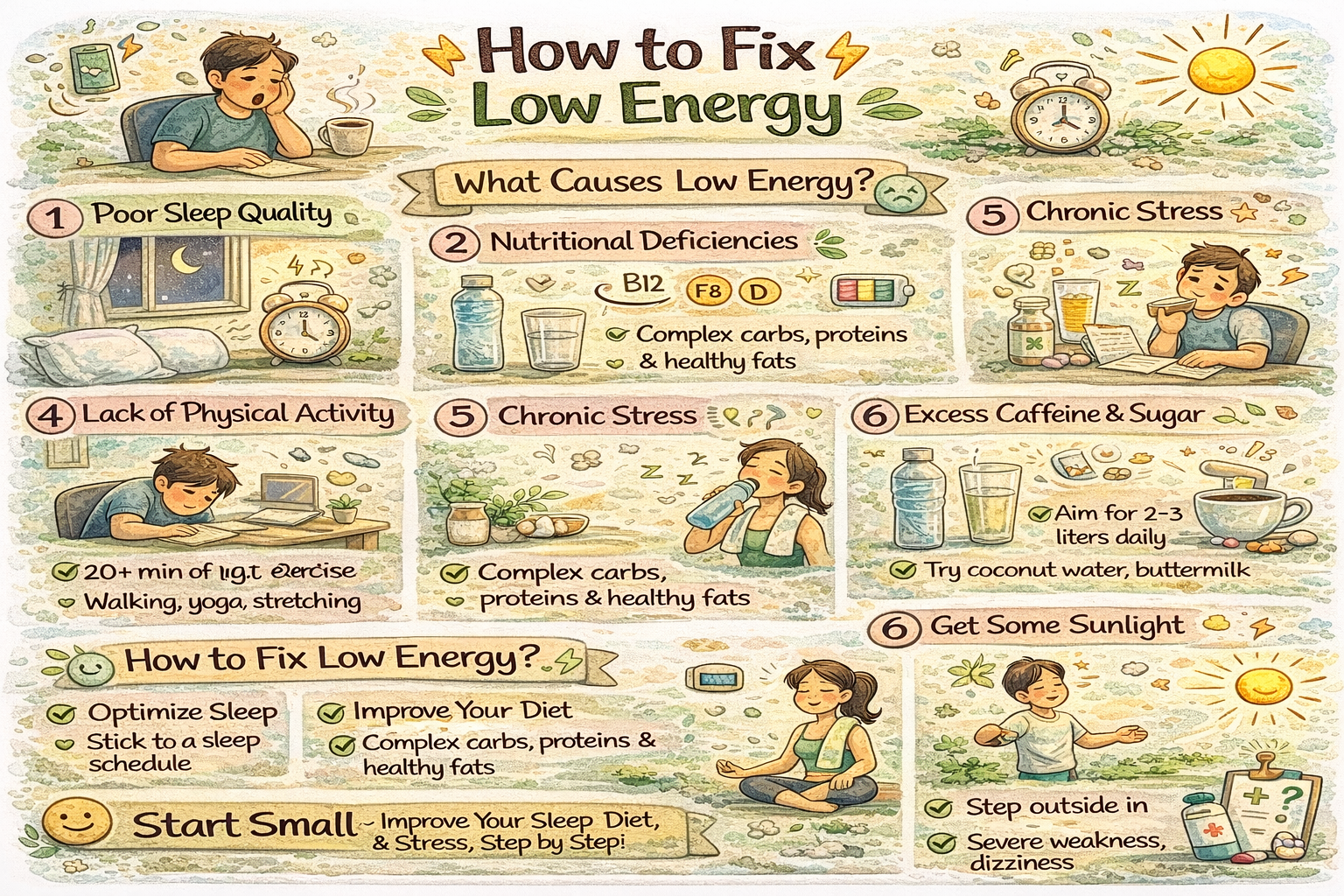

Feeling low on energy isn’t just about being “tired.” Persistent fatigue can affect your productivity, mood, and overall health. The key to fixing low energy is understanding its root causes and addressing them with targeted, sustainable habits.
What Causes Low Energy?

1. Poor Sleep Quality
Sleep is the primary recovery mechanism for your body. Inconsistent sleep schedules, excessive screen time before bed, or insufficient sleep (less than 6-7 hours) can disrupt hormonal balance and reduce energy levels.
2. Nutritional Deficiencies
Your body relies on nutrients to produce energy. Common deficiencies include:
- Iron – Low levels can lead to fatigue and weakness
- Vitamin B12 – Essential for nerve function and energy metabolism
- Vitamin D – Linked to mood and overall vitality
Skipping meals or relying on processed foods can worsen this.
3. Dehydration
Even mild dehydration can cause fatigue, headaches, and reduced concentration. Water is crucial for circulation, oxygen delivery, and cellular function.
4. Lack of Physical Activity
It may seem counterintuitive, but a sedentary lifestyle reduces energy levels. Regular movement improves blood flow, oxygen delivery, and mitochondrial efficiency (how your cells produce energy).
5. Chronic Stress
Stress triggers the release of cortisol. While helpful in short bursts, prolonged stress leads to mental exhaustion, poor sleep, and burnout, all of which drain energy.
6. Excess Caffeine & Sugar
Temporary spikes from caffeine or sugary foods often lead to energy crashes, leaving you more fatigued than before.
Signs Your Low Energy Needs Attention
- Constant fatigue despite resting
- Difficulty concentrating or brain fog
- Irritability or low motivation
- Frequent headaches or body aches
If these persist, it may be worth consulting a healthcare professional.
How to Fix Low Energy (Scientifically Backed Tips)
1. Optimize Your Sleep Routine

- Maintain a consistent sleep schedule
- Avoid screens at least 30 minutes before bed
- Keep your sleeping environment cool and dark
Quality sleep directly restores energy and cognitive function.
2. Improve Your Diet

Focus on balanced meals with:
- Complex carbohydrates (oats, brown rice)
- Proteins (eggs, dal, paneer)
- Healthy fats (nuts, seeds)
Avoid long gaps between meals to maintain stable blood sugar levels.
3. Stay Properly Hydrated
Start your day with water and aim for 2–3 liters daily. Include natural fluids like coconut water or buttermilk for added electrolytes.
4. Move Your Body Daily
Even 20–30 minutes of light exercise—walking, stretching, or yoga—can significantly improve energy by boosting circulation and endorphins.
5. Manage Stress Effectively
Incorporate:
- Deep breathing or meditation
- Short breaks during work
- Limiting digital overload
These reduce cortisol levels and improve mental clarity.
6. Get Sunlight Exposure
Morning sunlight helps regulate your circadian rhythm and boosts Vitamin D levels, both essential for sustained energy.
Helpful Products to Support Your Energy Levels
- The Body Reserve Vitamin B12 Supplement – Supports energy metabolism
- Fast & Up Low Sugar Energy Drink – Useful for instant hydration and electrolytes
- Fast & Up Multivitamins – Helps fill nutritional gaps
(Always consult a doctor before starting supplements.)
When to Seek Medical Help
If your fatigue:
- Lasts for weeks
- Is accompanied by dizziness, weight changes, or severe weakness
- Affects daily functioning
…it could indicate underlying conditions like anemia, thyroid issues, or sleep disorders.
Low energy is rarely caused by a single factor—it’s usually a combination of sleep, nutrition, stress, and lifestyle habits. The solution lies in consistent, small improvements rather than quick fixes.
Start today by fixing one area your sleep, hydration, or diet and build from there. Sustainable energy comes from sustainable habits.
Read more about tips to stay healthy: 6 Ayurveda Tips for Everyday Health