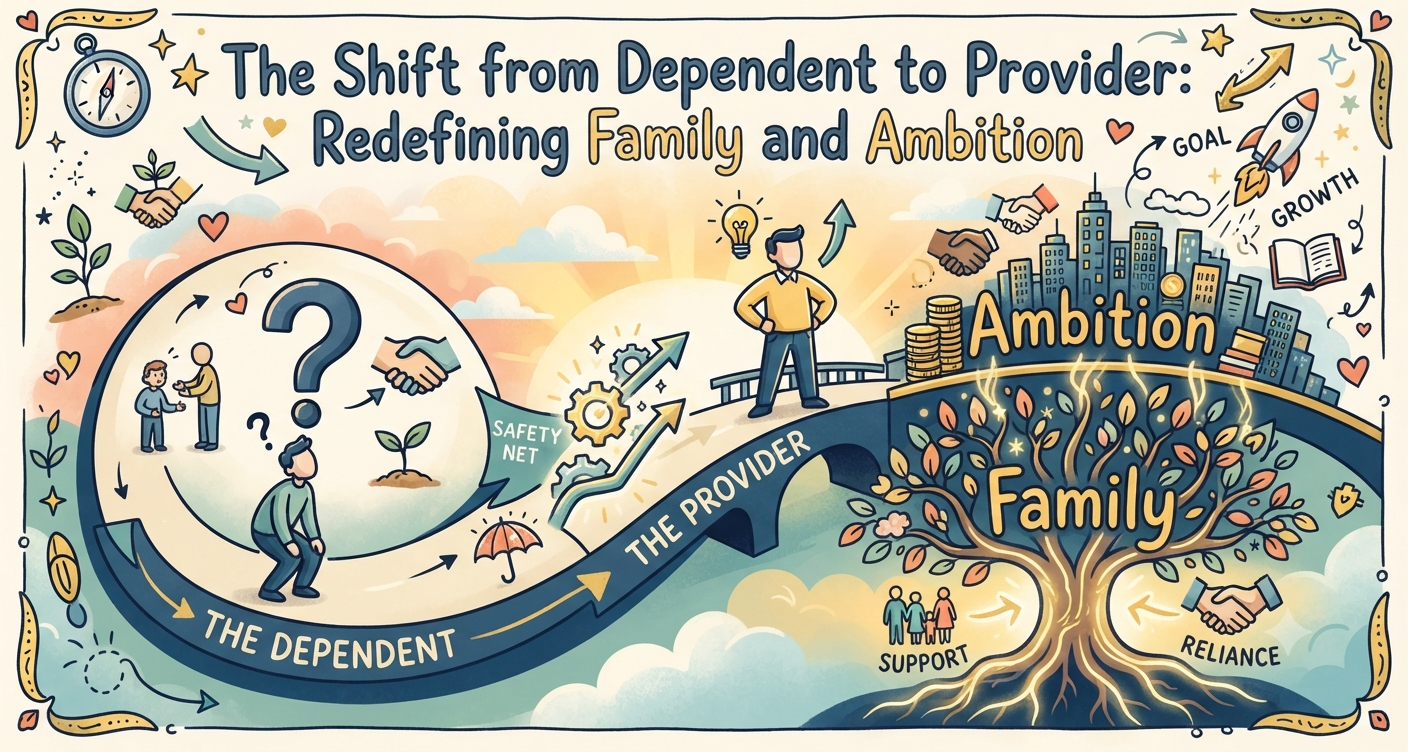

Stop Looking for a Safety Net: Why True Success Means Becoming the Anchor
We have all grown up hearing the same traditional advice:
"Keep your family and relatives close; you never know when you will need their help during a crisis."
On the surface, it sounds like practical wisdom. It teaches us to value relationships and build a supportive community.But if you look closely at the psychology behind it, is that relationship built on genuine love, or is it built on a hidden safety net of fear?Operating with the mindset of keeping people close just in case things go wrong is fundamentally opportunistic. It means your baseline assumption for the future is failure. You are preparing for a crash before you even finish building your vehicle.
The Flaw of the Backup Plan Mentality
When you keep a backup plan in your back pocket, your subconscious mind relaxes its efforts. Why push through the absolute limits of your potential today if you know Uncle or a relative can bail you out tomorrow?Extreme ambition doesn't coexist with comfortable safety nets. If you want to achieve extraordinary things, you have to burn the boats. You have to shift your perspective completely: Stop trying to be the person who needs a rescue, and start working to become the rescue itself.
How to Shift from Seeking Security to Being the Source of Security
If you want to make this mindset true in your own life and prove that you don't need a backup plan, you have to follow a rigorous, execution-focused path. Here is how you can do it:
Embrace Absolute Accountability:Stop blaming external circumstances or waiting for someone to clear your path. Take 100% responsibility for your financial and personal outcomes.Relentless Skill Acquisition:Shift your focus from consuming content to building high-income, high-leverage skills (like tech, sales, creation, or strategy) that the market rewards heavily. When your value increases, your dependency on others drops to zero.Redefine Your Inner Circle:Stop hanging out with people who plan for failure. Surround yourself with high-achievers who are building their own empires rather than looking for handouts.Shift Your Utility in the Family:Instead of calling relatives when you are in trouble, change the dynamic so they call you for guidance, leadership, and support when they face difficulties. That is the ultimate marker of transformation.
Conclusion
Self-reliance isn't about isolating yourself or cutting people off; it is about elevating your capacity so much that your presence brings strength to a room rather than a burden. When you stop looking for a safety net, you force yourself to learn how to fly. And once you succeed, you won't just secure your own life—you will become the pillar on which your entire family can safely stand.
Key Takeaways (Bullet Points for Quick Reading)
- The Trap of the Safety Net: Relying on relatives or friends "just in case" conditions your mind to accept failure.
- The Power of Extreme Self-Reliance: True ambition requires building success without an exit strategy or a fallback option.
- The Shift in Dynamic: The goal is to move from being someone who asks for help during a crisis to becoming the strong pillar others depend on.
- Actionable Growth: Focus on financial independence, high-income skill building, and absolute personal accountability.