
Have You Ever Felt Like Everyone Else Is Living a Better Life?
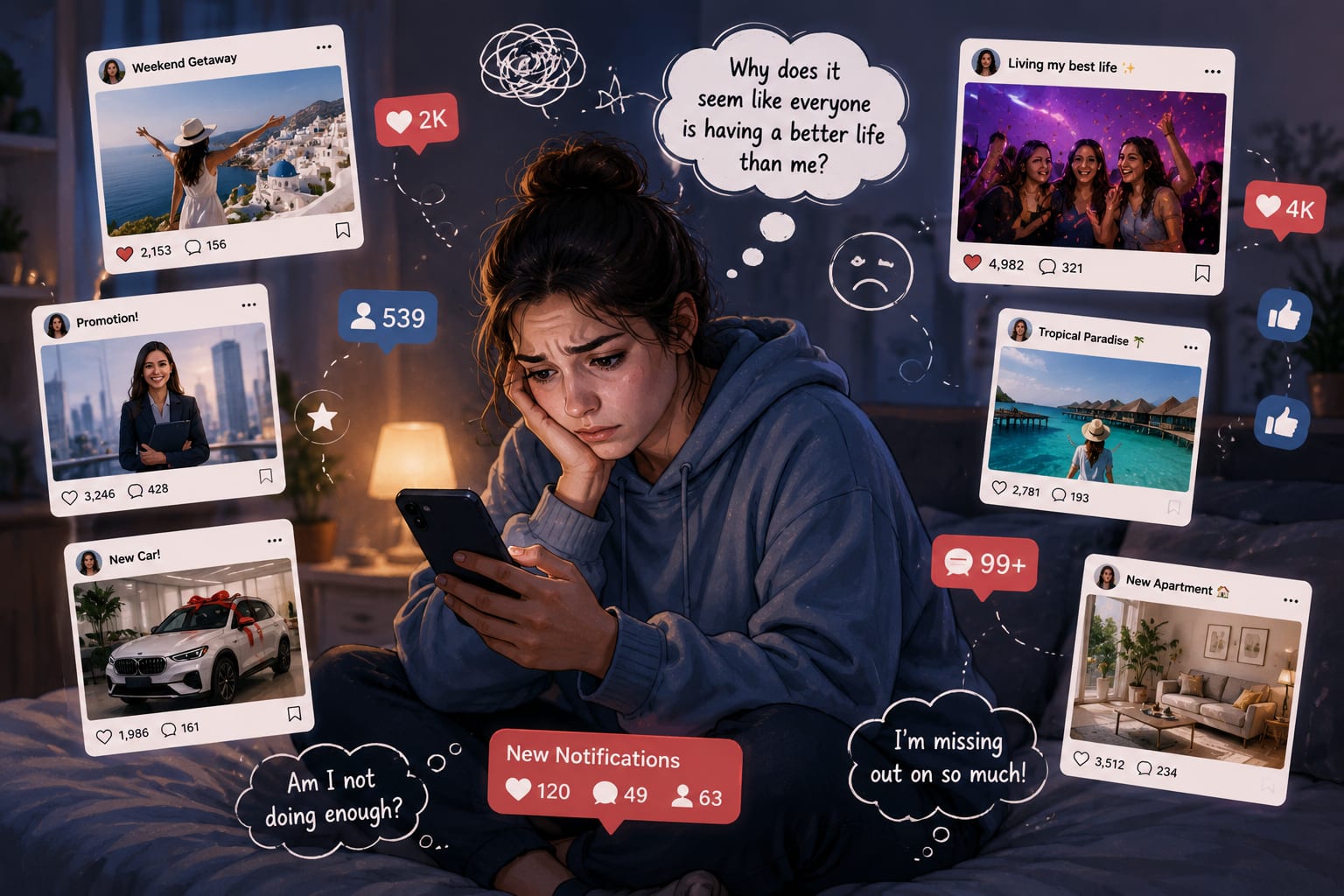
You're scrolling through Instagram.
A friend is vacationing in Bali.
Another just landed a dream job.
Someone else is attending a concert you've wanted to see for months.
Within a few minutes, you start wondering:
"Am I falling behind?"
"Should I be doing more with my life?"
"Why does it seem like everyone else is having more fun?"
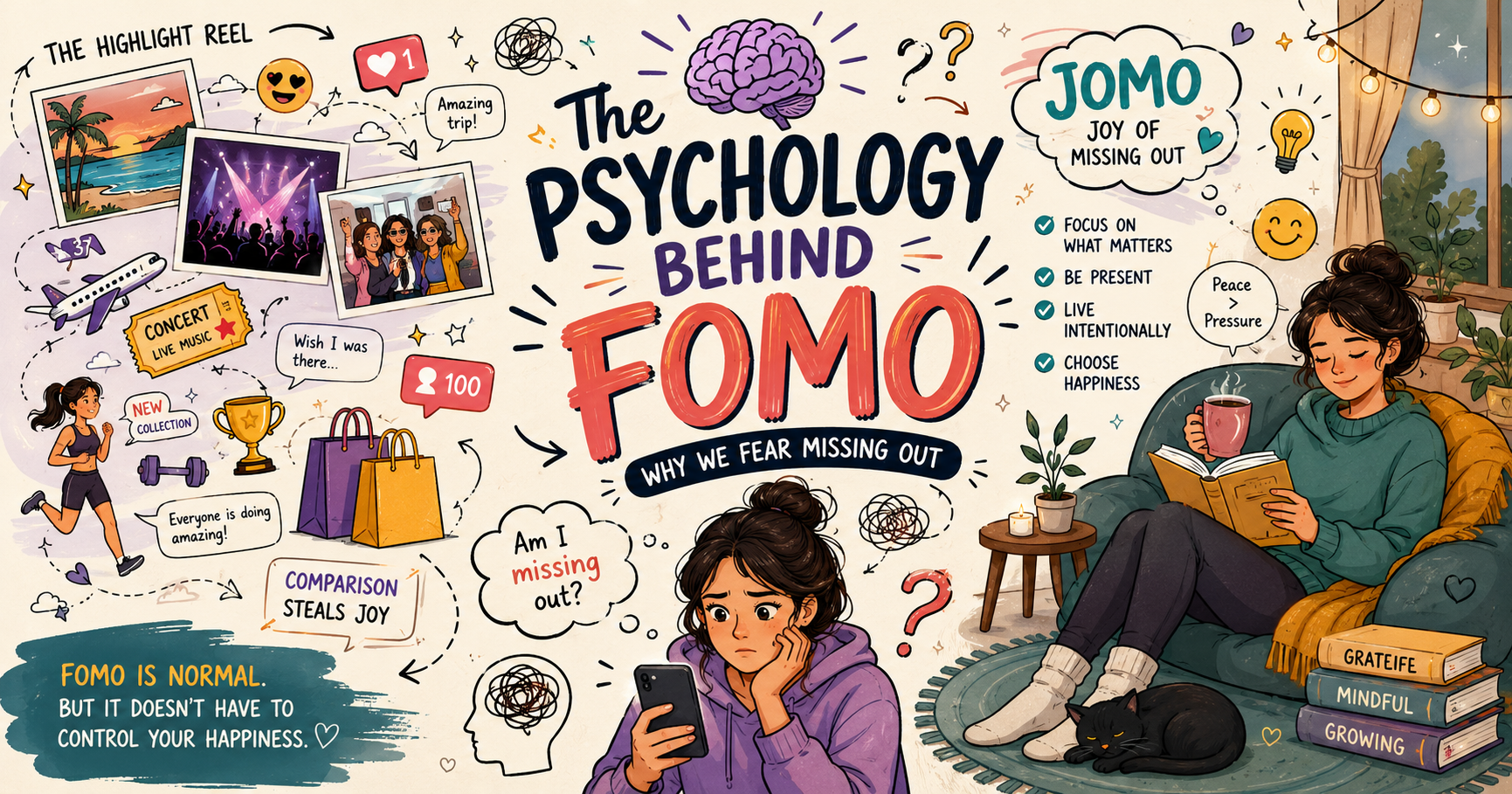
That uncomfortable feeling has a name: FOMO, or Fear of Missing Out.
It's one of the most common psychological experiences of the digital age. While social media has made it easier than ever to stay connected, it has also made it easier to compare our lives with carefully curated moments from others.
But why does FOMO happen? And why is our brain so vulnerable to it?
Let's look at the psychology behind FOMO, what science says about it, and how you can stop it from controlling your happiness.
What Is FOMO?
Fear of Missing Out (FOMO) is the anxiety that other people are having rewarding experiences without you.
It often creates the feeling that you should be somewhere else, doing something better, or living a more exciting life.
FOMO isn't limited to parties or vacations.
People experience it when they see:
- Friends traveling
- Career promotions
- Relationship milestones
- Viral trends
- Luxury purchases
- Fitness transformations
- Investment success stories
- Exclusive events
At its core, FOMO is less about missing an event and more about fearing you're missing a better version of life.
The Psychology Behind FOMO
FOMO isn't simply a product of social media. It stems from several psychological processes that have shaped human behavior for thousands of years.
1. Humans Naturally Compare Themselves to Others
Psychologist Leon Festinger introduced Social Comparison Theory, which suggests that people evaluate themselves by comparing their lives with those around them.
Thousands of years ago, comparison helped humans survive.
Today, however, social media exposes us to hundreds—or even thousands—of comparisons every day.
Instead of comparing yourself with a few neighbors, you're comparing yourself with influencers, celebrities, entrepreneurs, athletes, and people sharing only their highlight reels.
2. Your Brain Pays More Attention to Rewards
Our brains are wired to notice rewarding experiences.
When you see someone enjoying an exciting trip, buying a new home, or celebrating a success, your brain naturally imagines how rewarding that experience might feel.
The problem?
You see the reward—but not the stress, sacrifices, or setbacks behind it.
This creates the illusion that everyone else's life is constantly exciting.
3. Social Media Creates the "Highlight Reel" Effect
Most people don't post:
- Their boring Mondays
- Failed interviews
- Financial worries
- Relationship arguments
- Sleepless nights
Instead, they share vacations, celebrations, achievements, and picture-perfect moments.
When you're constantly consuming these highlights, your ordinary day can begin to feel disappointing—even though it's completely normal.
4. Scarcity Makes Opportunities Feel More Valuable
Ever noticed how an event seems more exciting once tickets sell out?
That's because our brains place greater value on things that appear scarce or exclusive.
Limited-time offers, exclusive invitations, and trending experiences all trigger the fear that if you don't act now, you'll miss something important.
Marketers and social media platforms often use this psychological principle to capture attention.
5. Belonging Is a Basic Human Need
Humans are social creatures.
Feeling included has always been important for survival and well-being.
When we see friends gathering without us or colleagues attending events we're not part of, our brain may interpret exclusion as a social threat—even when no one intended to leave us out.
This explains why FOMO can feel surprisingly emotional.
How Social Media Amplifies FOMO
Social media doesn't create FOMO, but it certainly magnifies it.
Platforms are designed to keep users engaged by constantly showing fresh content:
- Vacation photos
- Wedding announcements
- Fitness transformations
- New gadgets
- Career achievements
- Viral experiences
Because you're exposed to so many positive moments in such a short time, it becomes easy to believe that everyone else is progressing faster than you.
Signs You Might Be Experiencing FOMO
FOMO often appears in subtle ways.
Some common signs include:
- Checking your phone repeatedly for updates
- Feeling disappointed after browsing social media
- Comparing your achievements with others
- Saying "yes" to plans you don't actually enjoy
- Constantly worrying about missing opportunities
- Feeling restless when you're offline
- Difficulty enjoying the present moment
Recognizing these patterns is the first step toward changing them.
FOMO vs. JOMO: A New Way of Thinking
In recent years, a new idea has gained popularity: JOMO, or the Joy of Missing Out.
Instead of feeling anxious about what you're not doing, JOMO encourages appreciating what you are doing.
FOMOJOMOFear of missing experiencesEnjoying the present momentConstant comparisonSelf-acceptanceDriven by social pressureDriven by personal valuesEndless scrollingIntentional livingAnxiety about opportunitiesSatisfaction with meaningful choices
JOMO doesn't mean avoiding social life—it means choosing experiences that genuinely matter to you rather than chasing every trend.
How to Reduce FOMO Without Disconnecting Completely
You don't need to delete every social media app to feel better.
Small changes can make a significant difference.
1. Limit Mindless Scrolling
Set specific times for checking social media instead of opening apps whenever you're bored.
2. Remember That Social Media Is Curated
Most people share their best moments, not their entire lives.
Comparing your everyday reality to someone else's highlights will always feel unfair.
3. Focus on Your Own Goals
Instead of asking, "What is everyone else doing?"
Ask:
"What actually matters to me?"
Personal goals provide direction that isn't influenced by trends.
4. Practice Gratitude
Taking a few moments each day to appreciate what you already have can shift your attention away from what's missing.
5. Spend More Time Offline
Simple activities like walking, reading, cooking, or spending time with loved ones remind you that meaningful experiences don't always need to be shared online.
Is FOMO Always Bad?
Not necessarily.
In small amounts, FOMO can encourage people to:
- Try new experiences
- Stay socially connected
- Explore new opportunities
- Learn new skills
The problem begins when FOMO creates chronic anxiety, comparison, or dissatisfaction with everyday life.
Balance is the key.
The Future of FOMO
Interestingly, many people are beginning to push back against constant comparison.
Movements like:
- Slow living
- Digital minimalism
- Mindful technology use
- Intentional living
are encouraging people to spend less time chasing what everyone else is doing and more time creating lives that align with their own values.
In many ways, the rise of these movements is a response to years of nonstop comparison.
Final Thoughts
The psychology behind FOMO reminds us that our brains are naturally wired to compare, seek rewards, and value social connection. In today's digital world, those instincts are constantly triggered by curated feeds, viral trends, and endless updates.
The important thing to remember is that social media rarely shows the full story. Everyone has ordinary days, setbacks, and moments of uncertainty—they just don't make the highlight reel.
Instead of measuring your life against someone else's best moments, focus on experiences that genuinely matter to you. Real fulfillment comes from living intentionally, not from trying to keep up with every trend.