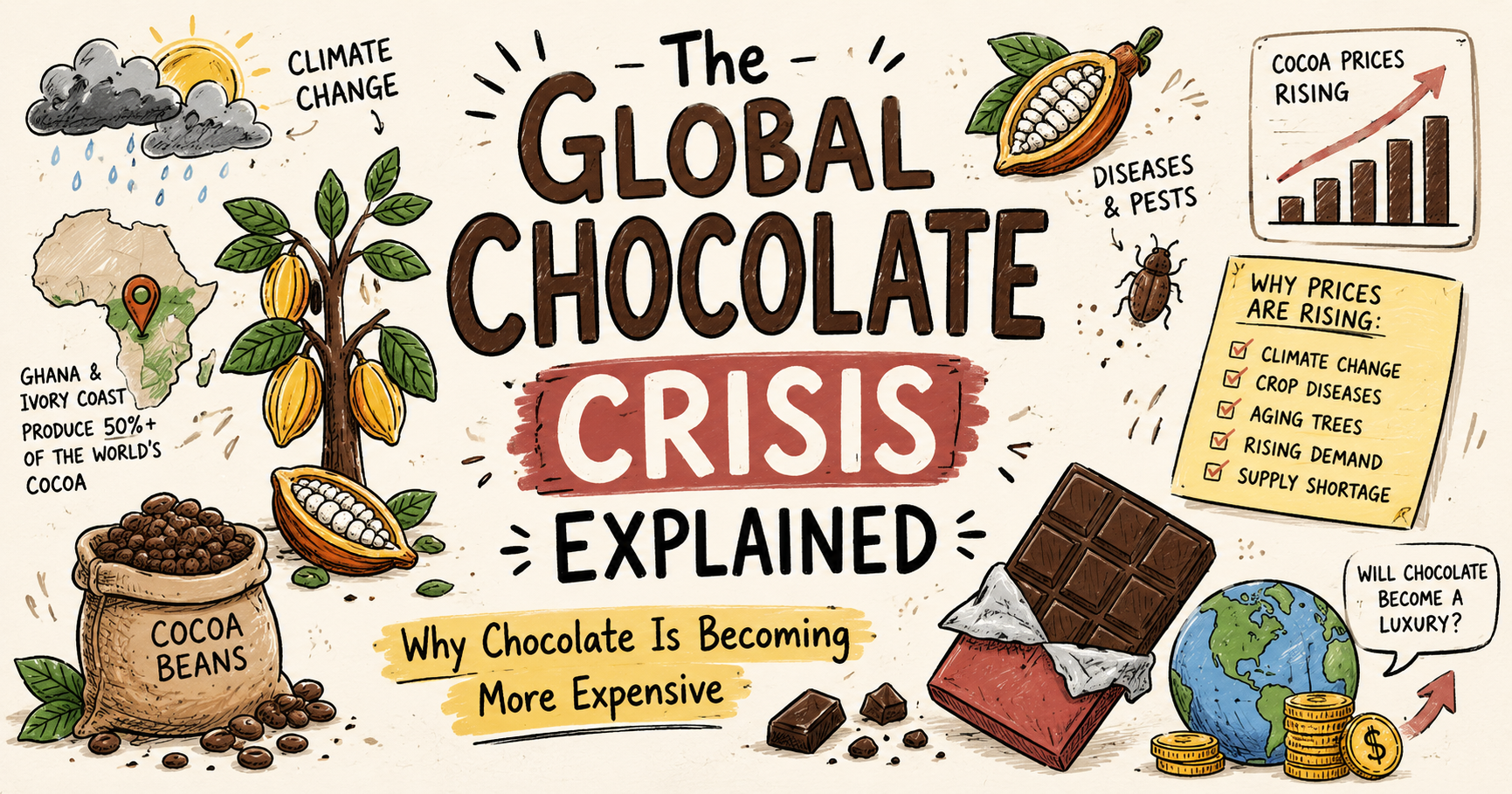

Chocolate has long been one of the world's favorite treats. Whether it's a simple candy bar, a gourmet dessert, or a comforting cup of hot cocoa, chocolate is deeply woven into everyday life.
But recently, consumers around the globe have noticed something unusual: chocolate prices are rising, package sizes are shrinking, and some products are becoming harder to find.
So what's happening?
The answer lies in a growing global chocolate crisis driven by climate change, crop diseases, supply chain disruptions, and increasing demand. Here's everything you need to know about why chocolate is becoming more expensive and what the future may hold for this beloved indulgence.
Why Are Chocolate Prices Rising?
The primary reason behind rising chocolate prices is a shortage of cocoa, the key ingredient used to make chocolate.
Cocoa beans come from cocoa trees that grow in tropical regions near the equator. While chocolate is consumed worldwide, cocoa production is concentrated in a handful of countries. When production falls in these regions, the entire global chocolate industry feels the impact.
In recent years, cocoa supplies have struggled to keep up with demand, creating significant pressure on manufacturers and consumers alike.
The Importance of Ghana and Ivory Coast
More than half of the world's cocoa supply comes from two West African nations:
- Ivory Coast
- Ghana
These countries serve as the backbone of the global chocolate industry. Major chocolate manufacturers rely heavily on cocoa harvested from farms across these regions.
When weather conditions, diseases, or economic challenges affect production in these countries, cocoa prices can surge rapidly across international markets.
How Climate Change Is Affecting Cocoa Production
One of the biggest contributors to the current cocoa shortage is climate change.
Cocoa trees require specific environmental conditions to thrive. They are sensitive to changes in temperature, rainfall, and humidity.
Over the past several years, cocoa-producing regions have experienced:
- Extreme rainfall
- Prolonged droughts
- Rising temperatures
- Unpredictable weather patterns
These conditions reduce crop yields and make it harder for farmers to maintain healthy cocoa plantations.
Scientists have warned that climate change could make some cocoa-growing regions less suitable for farming in the future, potentially threatening long-term chocolate production.
Crop Diseases Are Damaging Harvests
In addition to climate challenges, cocoa farmers are battling diseases and pests that attack cocoa trees.
Common threats include:
- Black pod disease
- Swollen shoot virus
- Various insect infestations
These problems can destroy crops, reduce productivity, and increase farming costs.
When disease outbreaks spread across major cocoa-growing regions, global cocoa supplies decline, leading to higher prices throughout the chocolate industry.
Aging Cocoa Trees Are Reducing Output
Many cocoa farms rely on older trees that naturally produce fewer cocoa pods over time.
Replacing aging trees requires significant investment, labor, and patience. Newly planted cocoa trees can take several years before they begin producing harvestable beans.
As a result, many farmers struggle to modernize their plantations quickly enough to meet growing global demand.
Global Demand for Chocolate Continues to Grow
While cocoa production faces challenges, demand for chocolate remains strong.
Emerging markets across Asia, Latin America, and the Middle East are consuming more chocolate than ever before. Rising incomes and expanding middle classes have increased global demand for cocoa-based products.
This creates a simple economic reality:
When demand rises while supply falls, prices increase.
The current chocolate crisis is a textbook example of this imbalance.
Why Chocolate Bars Are Getting Smaller
Many consumers have noticed another trend besides higher prices: smaller chocolate bars.
This practice is often referred to as "shrinkflation."
Instead of dramatically increasing prices, manufacturers reduce product size while keeping packaging and pricing relatively similar.
Examples include:
- Smaller candy bars
- Reduced package weights
- Fewer pieces per package
For consumers, the result is effectively paying more for less chocolate.
How Chocolate Companies Are Responding
Major chocolate brands are adapting to rising cocoa costs in several ways:
1. Increasing Retail Prices
Many companies have passed some of the increased cocoa costs directly to consumers through higher shelf prices.
2. Reformulating Products
Some manufacturers are experimenting with alternative ingredients or adjusting recipes to reduce dependence on cocoa.
3. Investing in Sustainable Farming
Large chocolate companies are funding programs designed to help farmers improve productivity, combat disease, and adapt to climate change.
These investments aim to stabilize future cocoa supplies and reduce long-term risks.
Could Chocolate Become a Luxury Product?
Chocolate is unlikely to disappear, but premium and specialty chocolates may become increasingly expensive.
If cocoa shortages persist and climate pressures worsen, consumers could face:
- Higher chocolate prices
- Limited product availability
- Increased demand for premium alternatives
- Greater focus on sustainably sourced cocoa
While everyday chocolate products will remain widely available, consumers may need to adjust to a future where chocolate costs significantly more than it did in previous decades.
What Consumers Can Expect in the Coming Years
The global chocolate market is entering a period of transformation.
Experts expect cocoa prices to remain volatile as farmers, manufacturers, and governments work to address production challenges.
Consumers should expect:
- Continued price fluctuations
- Ongoing shrinkflation in some products
- Increased focus on sustainable cocoa farming
- Growing awareness of climate-related food supply issues
The future of chocolate depends on improving agricultural resilience, supporting cocoa farmers, and adapting to changing environmental conditions.