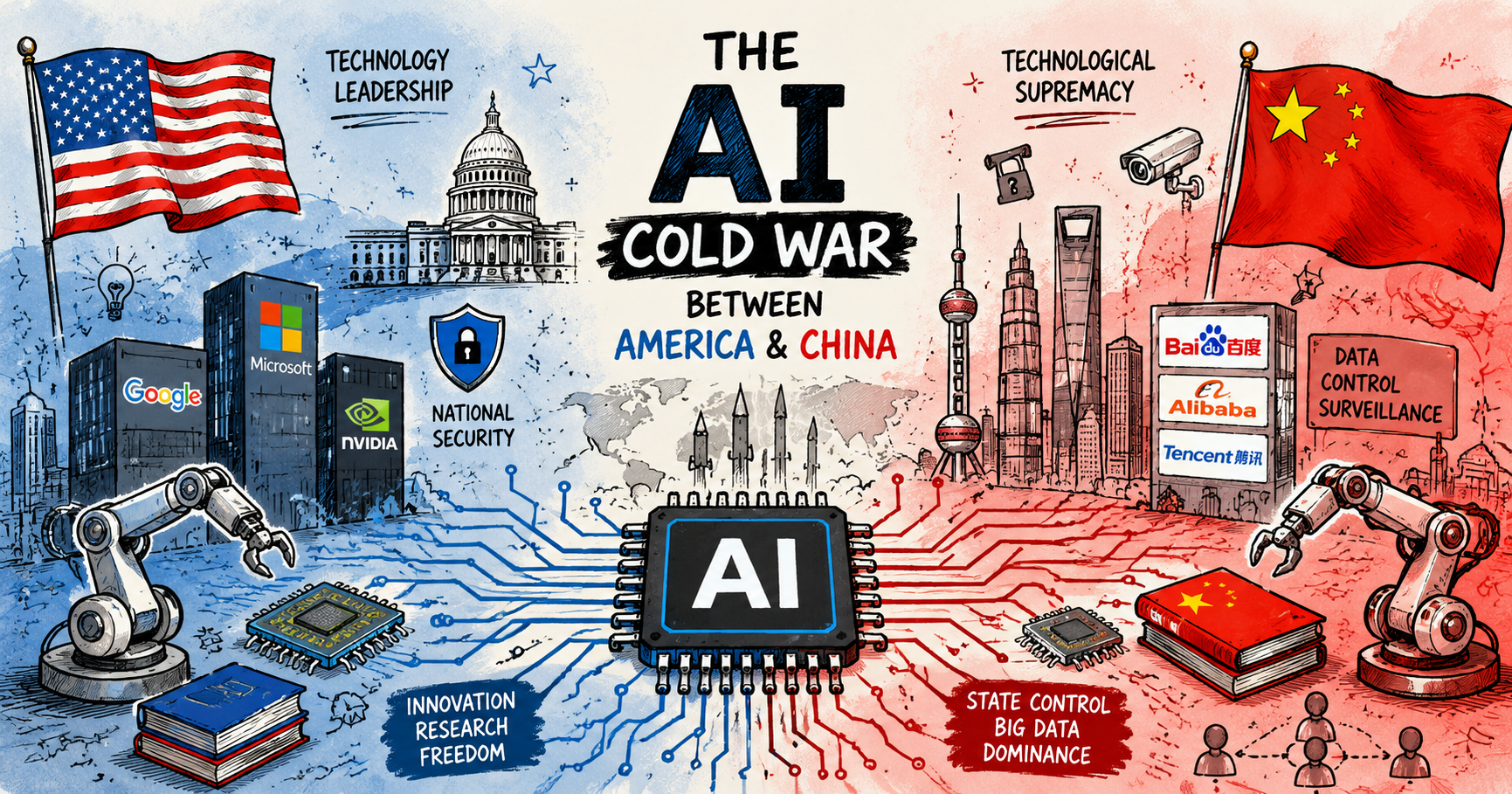

The next global superpower battle may not begin with tanks, missiles, or soldiers.
It may begin with algorithms.
Artificial Intelligence is rapidly becoming the most powerful technology of the 21st century, and two nations are racing to dominate it: United States and China.

What started as a technological competition has now evolved into something much bigger — a geopolitical struggle involving economic power, military strength, cybersecurity, surveillance, and global influence.
Many analysts now believe the world is entering a new kind of Cold War. But unlike the original Cold War between the US and Soviet Union, this one is being fought with AI models, semiconductor chips, data, and technological innovation.
And its impact could shape the future of global politics for decades.
Why AI Has Become So Important
Artificial Intelligence is no longer just about chatbots or image generators.
Governments now see AI as a strategic national asset capable of transforming:
- military operations
- intelligence gathering
- healthcare
- financial systems
- manufacturing
- surveillance
- cybersecurity
- education
- global commerce

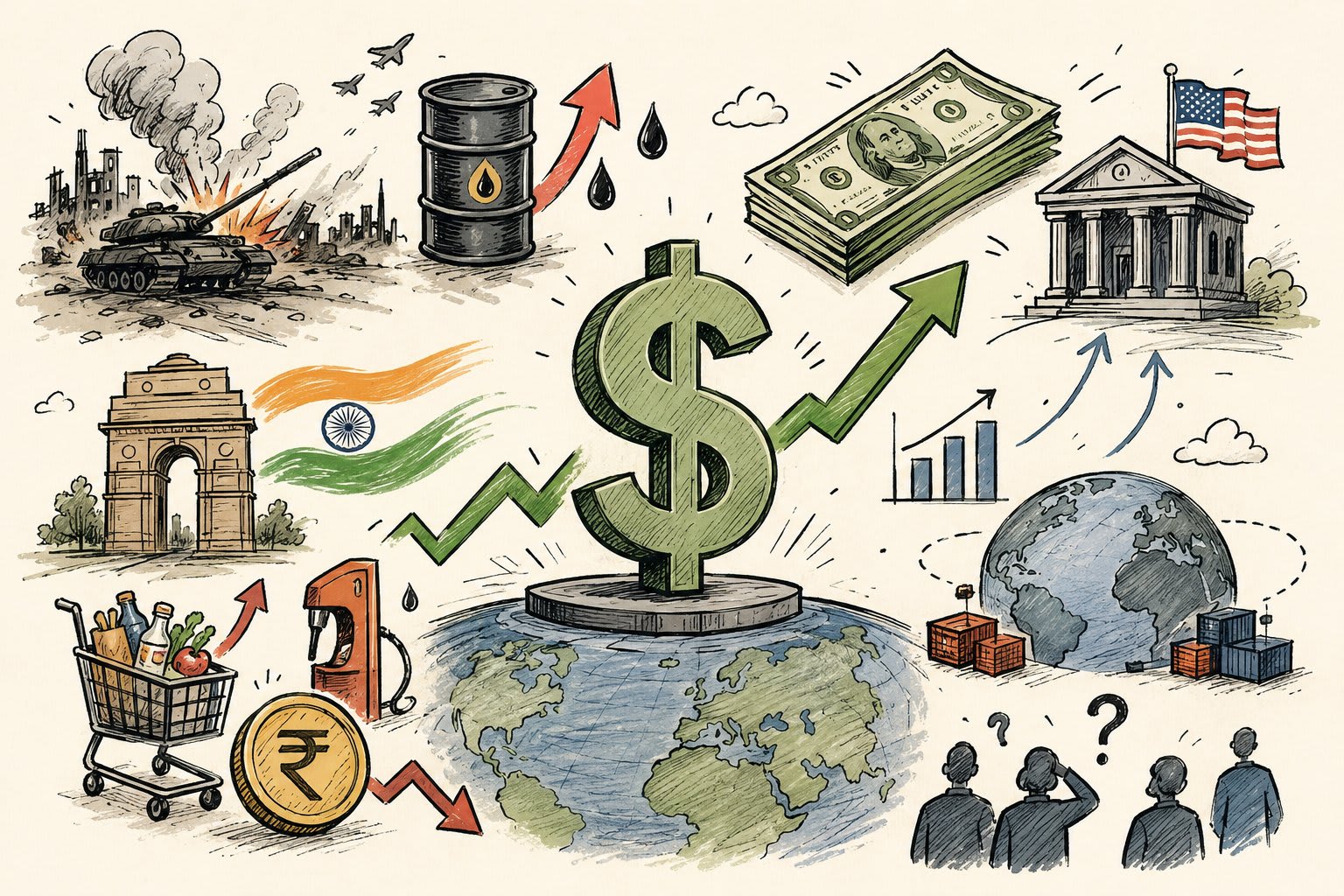
Whoever leads in AI could gain enormous economic and political advantages.
This is why both America and China are investing billions into AI development.
America Wants to Protect Its Technological Lead
The United States currently holds a strong advantage in advanced AI research and semiconductor technology.
Many of the world’s biggest AI companies are American, including:
- OpenAI
- Microsoft
- NVIDIA
These companies are building some of the most advanced AI systems ever created.
Washington believes maintaining leadership in AI is essential for national security and economic dominance. As a result, the US government has introduced restrictions on advanced chip exports to China, hoping to slow Beijing’s technological progress.
Semiconductor chips have now become geopolitical weapons.
Without high-end AI chips, it becomes much harder to train advanced artificial intelligence systems.
China Does Not Want to Depend on the West
China sees AI as critical to its long-term rise as a global superpower.
Beijing has aggressively invested in:
- AI research
- domestic chip manufacturing
- robotics
- quantum computing
- surveillance technology
Chinese technology companies are also competing rapidly in the AI sector, including:
- Baidu
- Alibaba
- Tencent
China’s goal is clear: reduce technological dependence on the United States and become self-sufficient in critical technologies.
The country also benefits from enormous data availability due to its massive population and digital ecosystem, giving AI systems access to vast amounts of information.
Semiconductor Chips Have Become the New Oil

One of the biggest battlegrounds in this AI rivalry is the semiconductor industry.
Advanced AI systems require powerful chips, and the global supply chain for those chips is incredibly sensitive.
This is why Taiwan has become strategically important.
Taiwan produces many of the world’s most advanced semiconductor chips through companies like TSMC.
This creates a dangerous geopolitical situation:
- China wants greater influence over Taiwan
- the US wants to protect semiconductor access
- global technology industries depend on stability in the region
Many experts believe semiconductor control may become as strategically important as oil was during the 20th century.
AI Is Also Changing Warfare

Artificial intelligence is increasingly being integrated into military systems.
Countries are developing AI-powered:
- drones
- cyber defense systems
- surveillance tools
- battlefield intelligence systems
- autonomous weapons
This raises serious ethical and security concerns.
Unlike nuclear weapons, AI technology spreads much faster and can be developed by private companies as well as governments. That makes regulation far more difficult.
The fear among global powers is simple: falling behind in AI could mean falling behind militarily.
The AI Race Is Affecting the Global Economy
The US-China AI rivalry is already reshaping the world economy.
Countries are now competing to:
- attract chip manufacturing
- secure technology supply chains
- protect sensitive data
- dominate emerging industries
This has created a growing technological divide between blocs aligned with either Washington or Beijing.
Many nations are trying to avoid becoming overly dependent on either side.
Even India is positioning itself carefully by expanding its own digital infrastructure, semiconductor ambitions, and AI ecosystem.
Why This Feels Like a Modern Cold War
The similarities to the original Cold War are becoming difficult to ignore.
Then:
- the US and Soviet Union competed for ideological dominance.
Now:
- the US and China are competing for technological dominance.
Instead of nuclear stockpiles alone, the new race involves:
- AI systems
- chips
- quantum computing
- cyber capabilities
- global digital influence
The rivalry is also expanding into trade, diplomacy, education, and global infrastructure.
Unlike traditional wars, this competition is unfolding quietly inside laboratories, data centers, and technology companies.
The Future of Global Power May Depend on AI
Artificial Intelligence is no longer just a technology story.
It is now a geopolitical story.
The nation that leads the AI revolution could shape:
- the future economy
- military power
- digital freedoms
- global influence
- international security
That is why the competition between America and China matters far beyond Silicon Valley or Beijing.
The AI Cold War has already started.
And the rest of the world is being pulled into it.
Also Read: Why the Middle East Is Becoming Dangerous Again
Explore how rising Iran tensions, oil politics, and US military activity are reshaping global geopolitics.