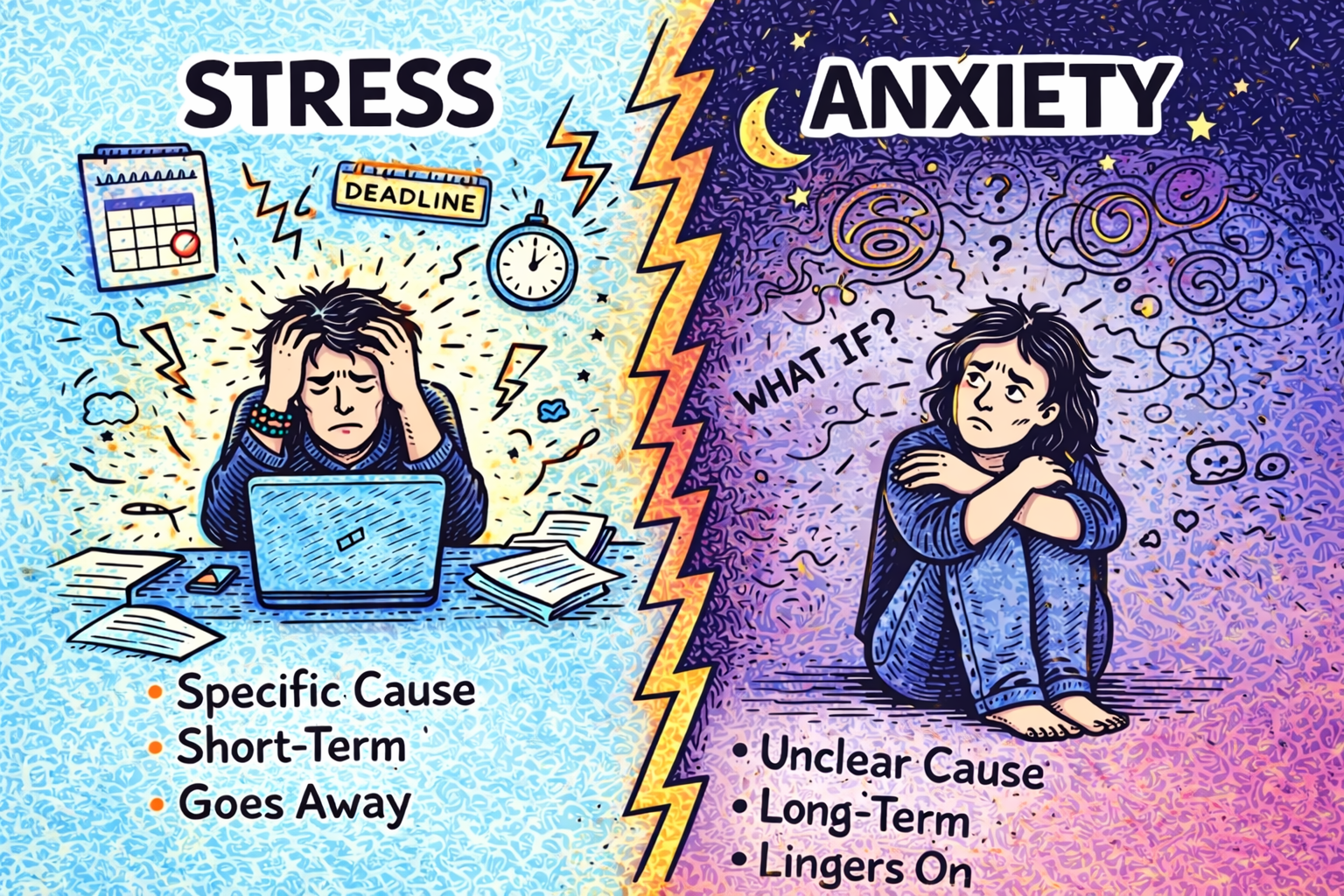

When Everything Feels the Same
We often use the words stress and anxiety as if they mean the same thing. A tough day at work? “I’m anxious.” Too many deadlines? “I’m stressed.” But while they can feel similar, they’re not identical—and understanding the difference can help you respond to your emotions in a much healthier way.
Think of it this way: both stress and anxiety are signals from your mind. The problem is, we don’t always know what they’re trying to tell us..
What Is Stress? A Response to Pressure

Stress is usually tied to a specific situation. It shows up when something demands your attention—like a deadline, an exam, a conflict, or a big life decision.
In many ways, stress can actually be helpful. It pushes you to act, focus, and solve problems. For example, a little stress before an important presentation can sharpen your thinking and keep you alert.
The key thing about stress is this:
It tends to go away once the situation is resolved.
Once the exam is over or the deadline is met, your body slowly returns to normal. Stress has a clear cause and often, a clear end.
What Is Anxiety? A Feeling That Lingers

Anxiety is a bit more complicated. It doesn’t always need a clear reason to exist.
You might feel uneasy, restless, or tense—even when nothing specific is wrong. It can show up as constant worrying, overthinking, or a sense that something bad might happen, even if you can’t explain why.
Unlike stress, anxiety often stays even after the problem is gone.
It can follow you into quiet moments, making it hard to relax, sleep, or focus. Instead of being tied to a situation, anxiety is more like a background noise that doesn’t fully switch off.
Spotting the Key Differences

While stress and anxiety overlap, a few differences can help you tell them apart:
- Cause Stress usually has a clear trigger. Anxiety may not.
- Duration Stress is temporary. Anxiety tends to linger.
- Focus Stress is about something happening now. Anxiety is often about what could happen.
- Physical Feelings Both can cause tension, but anxiety may bring restlessness, racing thoughts, or difficulty sleeping even without pressure.
Understanding these patterns can help you pause and ask: Am I reacting to something real right now, or am I caught in a loop of worry?
How Your Body Responds


Your body doesn’t stay silent in all this.
Stress might show up as:
- Headaches
- Muscle tension
- Short bursts of irritability
Anxiety, on the other hand, can feel more persistent:
- Trouble sleeping
- Racing heartbeat
- Constant fatigue
- Difficulty concentrating
When these symptoms stick around without a clear reason, it’s often a sign that anxiety is at play.
Why It Matters to Know the Difference

Knowing whether you’re stressed or anxious changes how you deal with it.
If it’s stress, the solution is often practical—finish the task, manage your time, or address the situation directly.
If it’s anxiety, the approach is different. It may involve slowing down your thoughts, setting boundaries with your environment, or even seeking support.
Ignoring the difference can make things harder. You might try to “fix” anxiety like a task, when what you really need is to pause and process.
Conclusion
Stress and anxiety are both part of being human. One pushes you to respond to life; the other asks you to pay attention to what’s happening within you.
The goal isn’t to eliminate either—but to understand them.
Because when you learn to recognize what you’re feeling, you stop reacting blindly. You start responding with clarity.
And sometimes, that small shift from confusion to awareness is what brings the most relief.