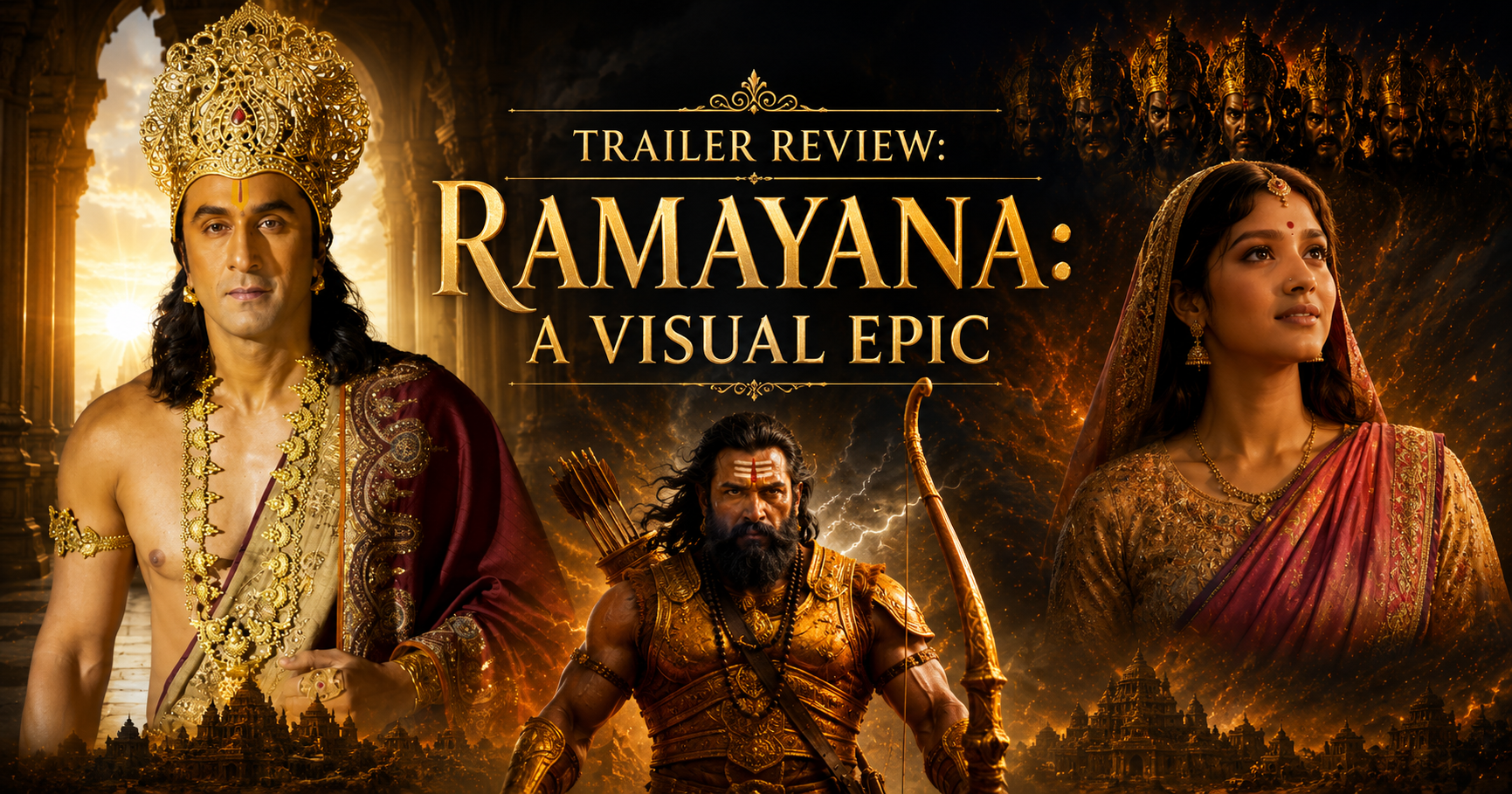

The Pressure Was Never About the Budget. It Was About the Legacy.
When you adapt the Ramayana, you're not just making another blockbuster.
You're touching one of the most revered stories in human history.
Every frame, every line of dialogue, every costume, and every visual effect will be dissected—not because audiences want the film to fail, but because millions have grown up with different interpretations of Lord Rama, Sita, Hanuman, and Ravana.
That is exactly why Nitesh Tiwari's Ramayana entered impossible territory long before its trailer released.
After watching the trailer, one thing becomes immediately clear:
This isn't trying to be another mythology-inspired fantasy.
It's trying to become India's answer to globally recognized cinematic epics.
Whether it succeeds is still unknown, but the trailer certainly gives us plenty to discuss.
The Visual Scale Is Unlike Anything Bollywood Has Attempted
The first thing that stands out is the sheer ambition.
Every frame feels expensive.
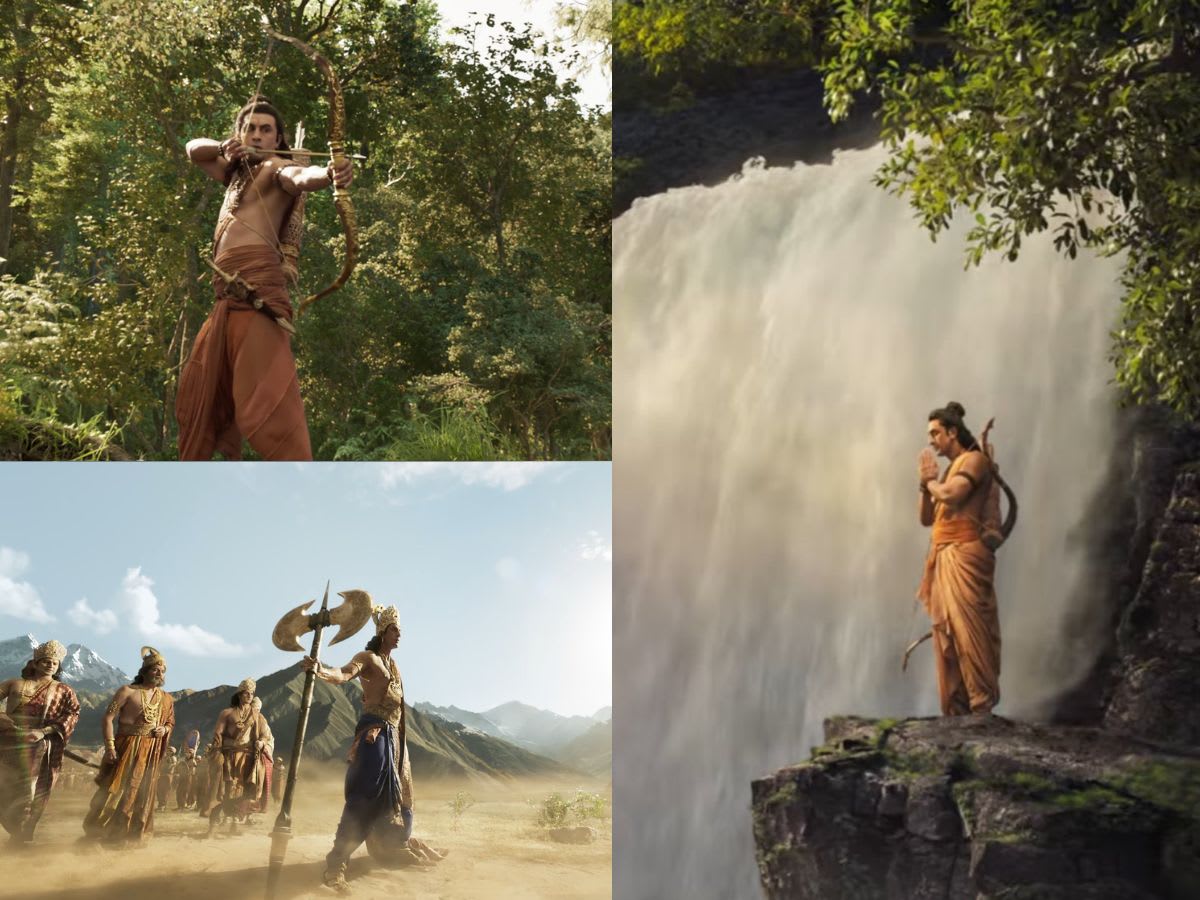
Instead of relying on loud CGI explosions, the trailer leans into cinematic compositions, enormous landscapes, carefully designed sets, and lighting that often resembles high-end Hollywood fantasy films.
There is a clear emphasis on scale.
The forests feel alive.
The kingdoms feel grand.
The celestial imagery feels appropriately mythological without becoming cartoonish.
Compared to many recent Indian VFX-heavy films, this trailer shows far greater restraint.
Rather than overwhelming the audience with constant effects, it allows the visuals to breathe.
That confidence immediately elevates the experience.
Ranbir Kapoor's Lord Rama Is Surprisingly Understated
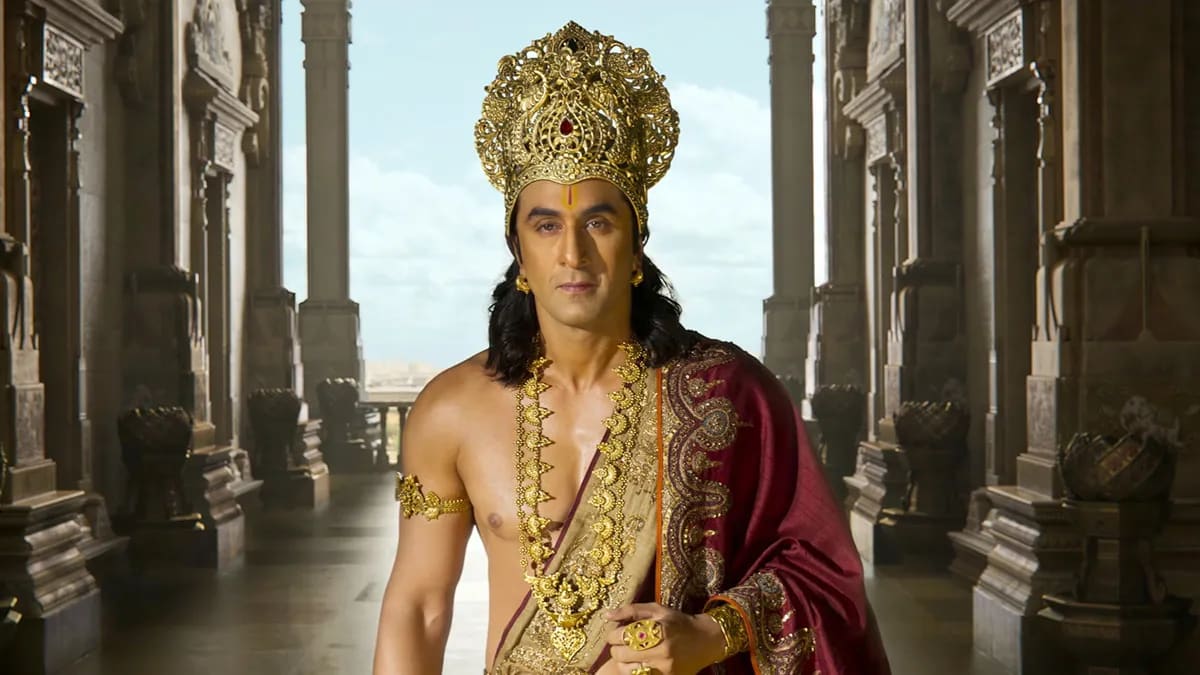
One criticism before the trailer was that Ranbir Kapoor might not possess the calm spiritual aura associated with Lord Rama.
The trailer doesn't completely answer that criticism—but it certainly challenges it.
Instead of portraying Rama as an action hero, Ranbir appears remarkably restrained.
His expressions are minimal.
His posture communicates discipline.
His body language feels composed rather than dramatic.
That may divide audiences.
Some viewers may find it emotionally distant.
Others may appreciate that Lord Rama isn't being portrayed as an exaggerated superhero.
The trailer wisely avoids revealing too much, making it difficult to judge the complete performance.
Sai Pallavi Already Feels Like One of the Film's Biggest Strengths

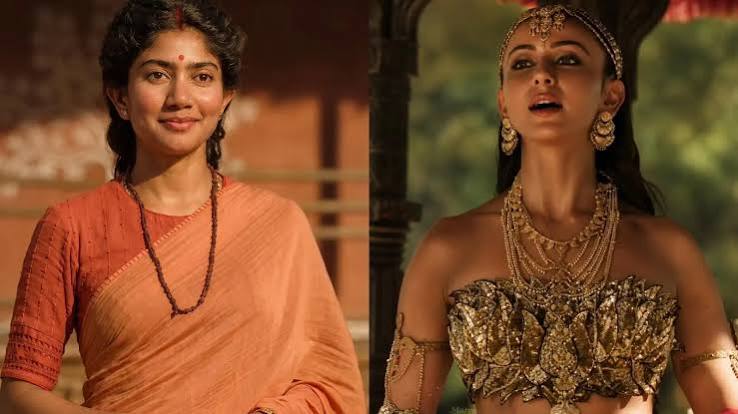
Although she appears only briefly, Sai Pallavi brings a quiet dignity to Sita.
There is an effortless authenticity in her expressions that fits the character naturally.
Unlike many mythological adaptations where costumes overpower performances, Sai Pallavi's simplicity works in the trailer's favor.
If the emotional core of Ramayana is to resonate, her performance may ultimately become one of the film's strongest pillars.
Yash's Ravana Looks Incredible... But Something Feels Missing
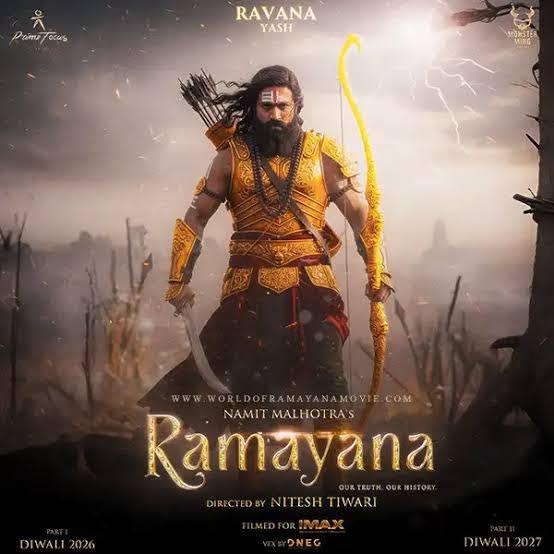
This is perhaps the trailer's most debated aspect.
Visually?
Ravana looks magnificent.
The armor, silhouette, production design, and overall presentation make him look genuinely intimidating.
However, the trailer doesn't fully establish his presence.
Ravana is not simply a villain.
He is one of mythology's most complex characters—a scholar, devotee, king, strategist, and embodiment of pride.
The trailer hints at this complexity but doesn't yet let Yash dominate the screen in the way many expected.
It's possible the filmmakers are deliberately saving his most impactful moments for the film.
For now, the visual design impresses more than the characterization.
Hans Zimmer and A.R. Rahman Might Be the Film's Secret Weapon
Perhaps the most exciting element isn't the CGI.
It isn't the cast.
It's the music.
The collaboration between Hans Zimmer and A.R. Rahman immediately raises expectations.
The trailer's score carries a sense of grandeur without becoming overwhelming.
Instead of chasing viral background music, it attempts to create an emotional identity.
If the complete soundtrack maintains this quality, it could become one of the defining aspects of the film.
The Trailer Understands That Less Can Be More
One of the smartest creative decisions is what the trailer refuses to reveal.
There are no lengthy dialogue sequences.
No unnecessary exposition.
No attempt to summarize the entire story.
Instead, it builds curiosity through imagery.
This approach respects both the audience and the source material.
In an era where trailers often reveal half the movie, that restraint deserves appreciation.
But There Are Still Some Concerns
As impressive as the trailer looks, it's far from perfect.
1. Emotional Connection Is Still Missing
The visuals are breathtaking.
The music is powerful.
But emotionally?
The trailer keeps viewers at arm's length.
The Ramayana has endured for centuries because of its emotional depth—not merely because of its battles.
The trailer showcases spectacle more effectively than human emotion.
2. Some CGI Still Looks Inconsistent
While the overall visual quality is excellent, a handful of shots still appear noticeably digital.
These moments are brief, but given the film's enormous scale and expectations, audiences will inevitably scrutinize every frame.
Fortunately, there's still time for refinements before release.
3. The Trailer Plays It Safe
Ironically, the trailer's biggest strength may also be its weakness.
It avoids controversy.
It avoids risks.
It avoids revealing major character moments.
That creates intrigue—but it also prevents the trailer from delivering one unforgettable scene that lingers after watching.
The Impossible Expectations
No film in Indian cinema has carried expectations quite like this.
It's not simply because of its reported budget.
It's because every audience already has their own version of Ramayana in their imagination.
That means the filmmakers aren't competing against other movies.
They're competing against centuries of storytelling, television adaptations, paintings, literature, and personal faith.
That may be the hardest challenge any director has ever accepted.
Final Verdict
The Ramayana trailer succeeds where it matters most: it restores confidence.
After years of skepticism surrounding mythological adaptations, this trailer suggests that the filmmakers are approaching the material with ambition, restraint, and technical sophistication.
Yet spectacle alone will not make this film unforgettable.
If Ramayana wants to become a true cinematic landmark, it must deliver the emotional gravity, moral complexity, and timeless humanity that have made the epic endure for generations.
For now, the trailer earns admiration—not because it proves the film will be great, but because it convinces us that it genuinely has the potential to be.