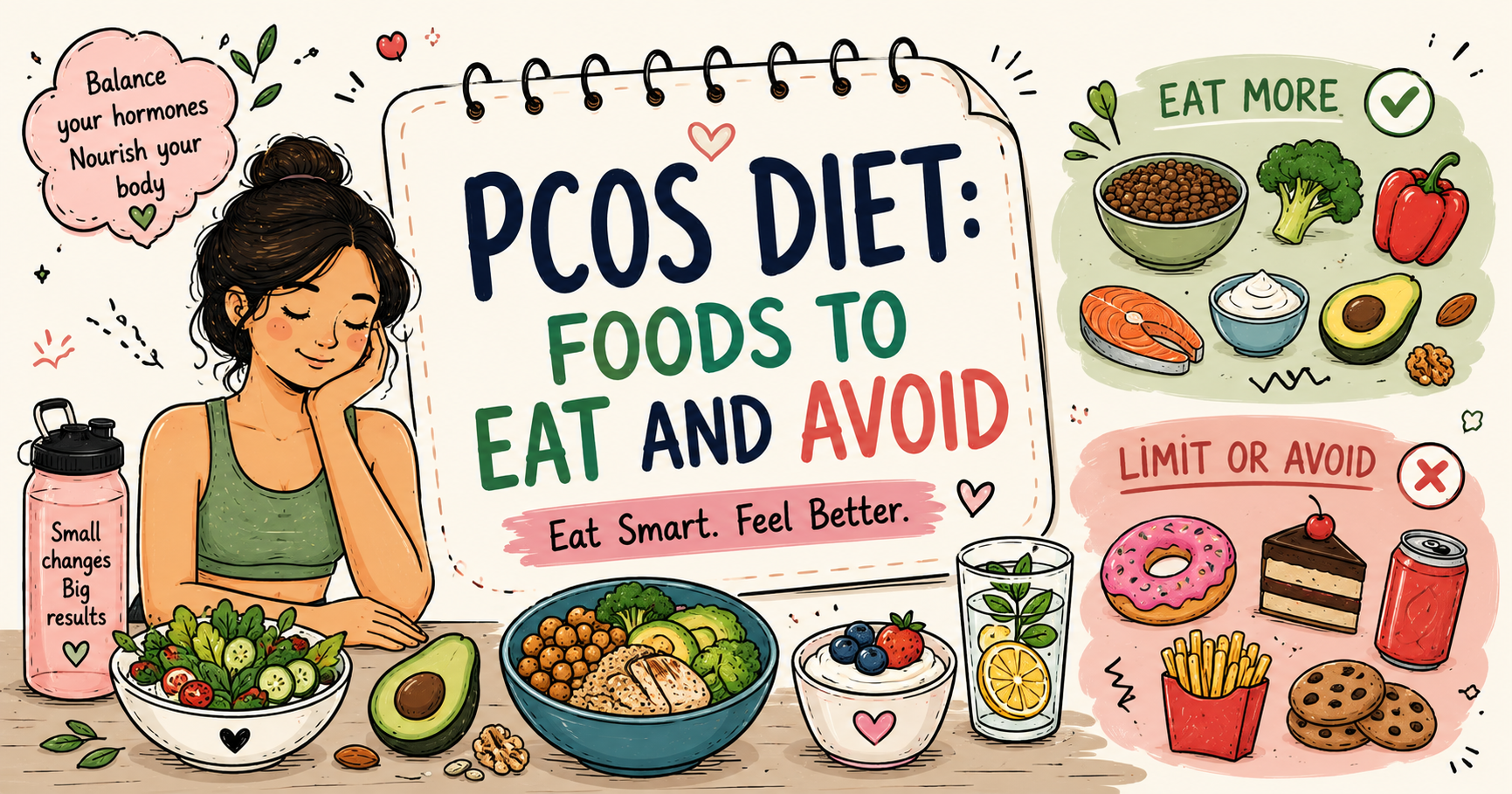

Polycystic ovary syndrome, commonly known as PCOS, is often discussed alongside weight loss and restrictive diets. That can make nutrition advice feel overwhelming.
One person says to cut out all carbohydrates. Another recommends going dairy-free. Someone else claims a particular supplement or “PCOS detox” can fix everything.
The reality is much less dramatic.
There is no single “best PCOS diet” that works for everyone. The international evidence-based guideline for PCOS states that no one dietary composition has been shown to be superior for all metabolic, hormonal, reproductive, or psychological outcomes. Instead, the focus should be on a sustainable, balanced eating pattern tailored to the individual's preferences and goals.
That means you do not need to fear every carbohydrate or follow an extremely restrictive diet.
A practical PCOS-friendly eating pattern can focus on foods that support overall health, help create satisfying meals, and make it easier to maintain steady eating habits.
Let's look at the foods you may want to eat more often, the foods worth limiting, and how to build a realistic PCOS-friendly plate.
Note: In 2026, some international resources have begun using the name PMOS (Polyendocrine Metabolic Ovarian Syndrome) for the condition previously known as PCOS. However, “PCOS” remains the term most readers currently search for and recognize.
What Does Diet Have to Do With PCOS?
PCOS is a complex hormonal and metabolic condition. Some people with PCOS experience insulin resistance, which can affect how the body responds to insulin.
Lifestyle management, including healthy eating and physical activity, is considered an important part of PCOS management and can support metabolic health, quality of life, and weight management where relevant. Importantly, healthy lifestyle changes can be beneficial even when weight loss is not the goal or does not occur.
The goal of a PCOS diet should not be:
“How can I eat as little as possible?”
A more useful question is:
“How can I build meals that are nutritious, satisfying, and sustainable?”
Foods to Eat More Often With PCOS
1. High-Fiber Vegetables
Vegetables can add fiber, vitamins, minerals, and volume to meals.
Good options include:
- Spinach
- Broccoli
- Cauliflower
- Carrots
- Bell peppers
- Cabbage
- Green beans
- Okra
- Tomatoes
- Cucumber
- Leafy greens
You don't need to eat only salads.
Vegetables can be added to:
- Dal
- Sabzi
- Omelettes
- Soups
- Stir-fries
- Sandwiches
- Rice dishes
Practical tip
Try filling a substantial portion of your plate with vegetables when possible, while still including protein and carbohydrates.
2. Protein-Rich Foods
Protein can help make meals more satisfying and is an important part of a balanced diet.
Depending on your dietary preferences, options include:
Vegetarian protein sources
- Lentils and dal
- Chickpeas
- Rajma
- Other beans
- Tofu
- Paneer
- Greek yogurt or curd
- Eggs, if included in your diet
Non-vegetarian protein sources
- Eggs
- Fish
- Chicken
- Other lean protein sources
Instead of eating a carbohydrate-heavy meal by itself, try combining it with protein.
For example:
Instead of: Plain toast
Try: Whole-grain toast with eggs or paneer
Or:
Instead of: A large bowl of rice alone
Try: Rice with dal, vegetables, and a protein source
The goal is not to eliminate carbohydrates. It is to build a more balanced meal.
3. Whole Grains and Fiber-Rich Carbohydrates
One of the biggest misconceptions about PCOS is that everyone with the condition should stop eating carbohydrates.
That's unnecessarily restrictive.
Carbohydrates can be part of a healthy diet. The quality and overall composition of the meal can matter more than simply labeling all carbs as “good” or “bad.”
Examples include:
- Oats
- Brown rice
- Whole-wheat roti
- Whole-grain bread
- Quinoa
- Barley
- Millet
- Sweet potatoes
- Other minimally processed grains
If switching completely to whole grains doesn't work for your budget, culture, or preferences, you don't need to panic.
A sustainable eating pattern matters more than trying to create a “perfect” plate.
4. Beans and Lentils
Beans and lentils are particularly useful because they provide a combination of:
- Protein
- Fiber
- Complex carbohydrates
- Important micronutrients
Easy options include:
- Masoor dal
- Moong dal
- Chana dal
- Chickpeas
- Rajma
- Black beans
- Whole green gram
A simple meal of dal + vegetables + roti or rice can absolutely fit into a balanced PCOS-friendly diet.
You do not need expensive “superfoods” to eat well.
5. Healthy Sources of Fat
Fat is another nutrient that is often unnecessarily feared.
Including moderate amounts of unsaturated fats can make meals more enjoyable and satisfying.
Examples include:
- Almonds
- Walnuts
- Peanuts
- Chia seeds
- Flaxseeds
- Pumpkin seeds
- Avocado
- Olive oil
- Other unsaturated cooking oils
A handful of nuts or seeds can make an easy snack when paired with fruit or yogurt.
6. Fruits
Fruit sometimes gets unfairly removed from “PCOS diet” plans because it contains natural sugars.
For most people, fruit can be part of a balanced diet.
Good options include:
- Berries
- Apples
- Oranges
- Guava
- Pears
- Kiwi
- Papaya
- Pomegranate
- Bananas
- Seasonal fruits
You do not need to be afraid of eating a banana.
If you find that fruit alone doesn't keep you satisfied, try pairing it with protein or fat.
For example:
- Apple + nuts
- Banana + peanut butter
- Fruit + plain yogurt
Foods to Limit Rather Than Completely Ban
The word “avoid” can sometimes encourage an all-or-nothing mindset.
You don't have to permanently ban your favorite foods to eat in a way that supports your health.
Instead, think about foods you may want to eat less frequently or in more moderate amounts, especially if they regularly replace more nutrient-dense meals.
1. Highly Sugary Drinks
Sugary beverages can add a large amount of sugar without being particularly filling.
Examples include:
- Soft drinks
- Sweetened sodas
- Energy drinks
- Heavily sweetened packaged beverages
- Large amounts of added sugar in tea or coffee
You don't have to give up every sweet drink forever.
But if sugary drinks are part of your everyday routine, reducing their frequency can be a practical place to start.
Try:
- Water
- Sparkling water
- Unsweetened drinks
- Plain or lightly sweetened tea and coffee
2. Highly Processed Snack Foods
Foods such as:
- Chips
- Packaged pastries
- Cookies
- Candy
- Highly processed snack foods
can be easy to eat quickly and mindlessly.
That doesn't make them forbidden.
The key is to avoid letting them become the foundation of your diet.
A useful approach is:
Eat nutritious foods most of the time, and leave room for foods you genuinely enjoy.
A sustainable diet is usually easier to maintain than one built around constant restriction.
3. Refined Carbohydrates Eaten Without Balance
Foods such as white bread, pastries, and heavily refined snacks can be less filling when eaten on their own.
That does not mean you must never eat them.
Instead of focusing on elimination, try improving the meal around them.
For example:
White toast alone → Toast + eggs + vegetables
Sweet cereal alone → Cereal with yogurt, nuts, and fruit
Rice alone → Rice + dal + vegetables + protein
Small adjustments can often be easier to sustain than dramatic food rules.
4. Large Amounts of Added Sugar
You don't need to eliminate all sugar from your life.
But it may be worth paying attention to how much added sugar regularly appears in:
- Sweetened drinks
- Desserts
- Packaged snacks
- Breakfast products
- Flavored beverages
The goal is awareness, not food guilt.
A Simple PCOS-Friendly Plate
Instead of obsessing over every calorie or carbohydrate, use a simple visual guide.
Try to include:
🥦 Vegetables or salad
🍗 A source of protein
🍚 A source of carbohydrates
🥑 A moderate amount of healthy fat
For example:
Vegetarian meal
- Dal or chana
- Mixed vegetable sabzi
- Roti or rice
- Curd
- Salad
Non-vegetarian meal
- Grilled chicken or fish
- Vegetables
- Brown rice, roti, or another carbohydrate source
- A small amount of healthy fat
There is no requirement for every meal to look exactly like this.
Think of it as a flexible framework.
A Sample One-Day PCOS-Friendly Meal Plan
This is only an example, not a prescription.
Breakfast
Option 1: Vegetable omelette + whole-grain toast
Option 2: Oats with yogurt, fruit, and nuts
Option 3: Besan chilla with vegetables and curd
Mid-Morning Snack
Choose one:
- Fruit + nuts
- Plain yogurt + fruit
- Roasted chickpeas
Lunch
- Dal, rajma, or another protein source
- Vegetable sabzi
- Roti or rice
- Salad or curd
Evening Snack
- Roasted makhana
- Fruit with peanut butter
- Yogurt
- Nuts and seeds
- Roasted chana
Dinner
- Tofu, paneer, eggs, fish, chicken, or lentils
- Plenty of vegetables
- Roti, rice, or another carbohydrate source
Should You Go Low-Carb if You Have PCOS?
Not necessarily.
Some people may prefer lower-carbohydrate eating patterns, while others may find them difficult to maintain.
The international PCOS guideline found insufficient evidence to support one particular diet composition as superior for everyone with PCOS. A sustainable healthy eating pattern that fits the person's preferences and goals is recommended instead.
That means:
You do not have to automatically eliminate rice.
You do not have to stop eating fruit.
You do not have to follow keto to manage PCOS.
If a particular dietary approach helps you meet your nutritional needs and is sustainable for you, it may be worth discussing with a registered dietitian or healthcare professional.
Should You Avoid Dairy With PCOS?
There is no universal recommendation that everyone with PCOS must eliminate dairy.
If you enjoy and tolerate dairy, foods such as milk, yogurt, and other dairy products may fit into your diet.
However, people with:
- Lactose intolerance
- A milk allergy
- Personal dietary preferences
may choose alternatives.
The important point is not to remove an entire food group without a clear reason and without considering how you will meet your nutritional needs.
Should You Avoid Gluten With PCOS?
Not unless you have a medical reason to avoid it.
PCOS alone does not automatically mean you need to follow a gluten-free diet.
If you have celiac disease, gluten sensitivity, or another medical reason to avoid gluten, follow the advice of your healthcare professional.
Otherwise, removing gluten simply because you have PCOS may make your diet more restrictive without necessarily providing additional benefits.
The broader evidence-based guidance emphasizes individualized, sustainable eating rather than unnecessarily restrictive or nutritionally unbalanced diets.
5 Practical PCOS Diet Tips That Are Easy to Follow
1. Don't Skip Meals if It Leaves You Extremely Hungry
Skipping meals may lead some people to become overly hungry later.
Try to develop a regular eating pattern that works with your lifestyle and hunger levels.
2. Add Protein to Your Meals
Instead of overhauling your entire diet, start by asking:
“What protein source can I add to this meal?”
It could be:
- Eggs
- Dal
- Tofu
- Paneer
- Beans
- Yogurt
- Fish
- Chicken
3. Add More Fiber Instead of Removing Everything
Try adding:
- Vegetables
- Fruit
- Lentils
- Beans
- Whole grains
- Nuts and seeds
A diet doesn't have to be restrictive to become more nutritious.
4. Plan for Your Real Life
The “perfect” diet is not useful if you cannot maintain it.
Choose meals that fit your:
- Budget
- Culture
- Cooking skills
- Work schedule
- Family meals
- Food preferences
The PCOS guideline specifically emphasizes an individualized and flexible approach and cautions against unduly restrictive, nutritionally unbalanced diets.
5. Think Beyond Food
Diet is only one part of PCOS management.
The international guideline recommends healthy lifestyle behaviors, including nutrition and physical activity, while recognizing that lifestyle goals should be individualized. Healthy lifestyle changes can improve health and quality of life even without weight loss.
Sleep, stress, physical activity, medication, and other aspects of healthcare may also matter.
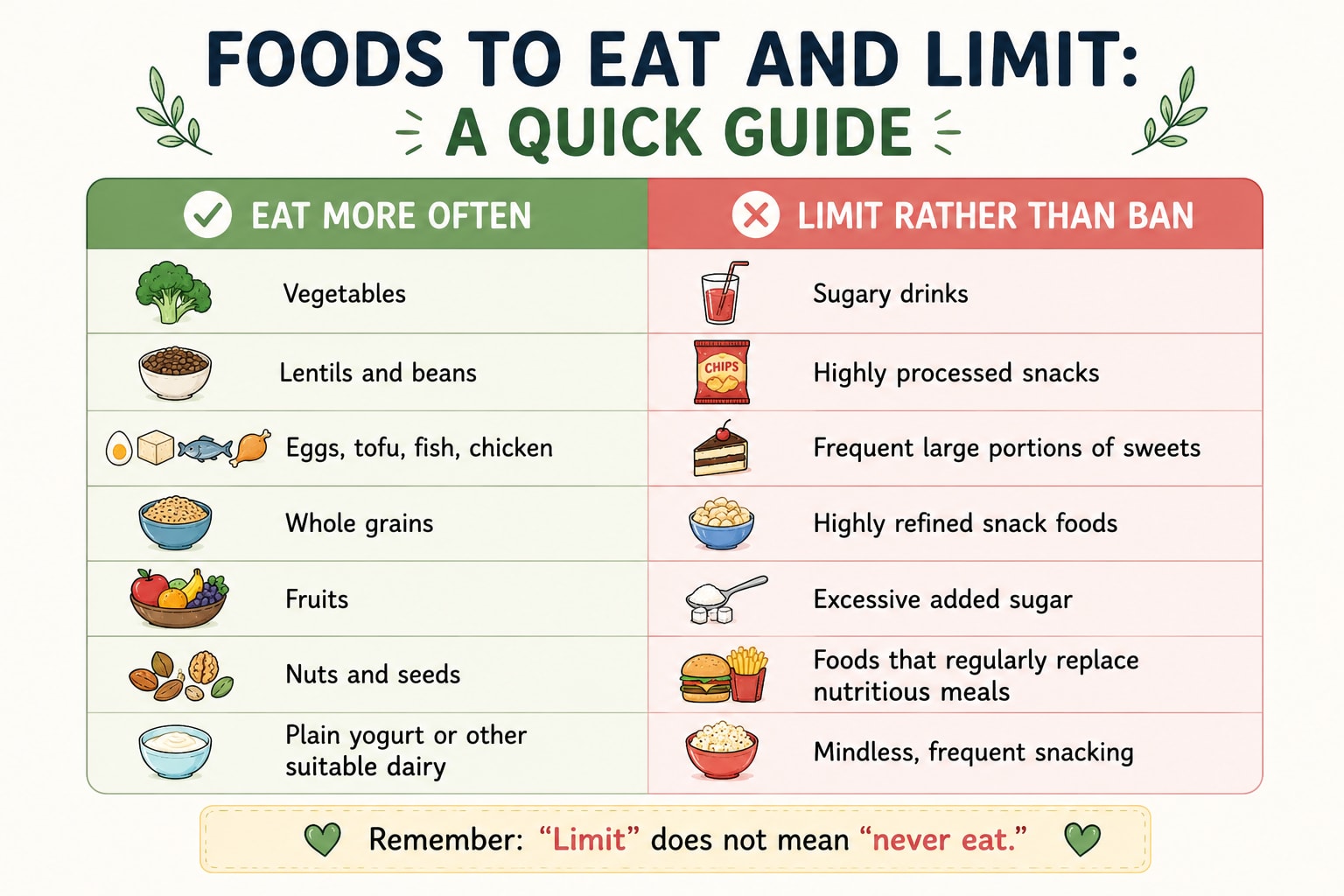
Foods to Eat and Limit: A Quick Guide
Common PCOS Diet Myths
Myth 1: “You can never eat carbs.”
Reality: Carbohydrates can be part of a healthy PCOS eating pattern.
Myth 2: “Everyone with PCOS needs keto.”
Reality: Current international guidance does not support one specific dietary composition as superior for everyone with PCOS.
Myth 3: “You must lose weight for lifestyle changes to help.”
Reality: Healthy lifestyle changes can provide benefits even without weight loss.
Myth 4: “Fruit is bad because it contains sugar.”
Reality: Whole fruits provide nutrients and fiber and can generally fit into a balanced eating pattern.
Myth 5: “You need expensive PCOS superfoods.”
Reality: Everyday foods such as dal, beans, vegetables, eggs, oats, fruit, nuts, and whole grains can form the basis of a nutritious diet.
The Bottom Line
The best PCOS diet is unlikely to be the most restrictive one.
There is no single eating pattern proven to be best for every person with PCOS. Current evidence-based guidance supports sustainable, individualized healthy eating rather than unnecessarily restrictive diets.
Start with simple changes:
- Add more vegetables and fiber-rich foods.
- Include a source of protein in your meals.
- Choose minimally processed foods more often.
- Include healthy fats.
- Reduce frequent sugary drinks and heavily processed snacks.
- Avoid treating entire food groups as “bad.”
- Build an eating pattern you can realistically maintain.
PCOS management is not about achieving a perfect diet.
It is about finding habits that support your health and work in your real life.
Frequently Asked Questions
What is the best diet for PCOS?
There is no single diet proven to be best for everyone with PCOS. International evidence-based guidance recommends a sustainable, healthy eating pattern tailored to individual preferences and goals rather than one specific diet.
Can I eat rice if I have PCOS?
Yes. PCOS does not automatically mean you need to eliminate rice. Consider the overall balance of the meal by including protein, vegetables, and other nutrient-rich foods.
Are eggs good for PCOS?
Eggs can be a useful source of protein and other nutrients and may fit into a balanced diet, depending on individual dietary needs and medical advice.
Should I avoid dairy with PCOS?
Not necessarily. There is no universal recommendation that everyone with PCOS must avoid dairy. Individual tolerance, preferences, and nutritional needs should be considered.
Should I completely stop eating sugar?
You do not need to eliminate every food containing sugar. A more practical approach is to reduce frequent consumption of foods and drinks high in added sugars while maintaining an overall balanced diet.
Can diet cure PCOS?
No specific diet is a cure for PCOS. Healthy eating and lifestyle habits can play an important role in overall management, alongside appropriate medical care when needed.
Sources and further reading
For readers who want to explore the evidence-based guidance, the International PCOS Guideline from Monash University and the 2023 guideline recommendations from ASRM provide detailed information on PCOS lifestyle and dietary management.
Disclaimer: This article is for educational purposes and should not replace individualized medical or nutrition advice. PCOS can affect people differently, and those who have diabetes, are pregnant or trying to conceive, have an eating disorder, or have other medical conditions should seek personalized guidance from a qualified healthcare professional or registered dietitian.