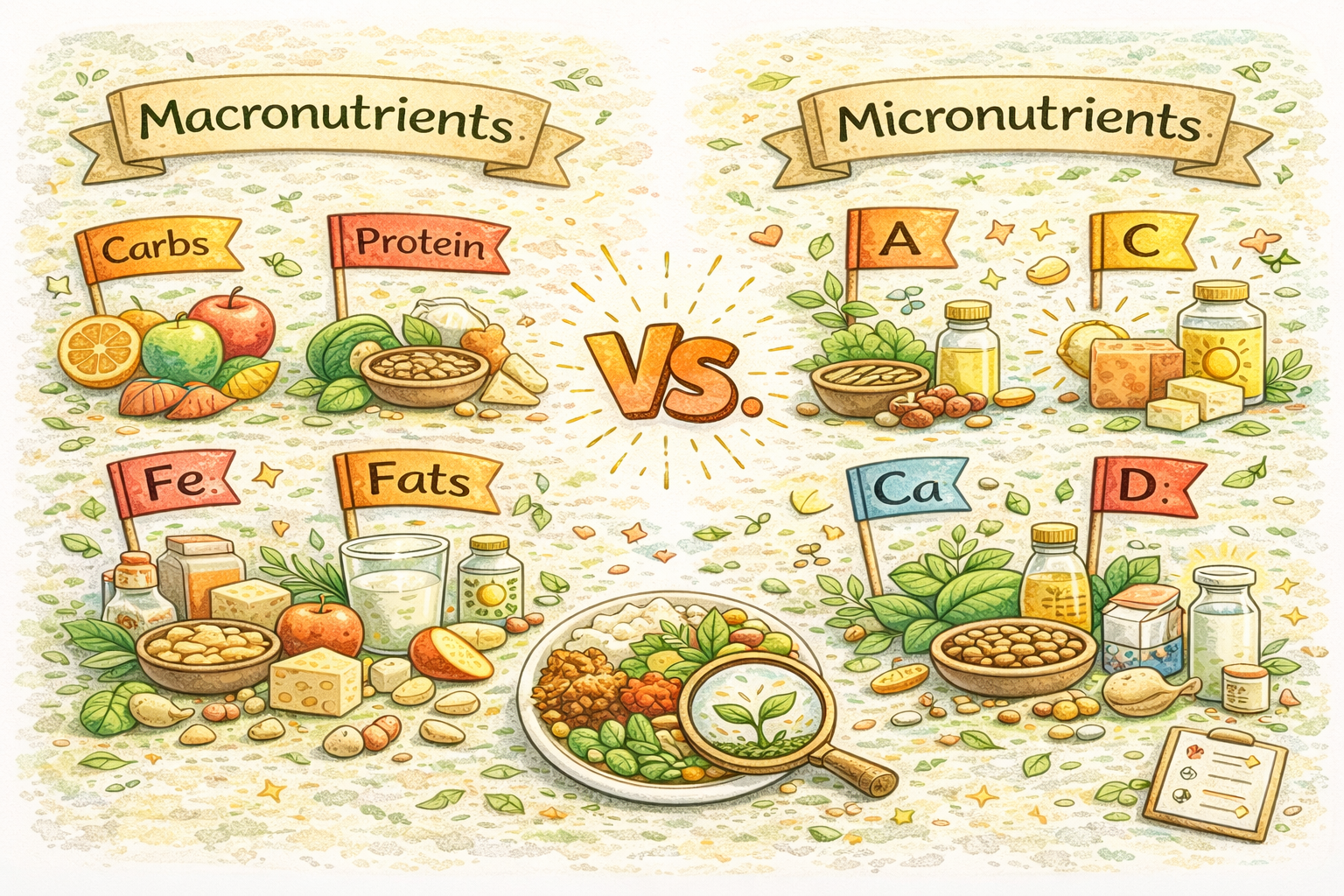

When people talk about “eating healthy,” the conversation often swings between calories, protein, or vitamins. In reality, your body depends on two distinct but interconnected groups of nutrients: macronutrients and micronutrients.
Understanding how they differ and how they work together makes it easier to build meals that actually support energy, recovery, and long-term health.

What Are Macronutrients?
Macronutrients are the nutrients your body needs in larger quantities because they provide energy (calories) and structural support. There are three primary types:
1. Carbohydrates
Carbs are your body’s preferred energy source. They break down into glucose, which fuels your brain and muscles.
Sources: rice, roti, oats, fruits, potatoes, millets Use: quick and sustained energy, especially for daily activity and exercise
2. Proteins
Proteins are made of amino acids and are essential for muscle repair, immune function, and tissue maintenance.
Sources: dal, paneer, eggs, chicken, soy, chickpeas Use: recovery, muscle building, enzyme and hormone production
3. Fats
Fats are often misunderstood, but they’re crucial for hormone health, brain function, and absorption of certain vitamins.
Sources: nuts, seeds, ghee, butter, coconut, cold-pressed oils Use: long-lasting energy, cell structure, nutrient absorption
What Are Micronutrients?
Micronutrients are needed in smaller amounts, but they are just as critical. They don’t provide energy directly, but they regulate almost every process in your body.
What Micronutrients Actually Do
- Enable energy production: B-vitamins act as coenzymes that help convert carbs, fats, and proteins into usable energy.
- Support oxygen transport: Iron forms hemoglobin; without it, tissues don’t get adequate oxygen.
- Regulate immunity: Vitamin C, A, D, zinc coordinate immune cell function.
- Maintain bones and muscles: Calcium, vitamin D, magnesium handle bone density and muscle contraction.
- Protect cells: Antioxidants (vitamin C, E, selenium) limit oxidative damage from stress, pollution, and exercise.
How They Work Together
Macronutrients and micronutrients don’t function in isolation—they depend on each other.
- Without Vitamin B, your body can’t efficiently convert carbs into energy
- Without healthy fats, fat-soluble vitamins (A, D, E, K) won’t be absorbed properly
- Without iron, oxygen delivery to muscles (and energy production) is compromised
Think of macronutrients as the fuel, and micronutrients as the system that helps your body use that fuel effectively.
How to Include Both in Your Daily Diet

You don’t need complicated meal plans. A few practical habits can ensure you’re getting both macro and micronutrients:
1. Build a Balanced Plate

Use a simple structure:
- 50% vegetables (fiber + micronutrients)
- 25% protein (dal, paneer, eggs)
- 25% carbs (rice, roti, millets)
- Add a small portion of healthy fats (ghee, nuts)
2. Eat a Variety of Colors
Different colors in fruits and vegetables indicate different nutrients. A diverse plate ensures broader micronutrient coverage.
3. Don’t Skip Protein
Many Indian diets are carb-heavy. Adding enough protein helps balance energy and supports muscle health.
4. Include Healthy Fats Daily
Avoid cutting fats completely—they’re essential for hormone balance and vitamin absorption.
5. Limit Ultra-Processed Foods
Packaged foods often provide calories (macros) but lack essential micronutrients.
Practical Products to Support Micro and Macro Intake
- Organic India Amla powder– convenient way to add vitamin C–rich ingredients
- Tata 1mg Multivitamins – fills common gaps when diet is inconsistent
- Himalayan Organics Vitamin D3 – useful in low-sunlight or deficiency cases
- True Elements Nuts & Seed Mixes – add zinc, magnesium, and healthy fats to meals
- 24 Mantra Organic Millets– improve mineral intake through whole foods
Common Mistakes You Can Avoid
- Focusing only on calories or protein while ignoring micronutrients
- Eating the same foods daily with little variety
- Eliminating entire food groups (like fats or carbs)
- Over-relying on supplements instead of real food
Foreword
A well-functioning body needs the right tools to use that fuel. Macronutrients provide the energy, while micronutrients ensure that energy is produced, utilized, and sustained efficiently.
Instead of chasing trends or restrictive diets, focus on balance, variety, and consistency.
Start by upgrading one meal today—add a protein source, include vegetables, and don’t skip healthy fats. Small changes build a complete, sustainable diet.
read more about superfoods to add in your diet: 7 Superfoods You Should Add to Your Daily Diet