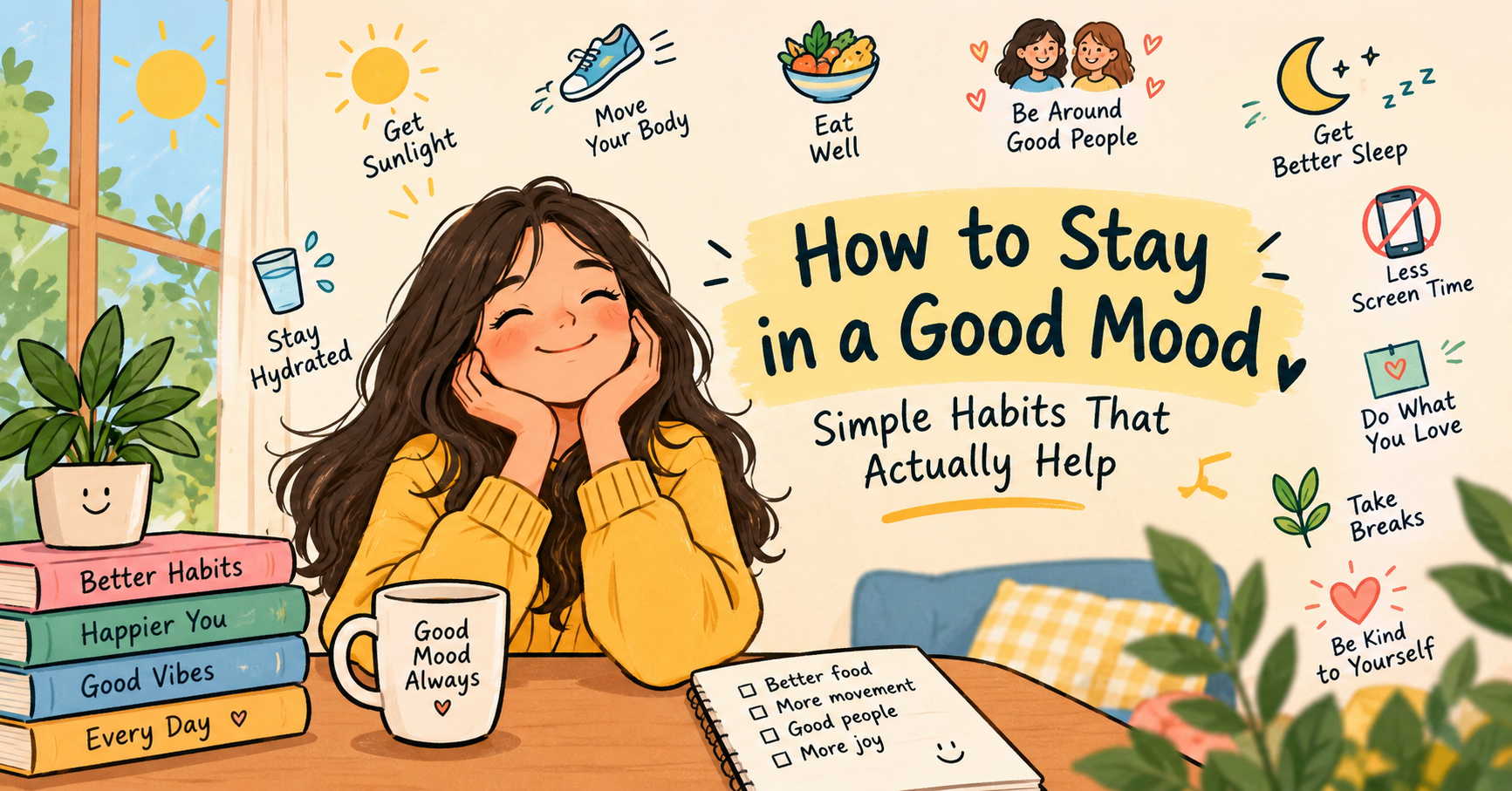

Some days you wake up feeling great. You have energy, everything seems manageable, and even small things make you smile.
Then there are days when one irritating message, a bad commute, too much work, or simply waking up on the wrong side of the bed can change everything.
The truth is, nobody can be in a good mood all the time. Trying to force yourself to feel happy every minute can actually make you feel worse. The real goal is to build a lifestyle that supports a better mood and helps you bounce back when a bad day arrives.
Here are some simple habits that can make a noticeable difference.
1. Start Your Morning Without Immediately Checking Your Phone
For many people, the first thing they see in the morning is a screen.
Messages, social media, news, emails and notifications can instantly fill your head with information before you've even properly woken up.
Instead, give yourself a little breathing room.
Drink some water, open the curtains, stretch, take a few deep breaths or simply sit quietly for a few minutes.
You don't need a complicated morning routine. Even 15 to 20 minutes without your phone can make your morning feel less rushed.
2. Get Some Sunlight
Your mood is closely connected to your body's internal clock.
Getting natural light during the morning can help your body understand that the day has started and can support a healthier sleep-wake rhythm.
You don't need to sit in the sun for hours. A short walk outside, having your morning tea near a bright window or spending some time outdoors can become an easy part of your routine.
And honestly, getting out of the house for a few minutes can feel surprisingly refreshing.
3. Move Your Body
You don't have to become a fitness fanatic to improve your mood.
Walking, dancing, cycling, stretching, yoga or exercising at the gym can all be ways of getting your body moving.
Even a 10 to 20 minute walk can be a good way to break up a stressful day.
Think of movement as a mood reset rather than another item on your fitness checklist.
4. Don't Let Hunger Turn Into Irritation
Ever noticed how everything starts annoying you when you're extremely hungry?
There's a reason the phrase "hangry" became so popular.
Skipping meals or going too long without eating can leave you feeling tired and irritable. Try to eat regular, balanced meals and include foods that provide protein, fibre, healthy fats and carbohydrates.
You don't need a perfect diet. Sometimes a proper meal is all you need to realise that the problem wasn't your entire life. You were just hungry.
5. Spend Time With People Who Make You Feel Good
The people around you can have a huge effect on your mood.
You don't necessarily need a huge social circle. One good conversation with a friend, sibling, parent or someone you trust can make a difficult day feel lighter.
Talk about something other than work, responsibilities and problems.
Send someone a funny video. Have coffee together. Go for a walk. Talk about absolutely nothing.
Small moments of connection can make ordinary days much better.
6. Stop Trying to Make Everyone Happy
Constantly worrying about what other people think can drain your energy.
You don't have to say yes to everything.
You don't have to respond immediately to every message.
You don't have to explain every decision you make.
Learning to set boundaries can protect your time and emotional energy. Sometimes protecting your mood means being comfortable with disappointing someone.
7. Take Breaks Before You Actually Need One
Many people work until they're completely exhausted and then wonder why they're irritated.
Instead, take small breaks throughout the day.
Stand up. Walk around. Get some water. Look outside. Listen to music. Talk to someone. Step away from your screen.
A five-minute pause can sometimes prevent a two-hour spiral of frustration.
8. Don't Take Every Small Problem Personally
Someone didn't reply to your message.
Your colleague sounded annoyed.
A friend cancelled plans.
Someone overtook you in traffic.
It's easy to create an entire story in your head around these little incidents.
But sometimes things simply happen.
Not every delayed reply means someone is angry with you. Not every bad mood around you is about you.
Before letting a small event ruin your entire day, ask yourself:
"Will this still matter to me next week?"
If the answer is no, don't give it today's peace.
9. Have Something to Look Forward To
Your entire week shouldn't be about responsibilities.
Give yourself small things to anticipate.
It could be:
- Watching a movie on Friday night
- Trying a new restaurant
- Meeting a friend
- Ordering your favourite food
- Reading a book
- Playing a game
- Taking a weekend trip
- Making your favourite dessert
You don't need a holiday every month. Sometimes having something small on the calendar is enough to make an ordinary Tuesday feel better.
10. Clean Your Space
Your surroundings can influence how you feel.
A messy room can make you feel mentally cluttered, especially when you're already stressed.
You don't need to deep-clean your entire home.
Put away the clothes lying on the chair. Clear your desk. Change your bedsheet. Open a window.
Even a 10-minute tidy-up can make your surroundings feel more comfortable.
11. Get Enough Sleep
It's difficult to maintain a good mood when you're constantly exhausted.
Most adults generally need around 7 to 9 hours of sleep each night.
Instead of treating sleep as something you sacrifice whenever life gets busy, treat it as part of taking care of yourself.
Try keeping a fairly consistent sleep schedule and give yourself some quiet time before bed.
Sometimes the best solution to a terrible mood is surprisingly simple:
Go to sleep.
12. Don't Fight Every Bad Mood
This might be the most important one.
You are going to have bad days.
You will sometimes feel irritated, sad, lonely, stressed or completely unmotivated.
That's normal.
You don't have to immediately fix every negative emotion. Sometimes you simply need to acknowledge it and give yourself time.
Instead of saying, "Why am I feeling like this? I should be happy," try asking:
"What do I need right now?"
Maybe you need rest.
Maybe you need to talk to someone.
Maybe you need some time alone.
Maybe you need to solve a problem you've been avoiding.
Understanding your emotions is often more useful than fighting them.
A Simple Good-Mood Routine
If you want to make these habits easier, don't try to change your entire life overnight.
Start with a simple routine:
Part of the daySmall habitMorningGet natural light and avoid your phone for a little whileAfternoonEat a proper meal and take a short movement breakEveningDo something enjoyable instead of only workingNightReduce stimulation and get enough sleepAnytimeTalk to someone when you're feeling overwhelmed
The Real Secret to Staying in a Good Mood
There is no secret trick that can keep you happy 24/7.
A good mood isn't about pretending that everything is perfect. It's about creating a life where stressful moments don't completely control you.
Get enough sleep. Move your body. Eat properly. Spend time with people you like. Take breaks. Go outside. Laugh at stupid things. Have something to look forward to.
And when you have a bad day, let it be a bad day.
You don't have to turn every difficult moment into a positive lesson.
Sometimes you just need to get through it, sleep on it, and start again tomorrow.
A good life isn't one where you're happy every single day. It's one where happiness has plenty of room to come back.