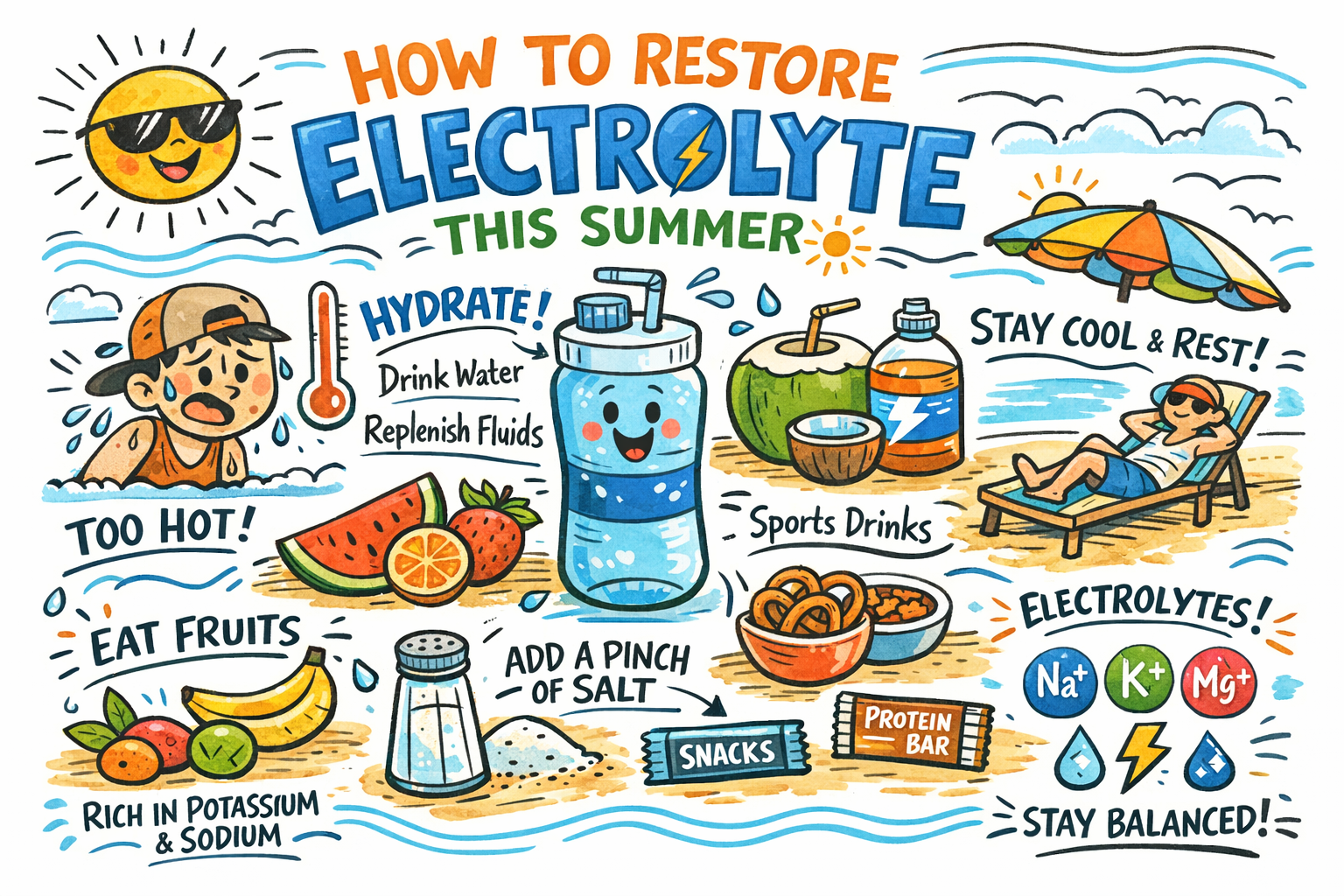

Hot weather doesn’t just make you sweat-it changes your body’s internal balance. Along with water, you lose electrolytes: minerals like sodium, potassium, and magnesium that regulate fluid balance, nerve signals, and muscle function. When these drop, you don’t just feel thirsty—you may feel drained, dizzy, or unusually weak.
Understanding how electrolyte loss happens—and how to correct it—can make a noticeable difference in how you function through the summer.

Why Electrolyte Loss Happens
Sweat is your body’s cooling system. As temperatures rise, your body increases sweat production to maintain a stable internal temperature. But sweat isn’t just water—it carries essential minerals with it.
Common triggers:
- Prolonged exposure to heat
- Physical activity (especially outdoors)
- Not drinking enough fluids
- Excess caffeine or alcohol (which can dehydrate you)
In humid conditions, the problem worsens because sweat doesn’t evaporate efficiently, making your body work harder to cool down.
Signs Your Electrolytes Are Low
Electrolyte imbalance often shows up subtly before it becomes serious:
- Persistent fatigue or low energy
- Muscle cramps or weakness
- Headaches or lightheadedness
- Increased thirst but no relief after drinking plain water
- Difficulty concentrating
If ignored, it can affect physical performance and even lead to heat exhaustion.
Key Electrolytes Your Body Needs
- Sodium: Maintains fluid balance and blood pressure
- Potassium: Supports muscle function and heart rhythm
- Magnesium: Helps with muscle relaxation and energy production
- Calcium: Important for muscle contraction and nerve signaling
Losing too much of these without replenishing them disrupts how your body functions.
How to Restore Electrolytes Effectively
1. Don’t Rely on Water Alone
Water is essential, but it doesn’t replace lost minerals. If you’re sweating a lot, you need fluids that contain electrolytes.

2. Use Natural Electrolyte Sources
Coconut water Naturally rich in potassium and easy to digest—ideal for quick rehydration.
Lemon water with salt A simple mix of water, lemon juice, a pinch of salt, and a little sugar can mimic an oral rehydration solution.

Buttermilk (chaas) Contains sodium, potassium, and probiotics—good for both hydration and digestion.
3. Eat Water-Rich Foods
Hydration doesn’t come only from drinks.
- Watermelon
- Oranges
- Cucumber
- Tomatoes
These provide both fluids and essential minerals.
4. Time Your Hydration
Don’t wait until you’re extremely thirsty. Spread your intake across the day:
- Start your morning with water
- Drink fluids between meals
- Rehydrate after being outdoors
5. Adjust Based on Activity
If you’re exercising or traveling in the heat, increase your intake. A short walk in the sun may not require much, but longer exposure definitely does.
Useful Products for Summer Hydration
- Fast&Up Reload Instant Hydration Powder – Convenient and effective for quick recovery
- Paperboat Coconut Water– Ready-to-drink natural hydration option
- Borosil Infuser Bottle – Helps you make lemon or fruit-infused water on the go
- Himalayan Pink Salt – Can be used in homemade electrolyte drinks
Common Mistakes to Avoid
- Drinking only plain water after heavy sweating
- Overconsuming sugary packaged drinks
- Ignoring early signs like fatigue or cramps
- Skipping meals during hot days
The bottom line
Electrolyte balance isn’t something most people think about until they feel unwell. But during summer, it becomes essential. The goal isn’t to overcompensate with fancy drinks—it’s to stay consistent with hydration, include natural sources, and listen to your body’s signals.
Read more about health here: Micro Vs Macro Nutrients