
It's 11:00 p.m.
You've already had dinner, you're getting ready for bed, and suddenly you're standing in front of the refrigerator wondering what you can eat.
Sound familiar?
Late-night hunger is extremely common. Sometimes you're genuinely hungry because dinner was too early or too small. Other times, the craving may be triggered by boredom, stress, habit, screen time, or simply staying awake longer than usual.
The good news is that you don't have to fight hunger by relying on willpower alone.
The better approach is to understand why you're hungry at night and make a few practical changes during the day.
In this guide, we'll look at why late-night hunger happens, how to tell physical hunger from cravings, what to eat when you're genuinely hungry, and simple habits that can make nighttime eating easier to manage.
Why Do You Get Hungry at Night?
Late-night hunger can have several causes, and not all of them are related to overeating.
1. Your dinner wasn't filling enough
If your evening meal is mostly refined carbohydrates or is simply too small for your needs, you may feel hungry again a few hours later.
A balanced meal containing protein, fiber-rich carbohydrates, vegetables or fruit, and healthy fats is generally more satisfying than a meal built primarily around highly processed carbohydrates.
For example:
Less filling:Toast + sugary spread
More balanced:Whole-grain toast + eggs + vegetables + fruit
The second option provides a broader mix of nutrients and is more likely to keep you satisfied.
2. You skipped meals during the day
Trying to "save calories" by skipping breakfast or lunch can backfire for some people.
If you're genuinely under-eating throughout the day, intense hunger at night isn't a failure of discipline. Your body may simply be asking for more food.
Instead of trying to eliminate nighttime hunger completely, look at your overall eating pattern.
Ask yourself:
Did I eat enough during the day?
That question can be more useful than asking:
How can I stop myself from eating after dinner?
3. You're staying awake longer
Your body doesn't automatically stop needing energy just because the clock says 9 or 10 p.m.
If you regularly stay awake until midnight or later, there's simply more time between dinner and bedtime.
This is particularly relevant for students, night-shift workers, gamers, and people who work late.
4. You're tired
Sleep and appetite are closely connected.
Research has found that insufficient sleep can increase hunger and appetite in some controlled studies, and sleep restriction has been associated with increased calorie intake.
NHLBI also notes that inadequate sleep can affect hormones involved in hunger regulation, including ghrelin and leptin.
So sometimes the solution to nighttime cravings isn't another diet rule.
It may be better sleep.
Hunger or Craving? Learn the Difference
Before reaching for a snack, pause for a moment.
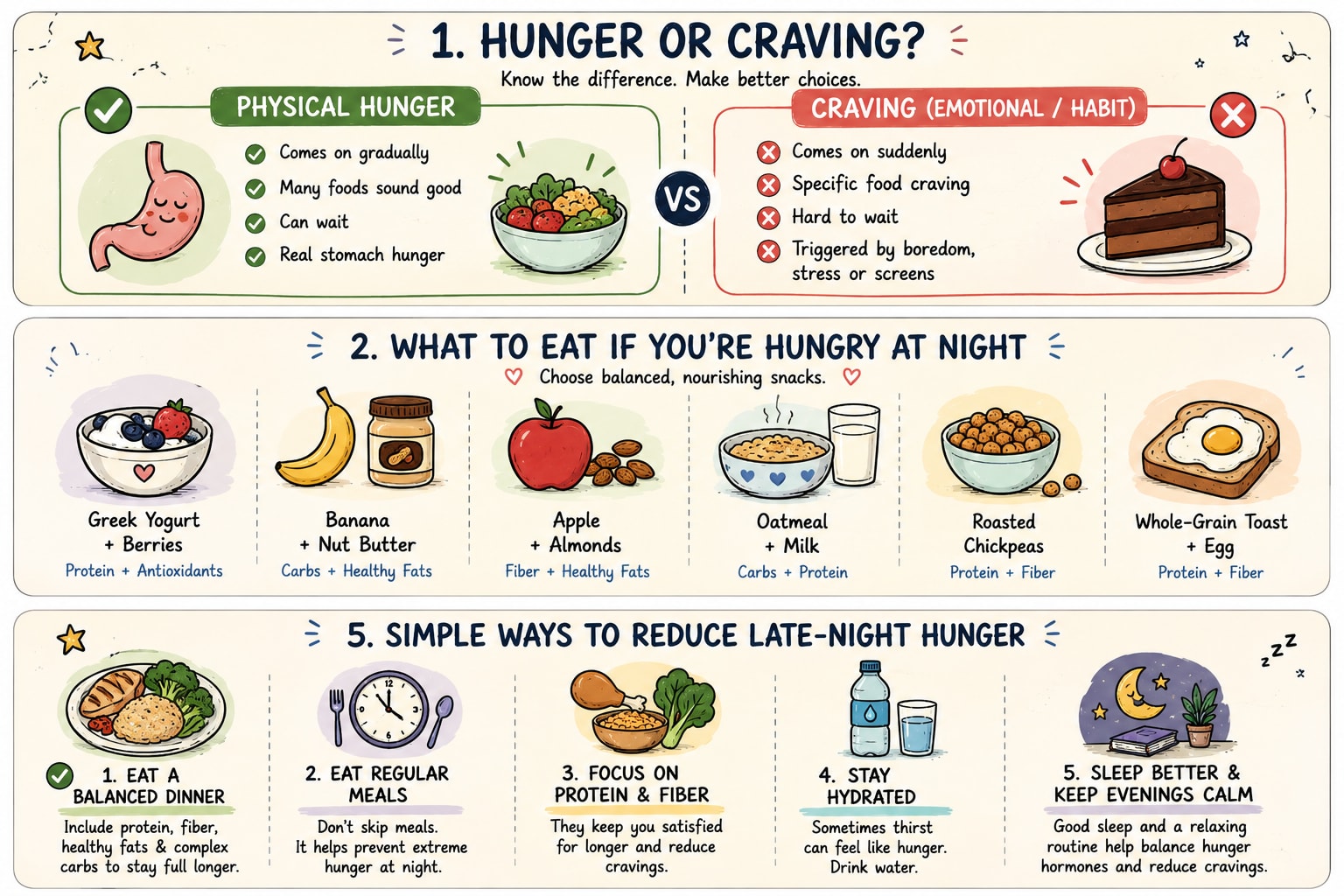
Physical hunger often:
- Develops gradually
- Can be satisfied by different foods
- Comes with stomach sensations
- Makes you willing to eat a normal meal
A craving often:
- Appears suddenly
- Focuses on a specific food
- Can be triggered by stress or boredom
- Feels stronger when you're watching TV or scrolling
- May disappear if you become distracted
Neither one makes you "bad."
The goal isn't to ignore every craving.
It's to understand what's actually driving the urge to eat.
10 Practical Ways to Control Late-Night Hunger
1. Make Dinner More Filling
One of the easiest ways to reduce late-night hunger is to improve your dinner.
Instead of building dinner around one food group, aim for a balanced plate.
Try including:
Protein:Eggs, tofu, paneer, lentils, beans, fish, chicken, Greek yogurt
High-fiber carbohydrates:Oats, brown rice, quinoa, whole-grain bread, potatoes, sweet potatoes
Vegetables:Spinach, broccoli, carrots, peppers, tomatoes, cauliflower
Healthy fats:Nuts, seeds, avocado, olive oil
You don't need a perfect plate every night.
The goal is simply to make dinner satisfying enough to carry you comfortably toward bedtime.
2. Don't Skip Meals Just to "Save Calories"
If you're constantly hungry at night, examine what happened earlier in the day.
Did you:
- Skip breakfast?
- Have a very small lunch?
- Eat only coffee until afternoon?
- Spend hours without eating?
- Restrict foods you enjoy?
If so, the problem may have started long before bedtime.
Regular, balanced meals can make it easier to manage hunger later in the evening.
3. Add More Protein to Your Meals
Protein is an important part of a satisfying diet.
Try adding a protein source to each major meal.
Breakfast
Eggs, Greek yogurt, milk, tofu or cottage cheese
Lunch
Lentils, beans, chicken, fish, tofu or paneer
Dinner
Fish, eggs, tofu, beans, chicken or paneer
Snacks
Greek yogurt, roasted chickpeas, nuts or cottage cheese
The goal isn't to turn every meal into a "high-protein" meal.
It's simply to avoid meals that contain almost no protein.
4. Increase Your Fiber Intake
Fiber can help make meals more satisfying and is found naturally in foods such as vegetables, fruits, whole grains, beans, lentils, nuts, and seeds.
Instead of relying on highly processed snack foods at night, build more fiber-rich foods into your regular meals.
Easy swaps:
White bread → Whole-grain bread
Sugary cereal → Oats with fruit and nuts
Chips → Roasted chickpeas
Sweet dessert → Fruit with plain yogurt
You don't need to eliminate your favorite foods.
Think addition before restriction.
Add more nutritious foods first and gradually improve the overall quality of your diet.
5. Drink Some Water
Sometimes what feels like hunger may actually be thirst or simply a desire to consume something.
Try drinking a glass of water and waiting a few minutes.
If you're still genuinely hungry, eat.
Don't use water as a way to suppress real hunger.
The point is simply to check whether you actually need food.
6. Create a "Kitchen Closed" Routine
If you routinely wander into the kitchen after dinner simply because you're bored, create a clear evening routine.
For example:
Dinner → Clean up → Brush teeth → Herbal tea → Read → Bed
A predictable sequence can help separate dinner from mindless snacking.
This isn't about creating a strict rule that says you're "not allowed" to eat after dinner.
If you're genuinely hungry, you can still have something.
It's about reducing automatic eating.
7. Keep Your Evening Snacks Intentional
If you know you'll get hungry before bed, plan for it.
A planned snack can be much easier to manage than waiting until you're extremely hungry and then eating whatever is easiest to find.
Nutritious late-night snack ideas
- Plain Greek yogurt with berries
- Banana with a small amount of peanut butter
- Apple with a handful of nuts
- Cottage cheese with fruit
- Oatmeal with cinnamon
- Roasted chickpeas
- A small bowl of unsweetened cereal with milk
- Whole-grain toast with nut butter
The right snack depends on your overall diet, preferences, hunger level, and health needs.
8. Don't Eat Straight From the Packet
This is a simple habit that can make a surprisingly big difference.
Instead of taking a packet of chips, cookies, or nuts to bed, put a reasonable portion into a bowl.
Then put the package away.
Eating directly from a large package makes it much harder to notice how much you've eaten.
This isn't about counting every calorie.
It's about making your food environment work in your favor.
9. Watch the Screen-Snacking Connection
Late-night hunger isn't always about your stomach.
It can also become a habit:
Netflix → snacks
Gaming → snacks
Scrolling → snacks
Studying → snacks
Eventually, your brain can start associating a particular activity with food.
Try separating the two occasionally.
For example, have tea while watching your show instead of automatically reaching for snacks every night.
If you're actually hungry, eat.
But if you're simply eating because the television is on, recognizing the pattern is the first step toward changing it.
10. Improve Your Sleep Routine
If you're regularly staying awake late, you're giving yourself more opportunities to eat.
Sleep deprivation can also affect appetite and food intake. NIH research has found that improving sleep duration reduced calorie intake in a randomized clinical trial involving adults who were overweight and habitually sleeping less than 6.5 hours per night.
Try:
- Keeping a relatively consistent bedtime
- Getting enough sleep opportunity
- Limiting stimulating activities close to bedtime
- Keeping your bedroom comfortable and dark
- Reducing unnecessary late-night screen time
Better sleep won't magically eliminate every craving, but it can make healthy eating habits easier to maintain.
What Should You Eat If You're Actually Hungry at Night?
Here's the important part:
You don't have to go to bed hungry just because it's late.
If your stomach is genuinely growling and you know you need food, choose a small, balanced snack.
Good options include:
SnackWhy It Can WorkGreek yogurt + berriesProtein + fruitBanana + peanut butterCarbohydrates + fatApple + almondsFiber + healthy fatsOatmeal + milkCarbohydrates + proteinCottage cheese + fruitProtein + carbohydratesRoasted chickpeasProtein + fiberWhole-grain toast + eggCarbohydrates + protein
The best option is the one that fits your dietary preferences and overall eating pattern.
Foods to Be Careful With at Night
You don't need to completely ban any food because it's nighttime.
However, some foods are particularly easy to overeat when you're tired or distracted.
These include:
- Chips
- Cookies
- Candy
- Ice cream
- Sugary cereals
- Sweetened beverages
- Highly processed snack foods
The issue isn't that these foods become "bad" after a certain hour.
The bigger problem is that they can be easy to eat quickly and mindlessly.
If you want them, enjoy them intentionally rather than eating them automatically every night.
Does Eating Late at Night Cause Weight Gain?
This question is more complicated than the popular rule that "eating after 8 p.m. makes you fat."
There isn't a universal cutoff time after which food suddenly causes weight gain.
Your overall calorie intake, food quality, activity, sleep, and eating pattern all matter.
However, research suggests that meal timing may influence metabolism and appetite, and controlled research has found that later eating can increase hunger and alter metabolic responses under certain conditions.
So instead of obsessing over an arbitrary time such as 8 p.m., focus on the bigger picture:
What are you eating, how much are you eating, how hungry are you, and how well are you sleeping?
Those questions are much more useful.
A Simple Late-Night Hunger Checklist
The next time you feel hungry at 11 p.m., ask yourself these five questions:
1. Am I physically hungry?
If yes, consider eating.
2. Did I eat enough today?
If you skipped meals, your hunger may be completely understandable.
3. Was dinner balanced?
If dinner lacked protein, fiber, or enough food overall, you may need a snack.
4. Am I tired?
If you're exhausted and staying up unnecessarily late, sleep may be the better choice.
5. Am I eating because of a habit?
If you're watching TV or scrolling and automatically reaching for food, pause and check whether you're actually hungry.
This five-question check can help you make a decision without turning food into a guilt exercise.
A Practical Evening Routine to Reduce Late-Night Hunger
Try this simple routine for a week:
6:30–8:00 p.m.Have a balanced dinner.
After dinnerDrink water and clean up the kitchen.
8:30–9:30 p.m.Do something relaxing rather than continuously grazing.
If genuinely hungryHave a planned snack such as yogurt and fruit or toast with nut butter.
Final hour before bedDim the lights and reduce stimulating activities.
BedtimeAim for enough sleep rather than staying awake unnecessarily late.
You don't need to follow these times exactly. Adjust them to your own schedule.
What If You're Hungry Every Night?
Occasional nighttime hunger is normal.
But if you're extremely hungry every night despite eating regular meals, it's worth looking at the bigger picture.
Consider:
- Are your meals large enough for your needs?
- Are you eating enough protein and fiber?
- Are you skipping meals?
- Are you exercising much more than usual?
- Are you consistently sleeping too little?
- Are you experiencing unusual thirst, frequent urination, or unexplained weight changes?
Persistent or unusual changes in appetite can sometimes be related to an underlying medical issue or medication.
If the change is significant, persistent, or concerning, talk with a qualified healthcare professional.
The Bottom Line
Controlling late-night hunger isn't about having extraordinary willpower.
It's about making your daytime eating pattern more satisfying, recognizing genuine hunger, reducing automatic snacking, and giving sleep the attention it deserves.
Start with three changes:
Eat balanced meals during the day.
Make dinner satisfying rather than unnecessarily restrictive.
Get enough sleep and create a calmer evening routine.
And if you're genuinely hungry before bed, you don't have to feel guilty about eating.
A small, nutritious snack can be a perfectly reasonable part of a healthy eating pattern.
The goal isn't to never eat at night.
The goal is to understand why you're eating and make choices that actually support your health.