
Anxiety rarely announces itself politely. It tends to arrive in fragments-tightness in the chest, restless thoughts at midnight, a sudden sense that something is wrong even when nothing obvious is. For many people, it becomes less of a moment and more of a pattern.
What makes anxiety especially difficult is that it often feeds on the way we respond to it. The body becomes tense, the mind starts predicting worst-case scenarios, and before long, we are trapped in a loop of fear reacting to fear.
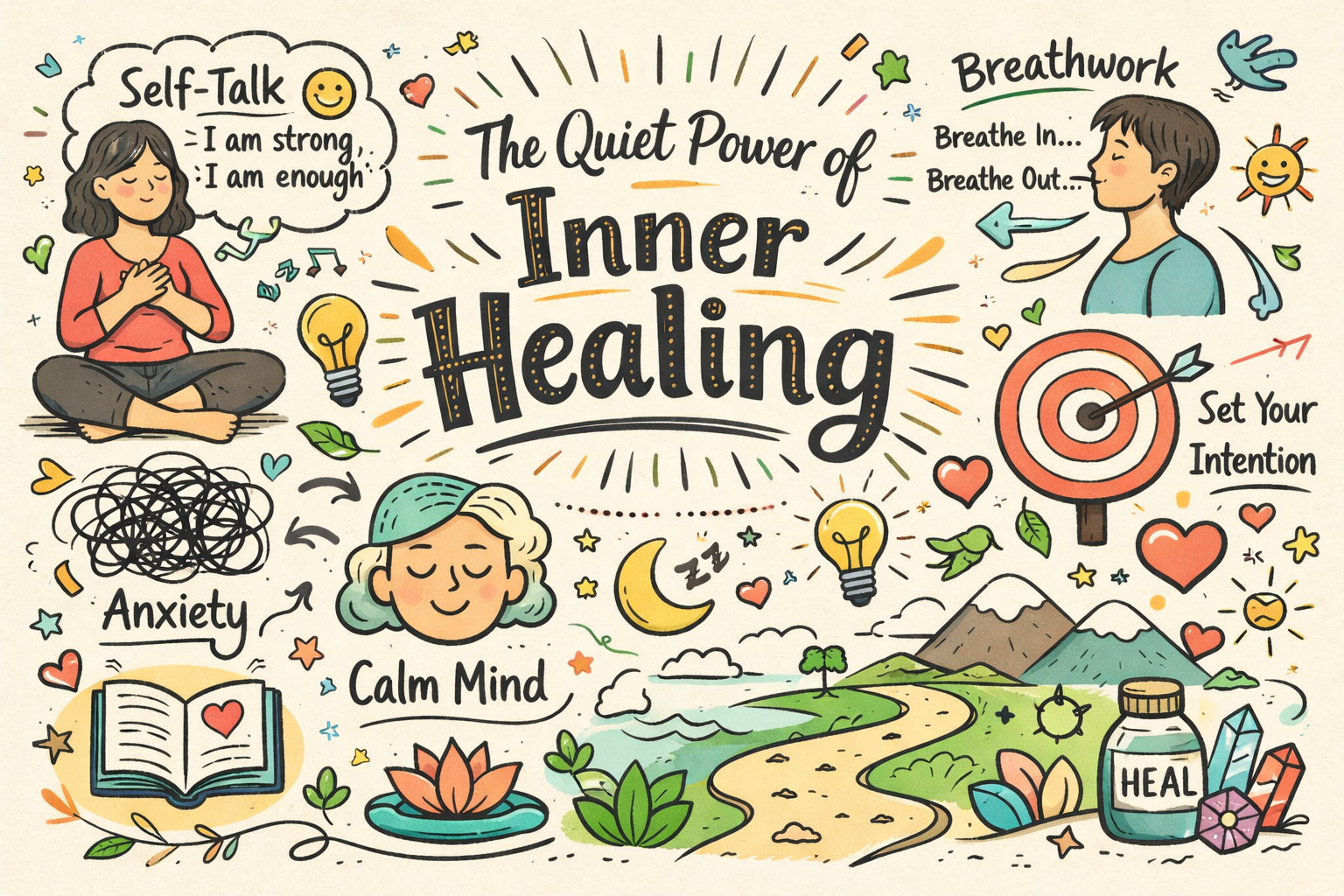
Breaking that cycle does not usually begin with one dramatic breakthrough. More often, it starts with smaller practices—how we speak to ourselves, how we regulate our breath, and how intentionally we direct our attention.
These habits may sound simple, but their impact on anxiety can be profound.
The Language You Use With Yourself Matters
The average person has thousands of thoughts every day. Many of them happen so quickly that we barely notice them. But over time, those thoughts shape emotional patterns.
When anxiety is present, inner dialogue often becomes harsh and absolute:
- I can’t handle this.
- Something bad is going to happen.
- I always mess things up.
The nervous system listens closely to these statements. Repeated negative self-talk reinforces stress responses, convincing the brain that danger is constant.
Self-talk is not about pretending everything is perfect. It is about choosing language that grounds rather than escalates.
A subtle shift from “I am falling apart” to “I am overwhelmed, but I can move through this” changes the emotional tone of the experience.
That difference matters.
Supportive internal dialogue creates psychological safety, and psychological safety helps calm the body.
Writing down your thoughts can interrupt anxious spirals and help you build a healthier inner dialogue. A guided journal like Intelligent Change Mindful Affirmation Journal can make this practice easier, especially if you struggle with where to begin.
Breathwork: The Fastest Route Back to the Present
Anxiety often pulls us into imagined futures. Breathwork brings us back to the body.
Unlike thoughts, the breath is immediate and measurable. It is one of the few systems in the body we can consciously control—and in doing so, influence the nervous system.
Slow, intentional breathing activates the parasympathetic nervous system, the branch responsible for rest and recovery.
A simple technique:
- Inhale for 4 counts
- Hold for 7 counts
- Exhale for 8 counts
- Repeat for 2–3 minutes
Lengthening the exhale signals to the body that it is safe.
This is not a vague wellness trend; it is physiology. When breathing slows, heart rate often follows. Muscles relax. The mind becomes less reactive.
Breathwork does not erase anxiety, but it interrupts its momentum.
That interruption can be enough to create clarity.
Even a simple meditation cushion or a pair of noise-canceling earbuds can make breathwork feel more intentional and easier to stick with.
Where Manifestation Fits In—And Where It Does Not
Manifestation is often misunderstood as wishful thinking. In reality, its practical value lies less in magical outcomes and more in focused intention.
At its healthiest, manifestation is the practice of aligning thoughts, beliefs, and actions toward a desired state.
For anxiety, that desired state is often peace, resilience, or trust.
When someone repeatedly visualizes calm, speaks it into their routines, and acts in ways that support it, they begin reinforcing a new mental blueprint.
This is not about denying reality. It is about training attention.
The anxious mind is already rehearsing fear. Intentional manifestation redirects that energy.
Instead of asking, What if everything goes wrong? the question becomes, What if I am capable of navigating what comes?
That shift changes how the brain interprets uncertainty.
Affirmation cards may sound simple, but repeating focused messages can gradually reshape the stories we tell ourselves.
The Role of Routine in Reducing Anxiety
Healing practices work best when they become habits, not emergency tools.
A five-minute morning check-in, a breathing ritual before sleep, or journaling after stressful moments can create consistency in emotional regulation.
The brain responds well to repetition. Predictable routines reduce cognitive overload and offer stability.
Even simple rituals—drinking tea without screens, stretching in silence, stepping outside for fresh air—can anchor the nervous system.
Anxiety thrives in chaos. Routine creates structure.
Structure creates relief.
Movement, Rest, and Emotional Release
Anxiety is not only mental; it is stored physically.
When stress accumulates, the body often holds it in the shoulders, jaw, chest, or stomach.
This is why movement matters.
Walking, yoga, dancing, or even gentle stretching helps discharge built-up tension.
Equally important is rest—not just sleep, but moments of deliberate stillness.
Rest is often mistaken for doing nothing. In truth, it is active recovery.
The nervous system needs pauses to reset.
Without them, anxiety remains in constant circulation.
Creating a sensory environment for calm—like using Plant Therapy lavender oil during breathwork—can train your brain to associate certain rituals with relaxation.
Healing Is Built in Small Decisions
There is no single cure-all for anxiety. It is shaped by biology, environment, thought patterns, and lived experiences.
But every supportive practice adds up.
A kinder inner voice. A steadier breath. A more intentional focus. A daily rhythm that supports emotional balance.
These are foundational acts.
The power of self-talk, breathwork, and intention lies in their ability to remind the body and mind that safety can be cultivated from within.
And over time, that internal safety becomes stronger than fear.
That is where real healing begins.
Read more about stress relief here: 7 Simple Ways to Reduce Stress in a Busy Life