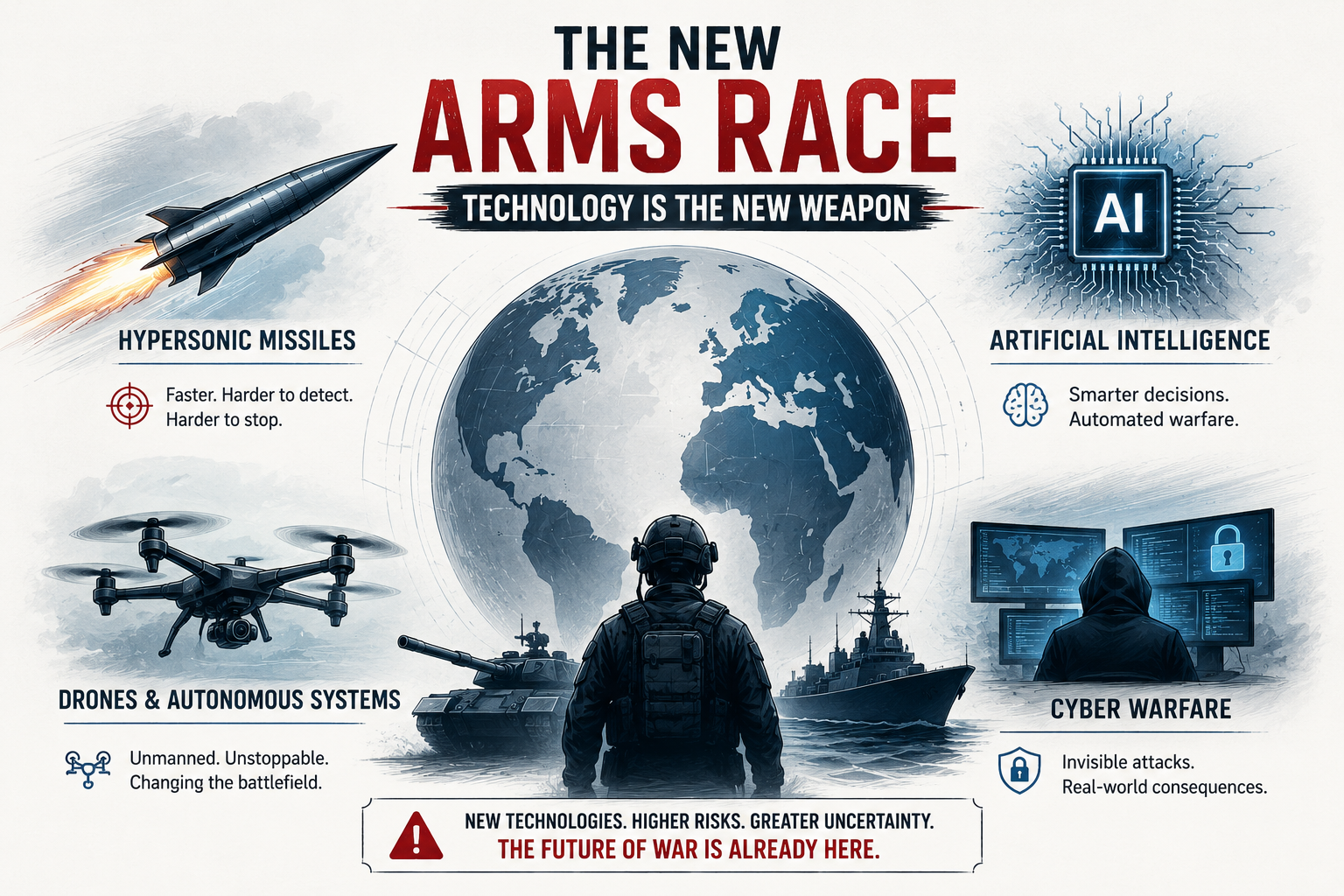

When people hear the phrase arms race, they usually think about the Cold War.
The United States and the Soviet Union competing to build bigger nuclear arsenals. Thousands of warheads. Missile silos. Nuclear submarines.
But the most important arms race today looks very different.
It is quieter.
More technological.
And in many ways, potentially more dangerous.
Around the world, major powers are investing billions of dollars into a new generation of military technologies:
- hypersonic missiles
- AI-powered weapons
- autonomous drones
- cyber warfare systems
- underwater robotic weapons
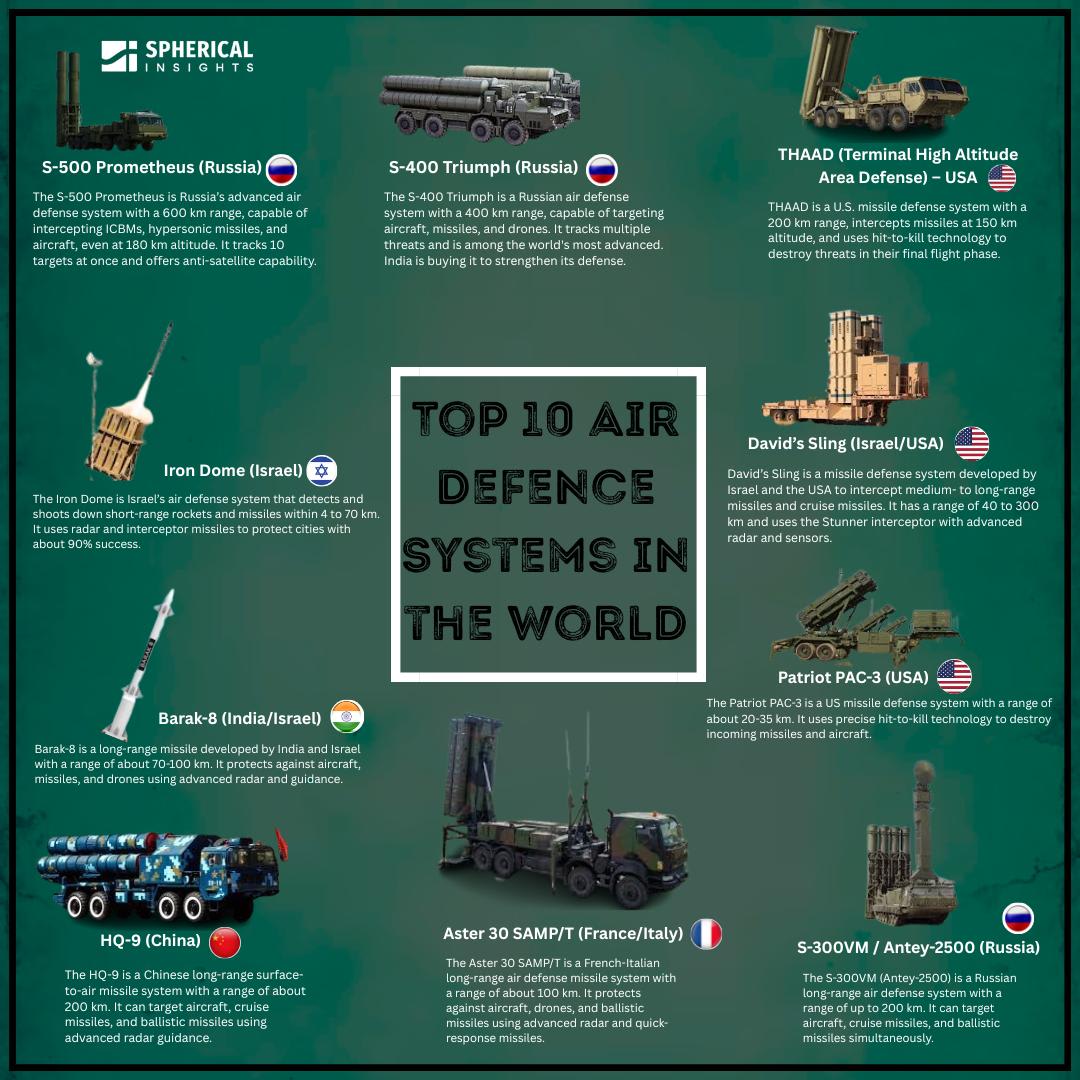
- advanced missile defense networks
Unlike the Cold War nuclear race, this competition is not only about the number of weapons.
It is about speed, automation, intelligence, and technological superiority.
And many people are barely paying attention. (National Institute of Atomic Warfare)
The Race Is No Longer Just Nuclear
Nuclear weapons still matter.
The world still has roughly 9,600 nuclear warheads, with the United States and Russia holding the largest arsenals.
But military competition is increasingly shifting toward next-generation weapons designed to change how wars are fought.
Governments are investing heavily in systems that can:
- strike faster
- make decisions faster
- evade traditional defenses
- operate with minimal human involvement
This is creating a new strategic competition unlike anything seen before.
Hypersonic Missiles Are Changing Military Calculations
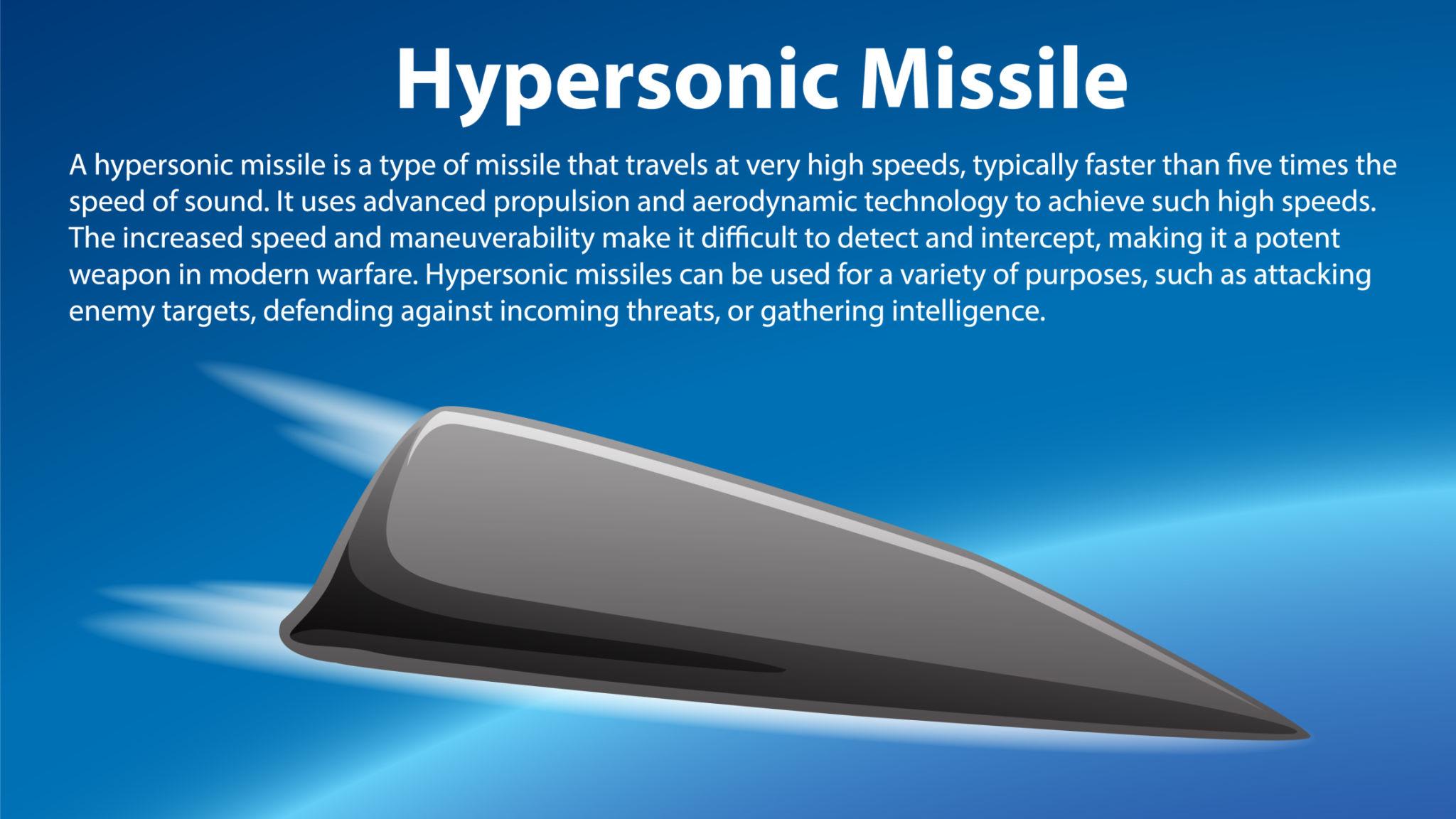
One of the biggest developments is hypersonic weapons.
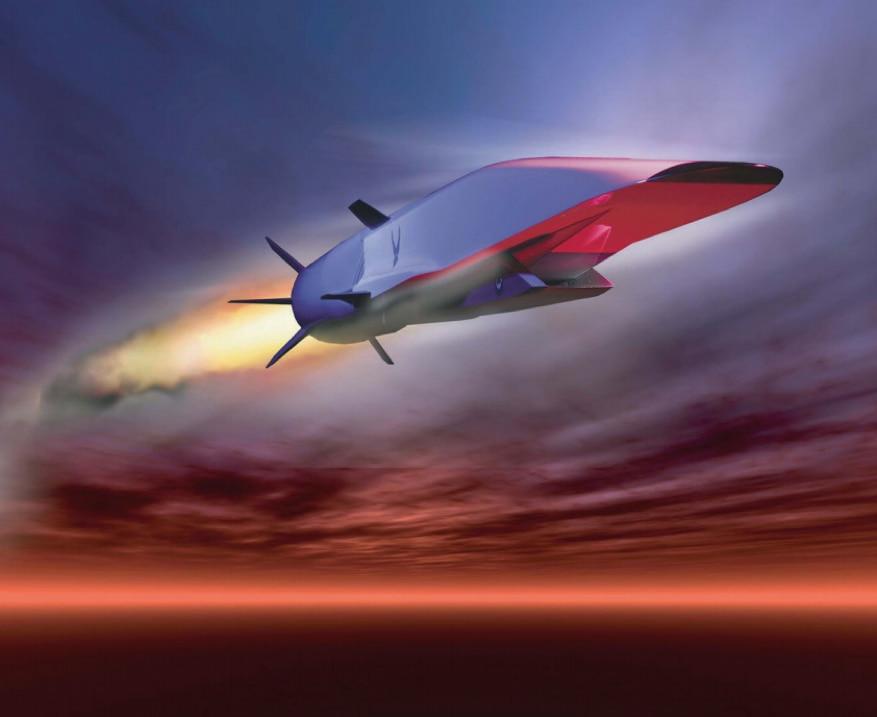
These missiles travel at speeds above Mach 5 — more than five times the speed of sound — and can maneuver during flight, making them much harder to intercept than traditional ballistic missiles. (Military Machine)
Countries leading hypersonic development include:
- United States
- China
- Russia
Russia has continued promoting systems like:
- Avangard hypersonic glide vehicles
- Sarmat intercontinental missiles
- Poseidon nuclear underwater drones
as part of its strategic modernization efforts. (LA Times)
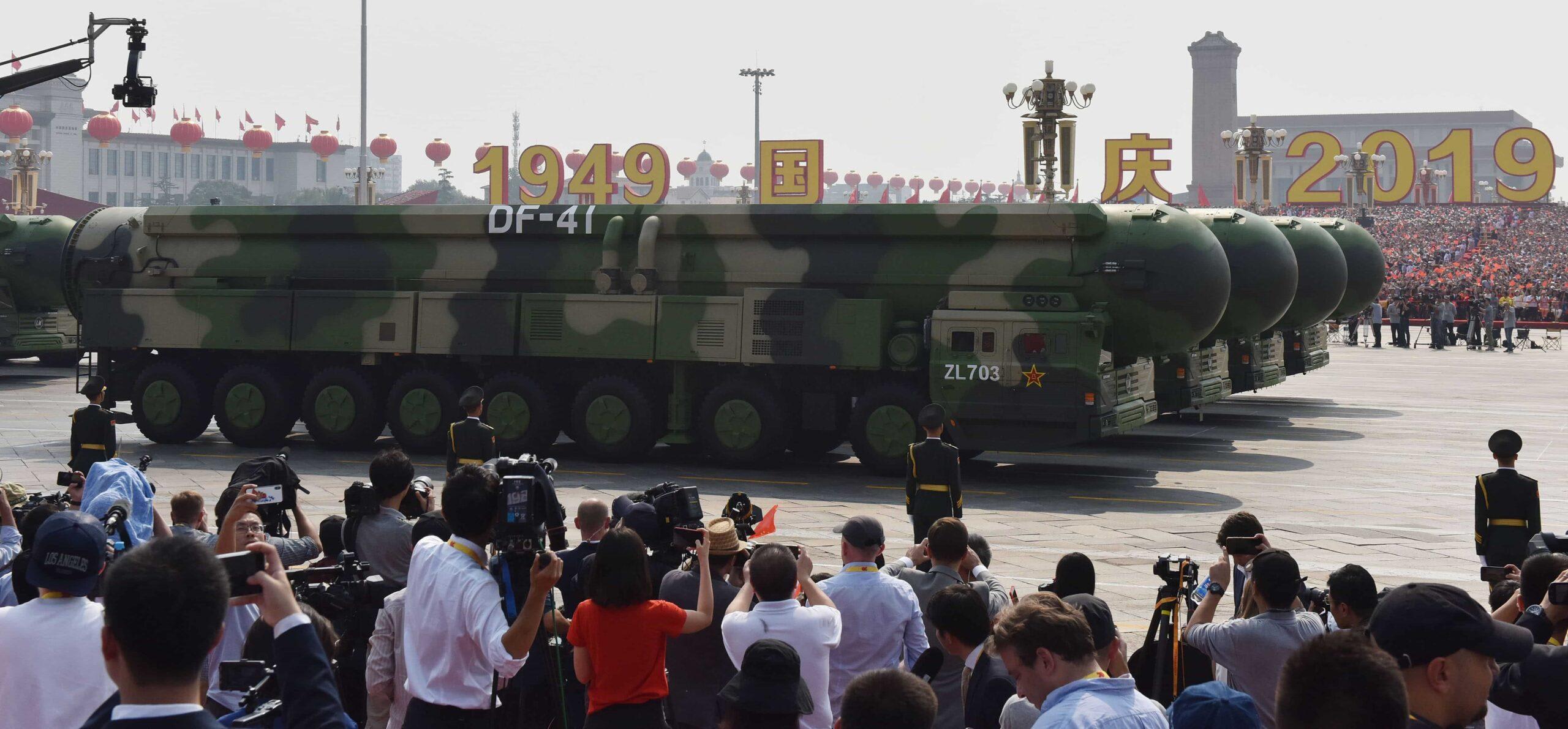
Meanwhile, the US and China are accelerating their own hypersonic programs, fearing technological disadvantage.
Military experts worry because hypersonic weapons dramatically reduce reaction time during crises.
A decision that once took minutes could soon take seconds. (Reuters)
Artificial Intelligence Is Entering Warfare
Perhaps the most important arms race today involves artificial intelligence.
Military AI is no longer science fiction.
Governments are developing systems that can:
- identify targets
- analyze battlefields
- coordinate drones
- process intelligence data
- assist military decision-making
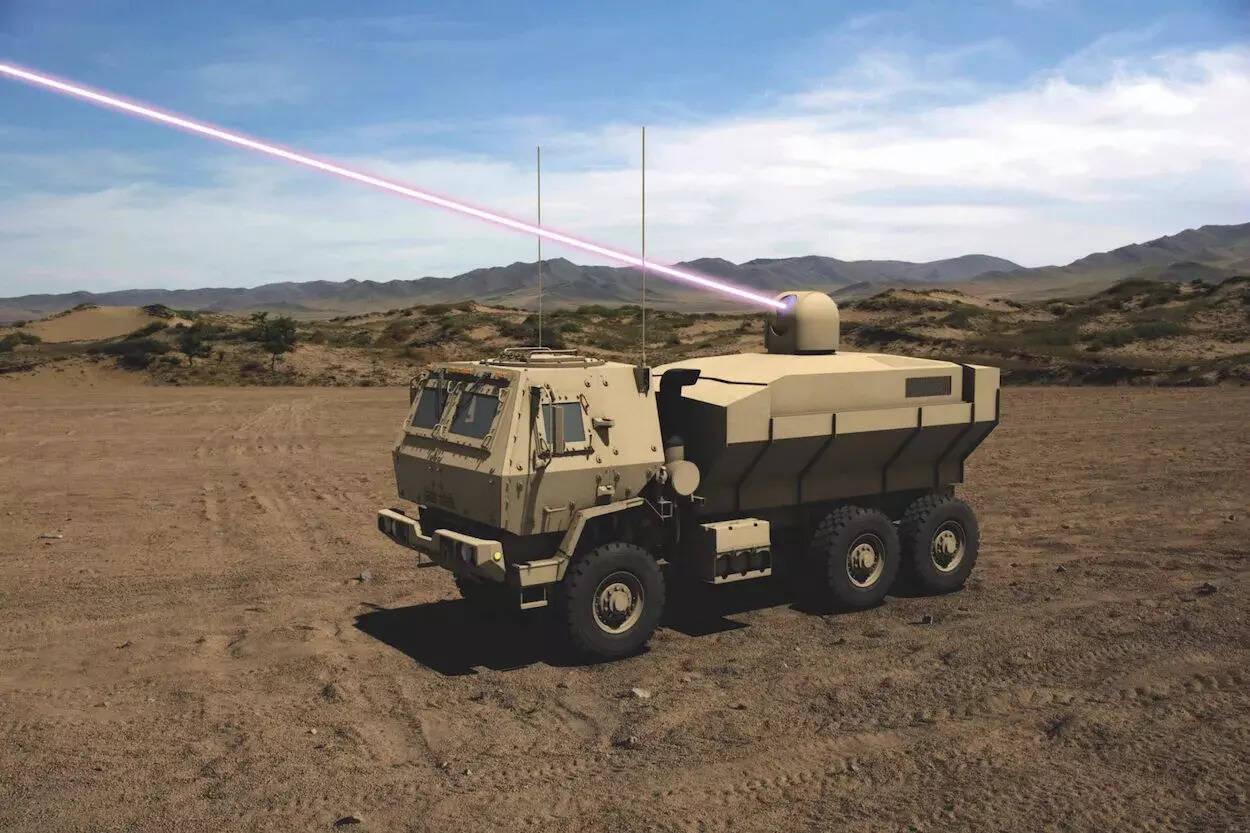
Recent reports show North Korea testing AI-guided missile systems and precision cruise missiles with automated target-recognition capabilities.
Meanwhile, China, the US, Russia, and several other countries are investing heavily in AI-driven military technologies. (The Indian Express)
The concern is not simply stronger weapons.
It is faster decision-making by machines during military crises.
That raises difficult questions:
- How much control should AI have?
- Can autonomous systems make mistakes?
- What happens if algorithms misinterpret threats?
These debates are becoming increasingly urgent.
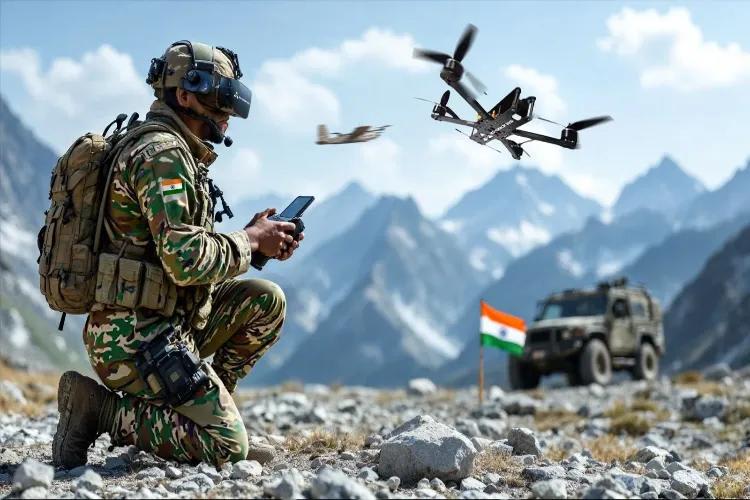
Drones Are Reshaping Modern Warfare
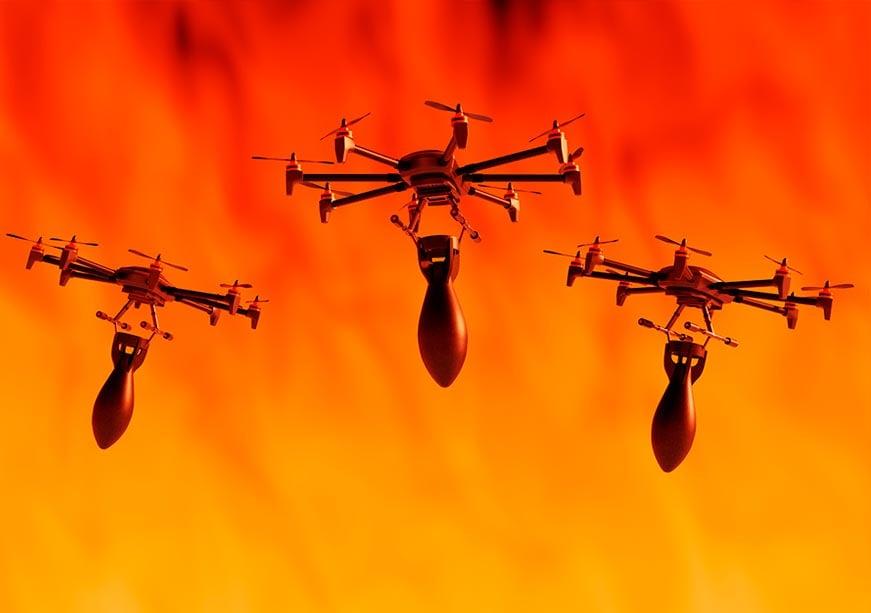
The war in Ukraine showed the world how powerful drones have become.
Relatively inexpensive unmanned systems are now capable of:
- reconnaissance
- precision strikes
- battlefield surveillance
- electronic warfare
Some military planners believe future conflicts could involve massive drone swarms operating simultaneously.
Countries are increasingly investing in:
- autonomous aerial drones
- naval drones
- underwater robotic systems
Even the AUKUS alliance recently announced plans to develop advanced unmanned undersea vehicles designed for reconnaissance and maritime warfare. (Reuters)
The battlefield is becoming increasingly automated.
China’s Military Expansion Is Accelerating
China's military modernization has become one of the most significant drivers of this new arms race.
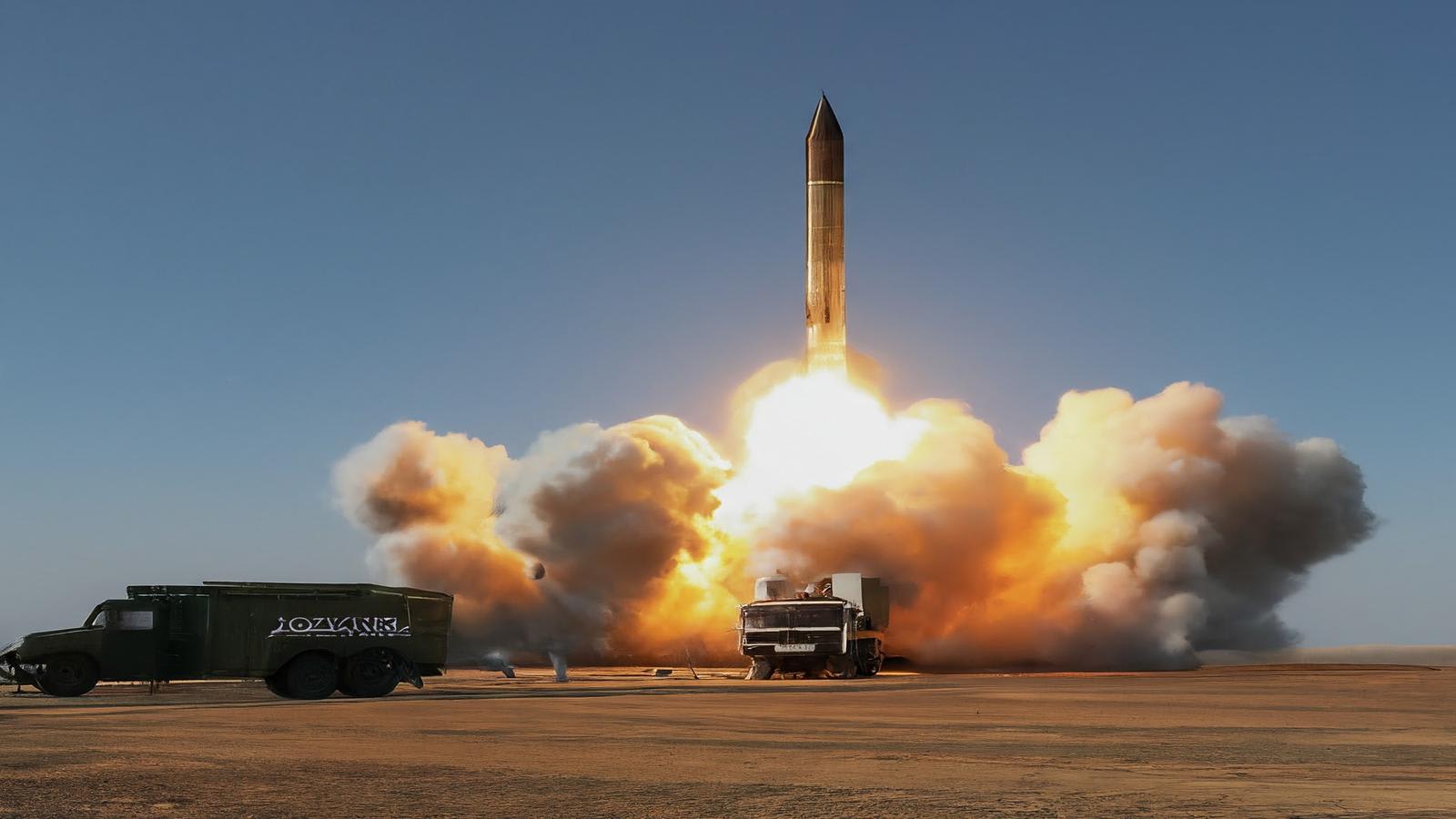
Recent satellite analysis revealed major expansion around China's missile infrastructure, including dozens of new launch facilities and support systems connected to nuclear missile forces. (Reuters)
Some US defense assessments project that China could possess around 1,000 nuclear warheads by 2030 if current modernization trends continue.
Beyond nuclear weapons, China is investing heavily in:
- hypersonic systems
- naval expansion
- AI warfare
- cyber capabilities
- space technologies
This is one reason tensions between Washington and Beijing increasingly resemble a technological competition rather than a traditional military rivalry.
Arms Control Is Weakening
A major reason experts are worried is that arms-control systems are becoming weaker.
The expiration of New START in 2026 removed the last major treaty limiting US and Russian strategic nuclear arsenals. RUSI
Without strong agreements:
- transparency decreases
- mistrust increases
- military competition accelerates
Many analysts fear that emerging technologies are advancing much faster than international regulations.
The result is a strategic environment with fewer rules and more uncertainty.
The Real Competition Is About Technology
The new arms race is not only about missiles.
It is about who controls:
- artificial intelligence
- advanced semiconductors
- quantum computing
- cybersecurity
- autonomous systems
- satellite networks
Military power increasingly depends on technological dominance.
That is why countries are investing enormous resources into AI research, chip manufacturing, and next-generation computing infrastructure.
Future geopolitical influence may depend as much on algorithms as armies.
Why This Arms Race Feels Different
The Cold War arms race was visible.
People saw missile tests, nuclear stockpiles, and military parades.
Today's competition often happens inside:
- research laboratories
- data centers
- semiconductor facilities
- AI companies
- cyber command centers
Much of it unfolds quietly.
Yet its consequences could be just as significant.
A world where hypersonic missiles reduce reaction times, AI assists battlefield decisions, and autonomous weapons operate at scale creates new risks that previous generations never faced.
The World Is Entering a New Era of Military Competition
The biggest geopolitical story of the next decade may not be a single war.
It may be the race to build the technologies that will define future wars.
Hypersonic missiles.
Artificial intelligence.
Drone swarms.
Autonomous submarines.
Quantum systems.
Military AI.
These are rapidly becoming the new symbols of power.
And while most people are focused on today's conflicts, governments around the world are already preparing for tomorrow's.
The new arms race has already begun.
Most people simply haven't noticed it yet. The Indian Express
America's global influence is not based solely on economics and alliances. It is also driven by its leadership in advanced military technologies and next-generation defense systems.