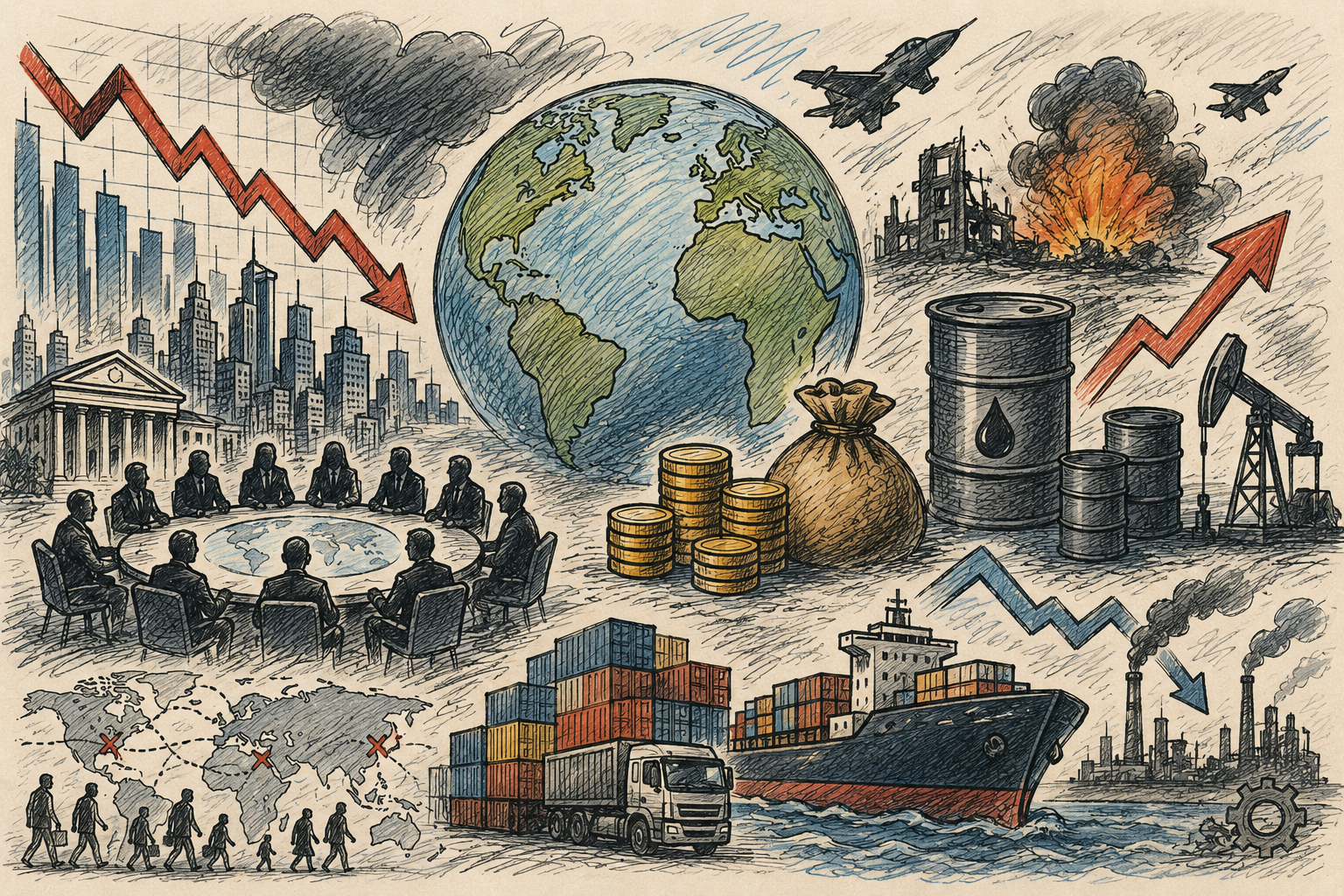

The world is facing one of its most significant economic challenges since the COVID-19 pandemic. A combination of geopolitical tensions, rising energy prices, supply chain disruptions, and slowing economic growth is creating uncertainty across global markets. At the center of this crisis lies the ongoing conflict involving Iran and its impact on international trade, oil supplies, and economic stability.
Governments, businesses, and investors around the world are closely monitoring developments as the consequences extend far beyond the Middle East.
Why Is the World Concerned?
The Strait of Hormuz, one of the world's most important oil transportation routes, has become a focal point of concern. A significant portion of global oil and gas supplies passes through this narrow waterway every day.
Any disruption to shipping routes can result in:
- Higher fuel prices
- Increased transportation costs
- Rising food prices
- Supply chain disruptions
- Increased inflation worldwide
As tensions continue, energy markets have reacted sharply, pushing oil prices higher and creating uncertainty for businesses and consumers alike.
World Bank Issues Major Warning
According to the latest World Bank assessment, global economic growth is expected to slow to approximately 2.5% in 2026, making it the weakest performance since the pandemic years.
Several factors are contributing to this slowdown:
Rising Inflation
Inflation is increasing across many countries due to higher energy and transportation costs. Consumers are paying more for fuel, electricity, food, and essential goods.
Slower Investment
Businesses become cautious during periods of geopolitical uncertainty. Companies often delay expansion plans, hiring, and investments until market conditions become more stable.
Supply Chain Challenges
Global supply chains remain vulnerable. Increased shipping costs and disruptions can affect everything from electronics and automobiles to agricultural products.
The World Bank warns that many developing nations could face a prolonged period of weak growth if current conditions persist.
Impact on Ordinary People
While geopolitical conflicts often seem distant, their effects can quickly reach households around the world.
Higher Fuel Prices
As oil prices rise, transportation becomes more expensive. This affects both personal travel and commercial logistics.
More Expensive Food
Farmers rely on fuel and fertilizers. Rising energy costs often translate into higher food prices for consumers.
Increased Cost of Living
Electricity, manufacturing, transportation, and retail sectors all face higher operating costs, which are frequently passed on to customers.
For many families, this means reduced purchasing power and tighter household budgets.
Financial Markets React
Stock markets around the world have experienced increased volatility as investors attempt to assess the economic impact of the crisis.
Major concerns include:
- Future interest rate decisions
- Inflation pressures
- Corporate earnings
- Energy market stability
- Global trade growth
Investors are increasingly seeking safer assets while monitoring central bank responses.
What World Leaders Are Doing
The upcoming G7 Summit in France is expected to focus heavily on:
- Middle East stability
- Global economic security
- Energy supply protection
- Inflation control
- International trade resilience
World leaders are seeking diplomatic solutions while preparing economic measures to reduce the impact on global markets.
Could Things Get Better?
Economists believe several positive developments could improve the outlook:
- Successful diplomatic negotiations
- Stabilization of oil prices
- Improved supply chain efficiency
- Expansion of renewable energy investments
- Increased international cooperation
However, uncertainty remains high, and much depends on future geopolitical developments.
Final Thoughts
The global economy is entering a critical period. The combination of geopolitical tensions, inflation pressures, and slowing growth has created a challenging environment for governments, businesses, and consumers alike.
While the world has faced major economic disruptions before and successfully recovered, the coming months will be crucial in determining whether global markets stabilize or face further turbulence.
For now, one thing is clear: events occurring thousands of miles away are influencing fuel prices, food costs, investments, and economic prospects for billions of people around the world.