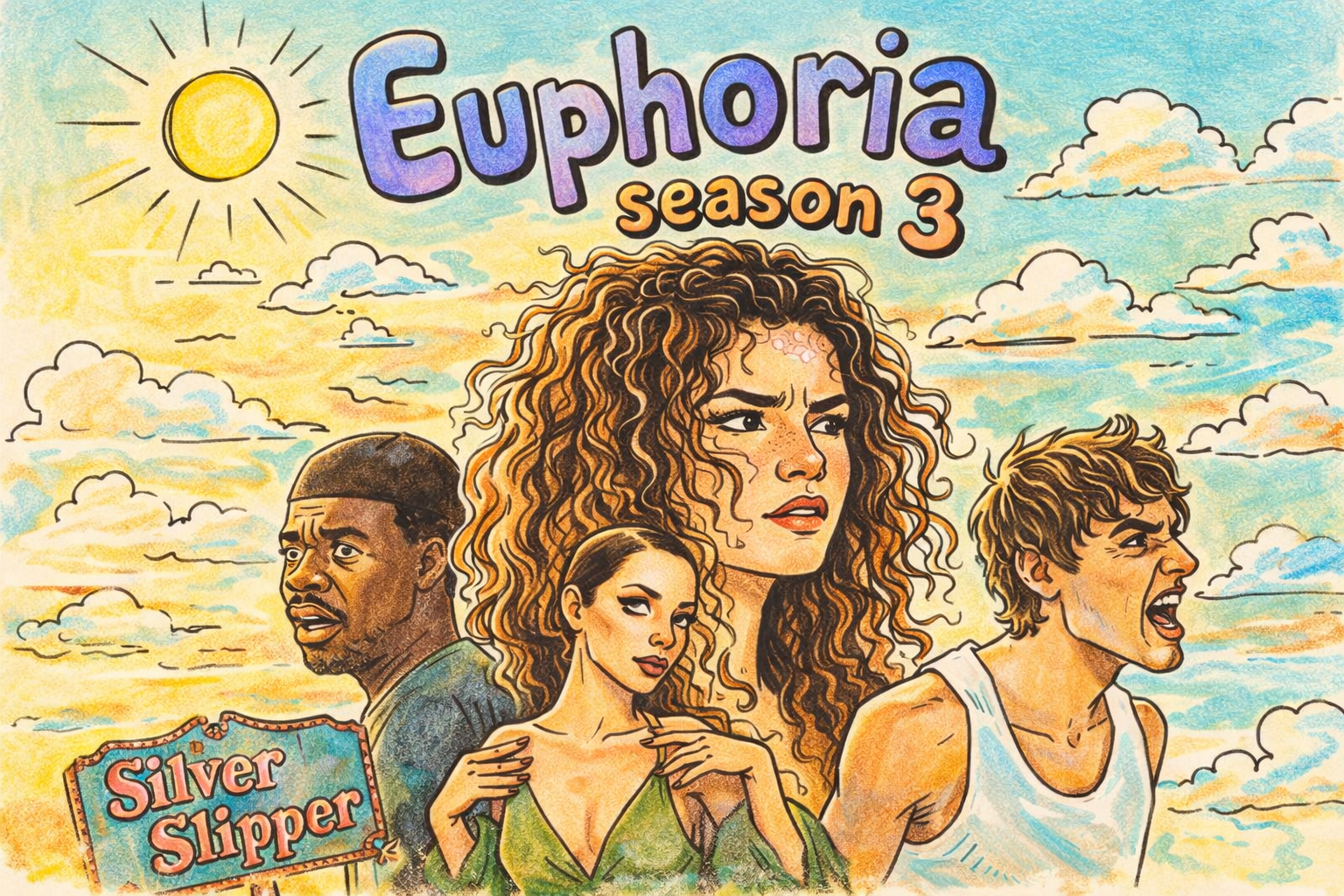

With massive anticipation and a long gap since its last release, Euphoria Season 3 finally arrives—and it’s nothing like what fans expected. Instead of continuing the familiar high school chaos, the show takes a bold leap into adulthood, exploring darker themes, deeper emotional conflicts, and real-world consequences.
But does this shift work? Read to find out.
Plot: Life After High School
Season 3 picks up five years after the events of Season 2, placing the characters in their mid-20s, navigating a much harsher and less forgiving world.
At the center remains Rue Bennett (Zendaya), whose struggle with addiction takes a darker turn. Instead of just battling internal demons, Rue is now entangled in dangerous external forces—working as a drug mule and trying to escape the consequences of past decisions.
Other characters are also dealing with complex adult realities:
- Nate and Cassie’s relationship evolves into something intense and controversial
- Jules explores identity and independence in unconventional ways
- Maddy and Lexi step into careers, reflecting a shift from survival to self-definition
The storyline expands geographically too—moving beyond East Highland into Los Angeles and even Mexico, giving the show a more cinematic, almost crime-drama edge.
What’s Different in Season 3?
1. From Teen Drama to Adult Drama
Earlier seasons focused on high school struggles—identity, relationships, and peer pressure. Season 3 replaces that with:
- Career anxiety
- Financial survival
- Crime and moral ambiguity
This shift makes the show feel less like a coming-of-age story and more like a psychological drama about consequences.
2. Tone: Less Neon, More Grit
The iconic neon aesthetic is toned down. Instead, the show adopts a more grounded, western-inspired realism, reflecting the characters’ emotional maturity.
3. Narrative Scope
Season 3 goes bigger:
- Multiple storylines across locations
- New characters and subplots
- Higher stakes (crime, addiction, exploitation)
However, this expanded scope sometimes makes the story feel less focused.
Character Evolution
Rue Bennett
Rue is no longer just a troubled teen, she’s now a product of her past choices. Her character arc explores survival, guilt, and the possibility of redemption. This is arguably Zendaya’s most intense performance yet.
Nate Jacobs
Nate appears more controlled but internally fractured. His evolution reflects a man trying to suppress chaos rather than confront it.
Cassie Howard
Cassie’s arc is one of the most controversial. Her pursuit of validation becomes more extreme, highlighting themes of identity, obsession, and societal pressure.
Jules Vaughn
Jules’ journey becomes more introspective, focusing on autonomy and emotional independence rather than relationships alone.
Supporting Characters
Characters like Maddy and Lexi show the most grounded growth—representing what “normal adulthood” might look like in a chaotic world.
Setting & Visual Storytelling
The setting plays a crucial role this season:
- Los Angeles introduces ambition, fame, and superficiality
- Mexico and border regions bring tension, danger, and survival themes
- Interiors feel more real and less stylized, reflecting emotional weight
Even the fashion and makeup evolve into “grown-up glam”, symbolizing how the characters are trying to redefine themselves.
Story’s Core Motive
The biggest question Season 3 asks is:
Can you ever truly escape your past? What happens when you don’t outgrow your trauma?Can you ever truly escape your past?
The show explores:
- The long-term consequences of addiction
- The illusion of reinvention
- The struggle between redemption and self-destruction
It’s less about who these characters are—and more about who they become when life stops giving second chances.
What Works
- Powerful performances, especially Zendaya
- Bold storytelling and expanded world-building
- Mature themes that feel relevant and raw
- Visually distinct evolution from earlier seasons
What Doesn’t
- Uneven pacing in certain episodes
- Overcrowded storylines
- Occasional loss of emotional intimacy due to scale
Critics have noted that while the ambition is impressive, the narrative can feel “meandering” at times.
Final Rating
⭐ 3.8 / 5
- Story: 4/5
- Characters: 4.5/5
- Execution: 3.5/5
- Visuals: 4.5/5
Final Verdict
Euphoria Season 3 is not an easy watch—and it’s not meant to be. It deliberately abandons the comfort of teenage storytelling and dives into something far more unsettling: adulthood without direction.
While it doesn’t always maintain the emotional precision of earlier seasons, it succeeds in evolving the series into something bigger, riskier, and more thought-provoking.
If Seasons 1 and 2 were about feeling everything, Season 3 is about living with the consequences of those feelings.
Euphoria Inspired Lifestyle & Aesthetic
Season 3 continues to reflect evolving fashion identities.
Y2K Fashion Revival
- Trendy Y2K Outfits: The Y2K aesthetic seen through bold colors and statement pieces remains a strong influence.
- Mini Bags like DOSYOS and Yuvita Rhinestone Purse
Euphoria Beauty Trends You Can Try
One of the most iconic elements of Euphoria is its bold makeup. From glitter tears to glowing skin, the aesthetic has influenced beauty trends worldwide.
- Glitter Eye Makeup Kits like DELANCI Glitter Palatte or VOZWA Chunky Eyeshadow
- Hydrating Skincare like Foxtale Hydrating Gel with Hyaluronic Acid, ORUM Hydra Glow Face Rice Water Moisturizer or Wishcare Barrier Bounce Moisturizer.
Read More about latest trends in Hollywood: Justine Bieber Coachella Performance Review