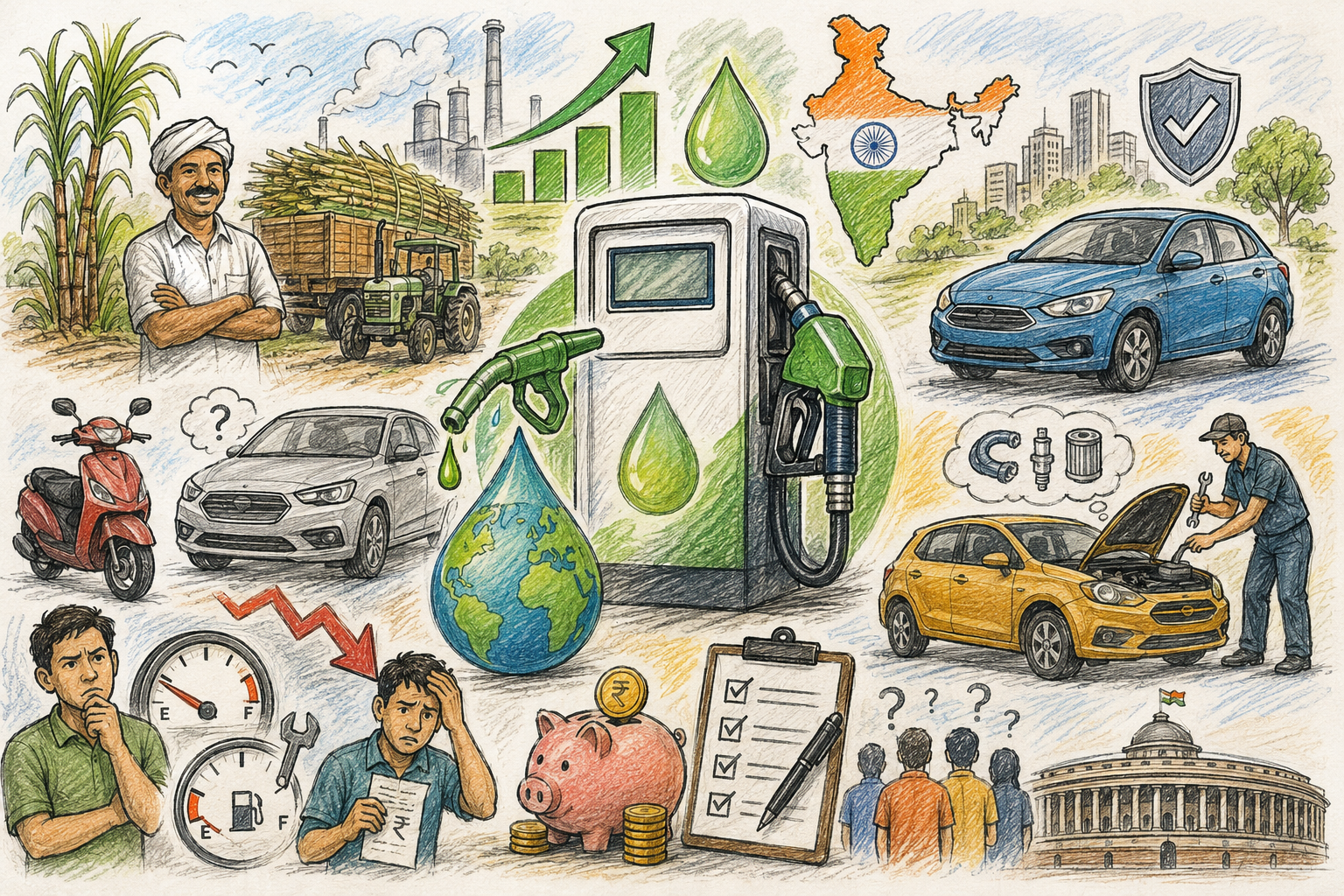

India has aggressively pushed the adoption of E20 petrol, a fuel blend containing 20% ethanol and 80% petrol. The government presents it as a major step toward reducing crude oil imports, lowering emissions, and supporting Indian farmers. However, since the nationwide rollout, many vehicle owners have raised concerns regarding mileage, engine compatibility, maintenance costs, and lack of fuel choice.
The E20 debate has now become one of the most controversial fuel policies in India, with supporters calling it a game-changer for energy security and critics arguing that consumers are bearing the cost of the transition.
What is E20 Petrol?
E20 is a blend of:
- 20% Ethanol (alcohol-based biofuel)
- 80% Conventional Petrol
Ethanol in India is primarily produced from:
- Sugarcane juice
- Molasses
- Damaged food grains
- Corn and other agricultural feedstock
The government launched the Ethanol Blended Petrol Programme to reduce dependence on imported crude oil and promote cleaner fuels.
Why is the Government Promoting E20?
1. Reduce Oil Imports
India imports a large portion of its crude oil requirements. By blending ethanol into petrol, the government hopes to reduce foreign exchange outflow and improve energy security.
2. Support Farmers
Ethanol production creates demand for sugarcane and agricultural products, increasing farmer income and providing an additional revenue stream to rural communities.
3. Lower Carbon Emissions
The government argues that ethanol-blended fuel emits fewer greenhouse gases compared to pure petrol and helps India meet climate goals.
4. Save Foreign Exchange
Official estimates indicate substantial savings from reduced crude oil imports due to ethanol blending.
What Problems Are Vehicle Owners Facing?
1. Reduced Mileage
This is the most common complaint.
Ethanol contains less energy per litre than petrol. As a result, many users report:
- Lower fuel efficiency
- More frequent refuelling
- Increased running costs
Industry representatives have acknowledged that older vehicles can experience mileage reductions.
2. Concerns for Older Vehicles
Most vehicles manufactured before 2023 were designed primarily for E10 fuel rather than E20.
Potential issues include:
- Fuel line deterioration
- Rubber seal wear
- Corrosion in fuel systems
- Increased maintenance requirements
Experts particularly caution owners of older petrol vehicles and motorcycles.
3. Higher Maintenance Costs
Several vehicle owners claim that servicing costs have increased after switching to E20 due to:
- Fuel system cleaning
- Injector issues
- Component replacements
While government agencies dispute large-scale damage claims, concerns remain among consumers.
4. Lack of Consumer Choice
One of the biggest criticisms is that many fuel stations no longer provide alternatives such as:
- E0
- E5
- E10
Consumers argue they should be allowed to choose the fuel most suitable for their vehicles.
Which Vehicles Are Most Affected?
High Risk
- Cars manufactured before 2015
- Older motorcycles and scooters
- Vintage vehicles
- Vehicles designed only for E5/E10 fuels
Moderate Risk
- Vehicles manufactured between 2015 and 2023
Lowest Risk
- E20-ready vehicles sold after April 2025
- New-generation vehicles specifically certified for E20 use
Government's Response to Complaints
The government has repeatedly stated that:
- E20 fuel is safe.
- Insurance coverage remains valid.
- Most modern vehicles can operate safely on E20.
- Social media misinformation has exaggerated many concerns.
Officials have also emphasized that E20 compatibility was planned years in advance through coordination with automobile manufacturers.
Why Are Automakers Concerned?
Many automakers initially expressed concerns about older vehicles operating on E20 fuel.
Major concerns included:
- Long-term engine durability
- Material compatibility
- Customer complaints
- Warranty issues
However, industry bodies later clarified that E20 is generally safe, though older vehicles may experience reduced mileage and performance.
The Supreme Court Challenge
A Public Interest Litigation (PIL) was filed challenging the nationwide E20 rollout.
Arguments included:
- Consumers were not given fuel alternatives.
- Older vehicles were not designed for E20.
- Potential damage and performance loss.
However, India's Supreme Court declined to halt the policy, allowing the E20 rollout to continue.
Who Benefits Most?
Farmers
Higher ethanol demand means:
- More sugarcane purchases
- Better procurement opportunities
- Additional income streams
Sugar Mills
Sugar mills have become major suppliers of ethanol and benefit significantly from increased demand.
Oil Marketing Companies
Reduced dependence on imported crude can improve energy security and lower import exposure.
Who Suffers Most?
Owners of Older Vehicles
They face:
- Potential compatibility concerns
- Lower mileage
- Higher maintenance expenses
Daily Commuters
People driving long distances may notice increased fuel consumption, which directly impacts monthly budgets.
Consumers Without Fuel Choice
Many motorists feel they are effectively forced into the transition without alternative petrol options.
What is the Government Planning Next?
India has already achieved its E20 target and is exploring even higher ethanol blends. Discussions around E25 and beyond have emerged, although the government is reportedly proceeding cautiously because of concerns regarding vehicle compatibility and mileage.
Transport Minister Nitin Gadkari has also backed flex-fuel and even 100% ethanol-capable vehicles as part of India's long-term fuel strategy.