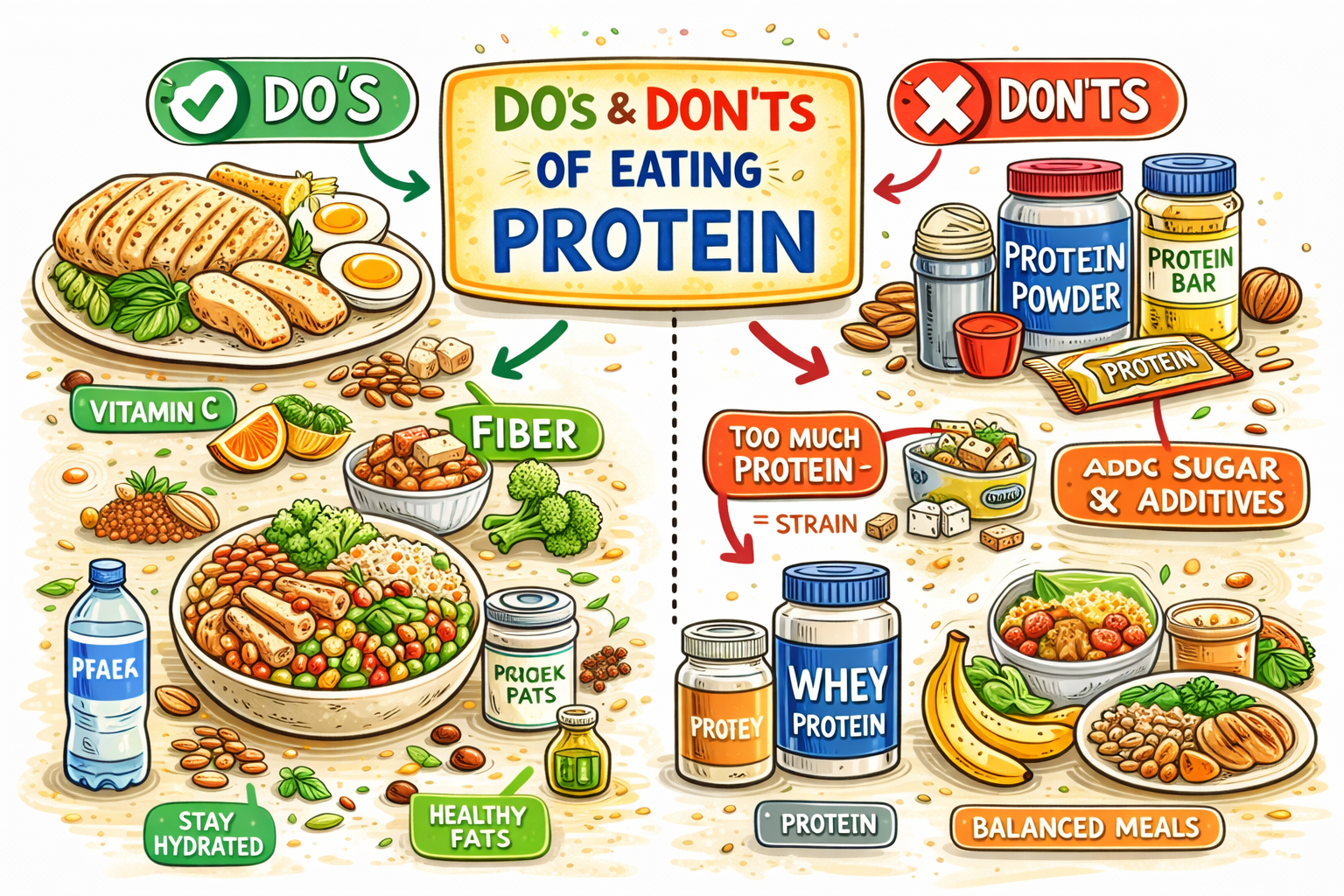

Protein is one of the most important nutrients your body needs—but simply eating more protein isn’t enough.
How, when, and what type of protein you consume makes a big difference. Let’s break it down in a simple way.
What is Protein & Why It Matters
Protein is one of the three essential macronutrients your body needs, along with carbohydrates and fats.
It is made up of smaller units called amino acids, often referred to as the “building blocks” of the body. These amino acids play a crucial role in repairing tissues, building muscles, and supporting overall growth and development.
Your hair, skin, and nails are also largely made of protein, which is why a proper intake contributes to healthy skin and stronger hair.
Another important role of protein is in maintaining satiety. Foods rich in protein keep you full for longer, helping to reduce unnecessary snacking and supporting weight management. This is especially useful if you are trying to lose fat or maintain a balanced diet.
Protein also helps stabilize blood sugar levels by slowing down the absorption of carbohydrates. This means fewer energy crashes and more sustained energy throughout the day.
Do’s of Eating Protein

1. Spread Protein Throughout the Day
Instead of consuming all your protein in one meal, distribute it across breakfast, lunch, and dinner. This helps better absorption and steady energy levels.
2. Choose “Clean Protein”
Clean protein refers to minimally processed, nutrient-rich sources like:
- Eggs
- Chicken
- Paneer
- Lentils and beans
- Greek yogurt
These are free from unnecessary additives and provide additional nutrients.
3. Pair Protein with the Right Foods
For better absorption, combine protein with:
- Vitamin C foods (lemon, oranges) → improves iron absorption
- Healthy fats (nuts, olive oil) → supports nutrient uptake
- Fiber (veggies, whole grains) → aids digestion
4. Stay Hydrated
High protein intake requires more water for proper digestion and kidney function. Always drink enough water.
Don’ts of Eating Protein

1. Don’t Rely Only on Protein Supplements
While protein powders are convenient, they shouldn’t replace whole foods completely. Use them as a supplement, not a substitute.
2. Don’t Overconsume Protein
More isn’t always better. Excess protein can strain your digestion and may not provide extra benefits.
3. Avoid Processed Protein Sources
Highly processed foods labeled “high protein” often contain added sugars, preservatives, and unhealthy fats.
What is Whey Protein?
Whey protein is a high-quality protein derived from milk. It is quickly absorbed by the body, making it ideal for post-workout recovery.
There are different types:
- Whey concentrate (basic form)
- Whey isolate (higher protein, less fat)
- Whey hydrolysate (fastest absorption)
When Should You Consume Protein?
- Morning: Helps kickstart metabolism
- Post-workout: Best time for muscle recovery
- Lunch: Supports meal adsorption (slow-digesting protein like casein or paneer works well)
Pro Tip for Maximum Absorption
Your body absorbs protein best when it’s balanced with carbs and fats. For example:
- Chicken/Tofu + rice + veggies
- Paneer + roti + salad
- Protein shake + banana
This ensures your body uses protein efficiently rather than wasting it.
Eating protein the right way can transform your health, energy levels, and fitness results. Focus on clean sources, balance your meals, and avoid overdependence on supplements.
Remember it's not just about how much protein you eat, but how smartly you consume it.
Read more about protein recipes you can try at home: Desi Burrito Bowel Recipe at Home