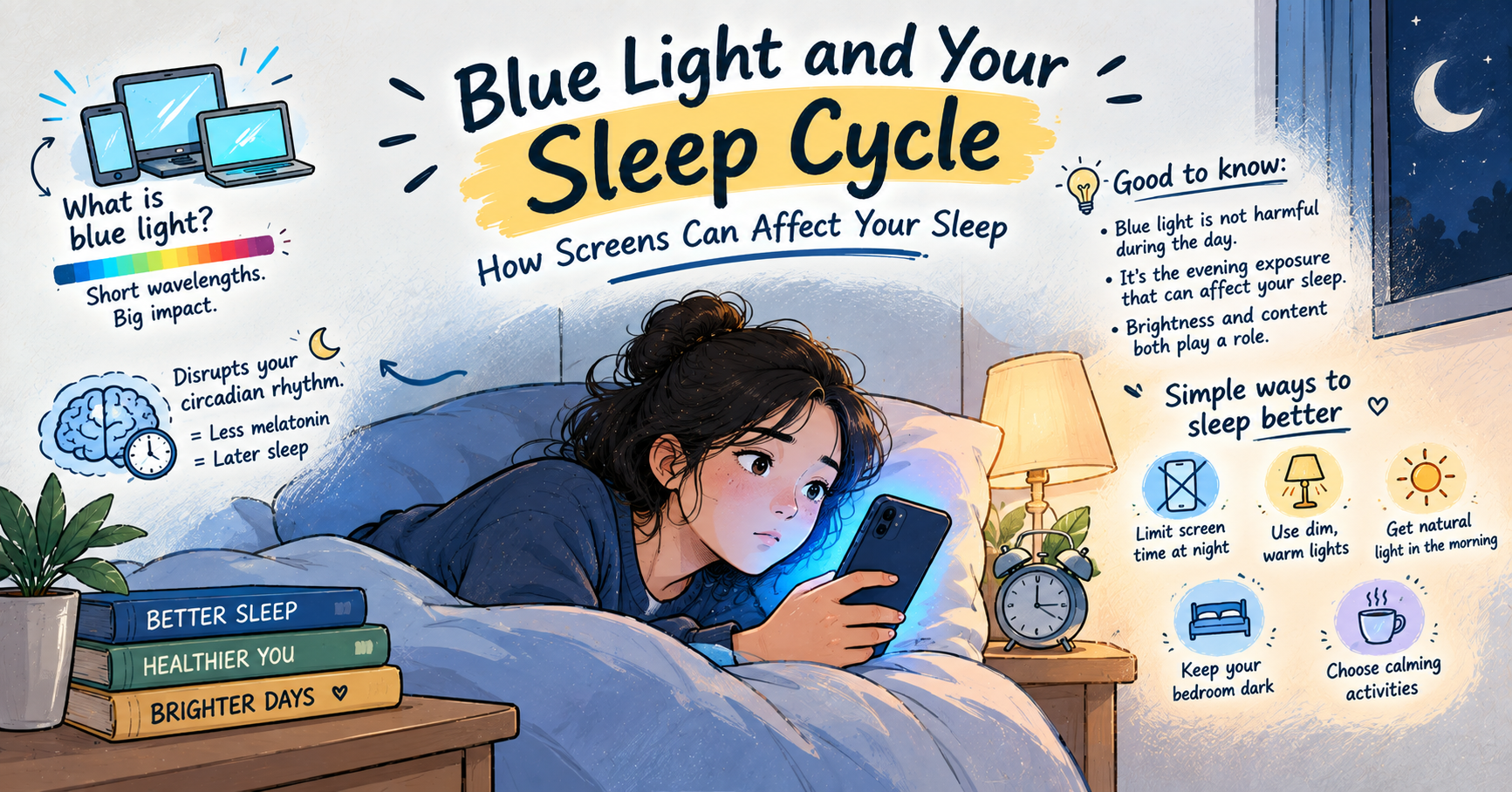

You may have noticed that falling asleep feels harder after spending an hour scrolling through your phone in bed. It is easy to blame the endless videos, messages, or interesting posts, but there is another factor worth considering: light.
The light from phones, tablets, laptops, TVs, and LED bulbs can affect the body's natural sleep-wake cycle. Blue light is particularly important because it can signal to the brain that it is still daytime, even when it is late at night.
But does that mean you have to stop using your phone after sunset? Not necessarily. Understanding how light affects your body can help you make a few simple changes that may support better sleep.
What Is Blue Light?
Blue light is a part of the visible light spectrum with relatively short wavelengths. Natural daylight contains plenty of it, which is one reason it has such a strong effect on alertness and the body's internal clock.
Blue light also comes from artificial sources, including:
- Smartphones
- Tablets
- Computer screens
- Televisions
- LED lights
- Fluorescent lights
Blue light itself is not harmful simply because it is blue. In fact, exposure to bright light during the daytime is useful. The problem is bright light at the wrong time, particularly during the evening when your body is preparing for sleep.
How Blue Light Affects Your Sleep Cycle
Your body has an internal timing system called the circadian rhythm. It helps regulate when you feel awake and when you become sleepy.
Light is one of the strongest signals that keeps this internal clock synchronized with the 24-hour day.
When evening arrives and the environment becomes darker, your brain normally increases production of melatonin, a hormone involved in preparing the body for sleep. Bright artificial light in the evening can interfere with this process.
Blue light has a particularly strong effect on the circadian system. Exposure during the evening can suppress or delay melatonin production and shift the body's internal clock toward a later schedule.
This can make you feel less sleepy when you actually want to go to bed.
Why Your Phone Can Keep You Awake
There are actually two problems with using your phone late at night.
1. The light
The screen exposes your eyes to artificial light, including short-wavelength light that can influence the circadian system.
2. The content
Your brain may also remain active because of whatever you are doing on the device.
Watching an exciting video, replying to messages, reading stressful news, playing games, or scrolling through social media can keep you mentally engaged. So even if you reduce the blue light from your screen, staying on your phone for another hour may still push your bedtime later.
This is an important distinction. Blue light is one part of the problem, not necessarily the entire explanation for poor sleep.
Does All Evening Light Affect Sleep?
No light is not automatically equal to blue light.
Research and guidance from the CDC's National Institute for Occupational Safety and Health indicate that the circadian system is particularly sensitive to blue and short-wavelength light. Yellow and orange light generally have a smaller effect, while dim red light has relatively little effect on the circadian clock.
That is why a bright white room late at night may be less sleep-friendly than a room with soft, dim lighting.
It is also worth remembering that brightness matters. You do not need to sit in complete darkness from sunset onward. The goal is to gradually reduce bright light as bedtime approaches.
How Much Does Blue Light Really Matter?
The science is more nuanced than the simple claim that "phone screens destroy your sleep."
Studies consistently show that evening light can influence melatonin and circadian timing. However, the effect on actual sleep can vary depending on the brightness, duration, timing of exposure, individual sensitivity, and what else you are doing before bed.
Research on blue-light-blocking glasses is also mixed. A systematic review found some evidence of improved sleep outcomes, but the studies were relatively limited and inconsistent. More recent research has also found that evidence from randomized trials remains limited.
So blue-light glasses should not be viewed as a guaranteed solution.
Simple Ways to Reduce the Impact of Blue Light
You do not have to completely give up your evening screen time. Try making your environment more sleep-friendly instead.
1. Dim your lights before bed
About two hours before your usual bedtime, start using softer, dimmer lighting where practical. The CDC notes that reducing bright evening light can help prevent the circadian clock from being pushed toward a later schedule.
2. Use night mode on your devices
Most smartphones, tablets, and computers offer night-shift or warm-display settings. These reduce some short-wavelength light.
They are useful, but they should not be treated as permission to scroll endlessly in bed.
3. Keep your phone away from your pillow
Instead of keeping your phone next to your head, place it across the room or somewhere you cannot easily reach it.
This can reduce the temptation to check notifications every few minutes.
4. Get bright light during the morning
Light is not something you should avoid all day.
Morning light helps synchronize the circadian clock and can support alertness during the day and sleepiness later in the evening. Spending time outdoors after waking can be particularly useful.
5. Create a screen-free wind-down period
Try giving yourself 30–60 minutes without stimulating screen activity before bed.
Read a physical book, stretch, take a warm shower, prepare for the next day, listen to calm music, or simply talk with someone.
6. Make your bedroom dark
Your sleep environment matters too. Keeping the bedroom dark can reduce unwanted light exposure while you sleep.
What About Blue-Light-Blocking Glasses?
Blue-light-blocking glasses are often marketed as a simple solution for people who use screens at night.
There is some evidence that reducing short-wavelength light before bed may help certain people, but the overall research is not strong enough to say that these glasses will improve everyone's sleep.
For most people, it makes sense to start with simpler changes: dim the lights, reduce late-night screen exposure, keep a consistent sleep schedule, and get natural light during the day.
A Simple Evening Routine
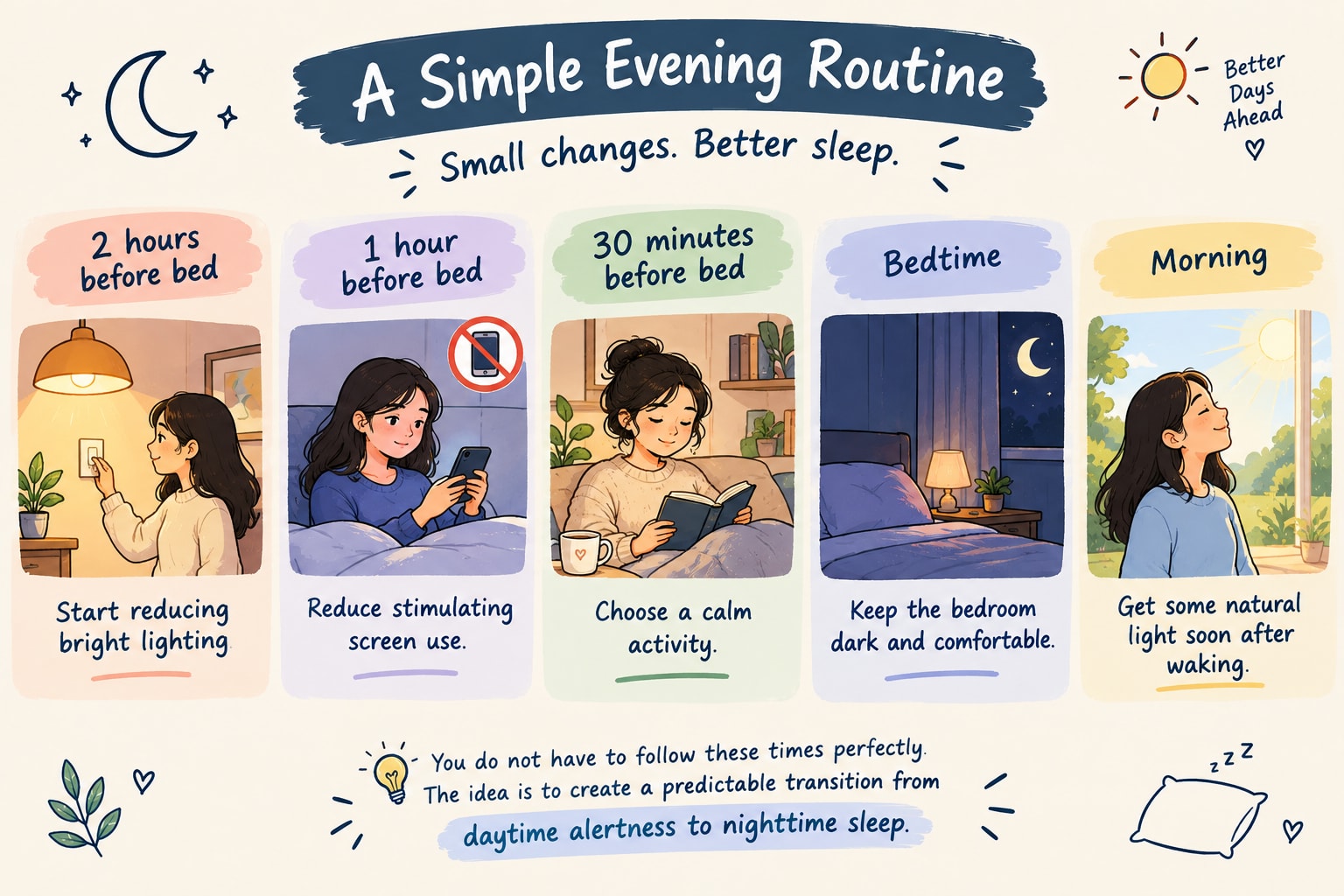
You do not have to follow these times perfectly. The idea is to create a predictable transition from daytime alertness to nighttime sleep.
Final Thoughts
Blue light is not the enemy. During the day, light helps keep your body clock synchronized and supports alertness. The bigger concern is bright artificial light and stimulating screen use late at night, when your body is naturally preparing for sleep.
If you regularly struggle to fall asleep, start with small changes rather than trying to eliminate every screen from your life. Dim the lights, reduce late-night scrolling, keep your bedroom dark, and expose yourself to natural light during the morning.
Your sleep cycle responds to the signals you give it throughout the entire day, not just during the few minutes before you get into bed.
This article is for general education and is not a substitute for medical advice. If you regularly have difficulty sleeping or experience persistent daytime sleepiness, consider speaking with a healthcare professional.