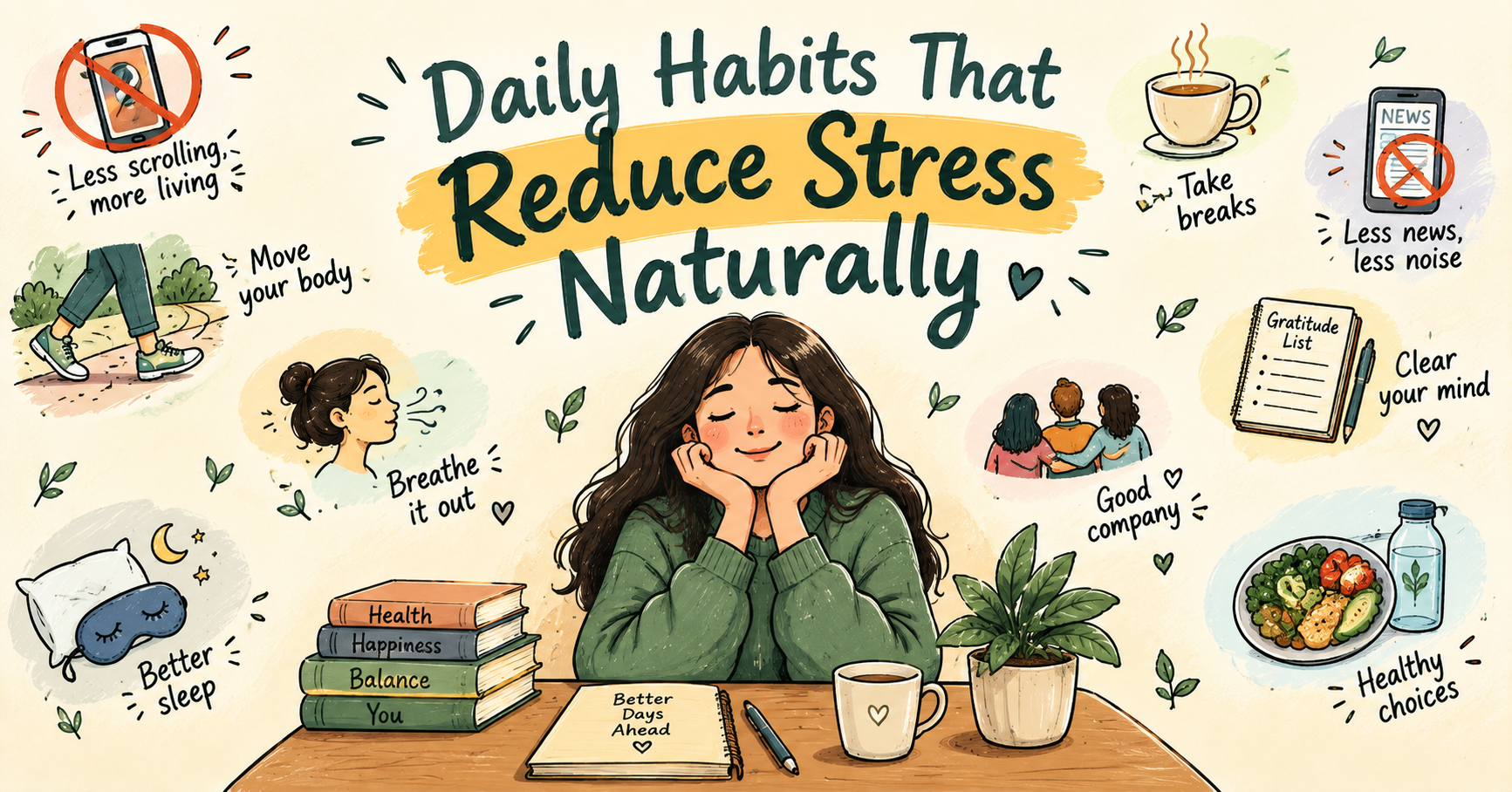

Stress has become a normal part of modern life. Work deadlines, financial worries, relationships, social media, health concerns, and simply having too much to do can leave the mind feeling constantly switched on.
A little stress is normal and can help us respond to challenges. The problem is when stress becomes a regular part of everyday life. Long-term stress can affect sleep, mood, concentration, digestion, and overall health.
The good news is that reducing stress does not always require a major lifestyle change. Small habits repeated every day can make a meaningful difference.
Here are some simple daily habits that can help reduce stress naturally.
1. Start Your Day Without Immediately Checking Your Phone
One simple change is to avoid reaching for your phone the moment you wake up.
Checking emails, social media, news, or work messages immediately can make your brain jump straight into problem-solving mode. Instead, give yourself the first 15–30 minutes of the day without notifications.
Drink some water, stretch, open a window, or simply sit quietly for a few minutes.
You don't need a complicated morning routine. The goal is to start the day at your own pace.
2. Take a Short Walk Every Day
You don't need an intense workout to become more active.
A 15–30 minute walk can give you a break from work and screens while getting your body moving. Regular physical activity is also associated with better emotional well-being. WHO recommends that adults aim for at least 150 minutes of moderate physical activity per week, although doing some activity is better than doing none.
Try walking after lunch, in the evening, or whenever you feel mentally overwhelmed.
Even a short walk around your neighborhood can become a useful reset.
3. Practice Slow, Deep Breathing
When you're stressed, your breathing can become faster and shallower. Taking a few minutes to slow it down can help your body move toward a relaxation response.
Try this simple routine:
- Sit comfortably.
- Relax your shoulders.
- Breathe in slowly through your nose.
- Let your stomach gently expand.
- Exhale slowly.
- Repeat for 2–5 minutes.
Research reviewed by the National Center for Complementary and Integrative Health suggests that slow, deep breathing may modestly reduce stress and can affect measures such as cortisol and blood pressure.
4. Protect Your Sleep
Stress and poor sleep can easily become a cycle. You feel stressed, sleep badly, and then feel even less prepared to handle the next day's problems.
For most adults, getting at least 7 hours of sleep is recommended. Going to bed and waking up around the same time each day can also support better sleep.
A simple evening routine can help:
- Reduce screen use before bed.
- Avoid caffeine late in the day.
- Keep your bedroom comfortable and quiet.
- Try to maintain a consistent sleep schedule.
You don't need a perfect nighttime routine. Consistency matters more.
5. Take Small Breaks During the Day
Working continuously for hours may feel productive, but your brain also needs pauses.
Try taking a 5–10 minute break between demanding tasks. Stand up, stretch, get some fresh air, make tea, or simply look away from your screen.
The CDC recommends taking breaks, making time to unwind, and using activities such as stretching, deep breathing, meditation, journaling, or spending time outdoors to manage stress.
The important part is actually stepping away instead of turning your break into another hour of scrolling.
6. Limit Constant News and Social Media
Staying informed is useful, but constantly consuming stressful information can leave your mind feeling overloaded.
Try creating specific times to check news and social media instead of checking them throughout the day.
For example, you could check news once in the morning and once in the evening rather than opening a news app every few minutes.
The CDC specifically recommends taking breaks from news and social media as part of healthy stress management.
7. Write Down What's on Your Mind
Sometimes stress feels worse because everything is floating around in your head at the same time.
A simple journal can help you organize those thoughts.
At night, write down:
What is worrying me? What can I actually control? What is one thing I can do tomorrow?
You can also write down three things you're grateful for. The CDC includes journaling and daily gratitude among healthy ways to manage stress.
You don't need to write pages. Even five minutes is enough to create a little mental space.
8. Make Time for People You Trust
Stress can make you withdraw from other people, but isolation can make difficult situations feel even heavier.
Call a friend. Have dinner with your family. Talk to someone you trust. Even a short conversation can make a stressful day feel more manageable.
Research and public-health guidance from the CDC associate meaningful social connections with better stress management, sleep, and overall well-being.
You don't need a huge social circle. A few supportive relationships can matter a lot.
9. Give Yourself a Realistic To-Do List
One reason people feel constantly stressed is that their daily list is impossible to finish.
Instead of writing down 15 things, identify the three most important tasks for the day.
Finish those first. Everything else can come afterward.
It's also okay to say no to tasks that aren't urgent or necessary. NIH guidance on emotional wellness specifically recommends setting priorities and deciding what must get done versus what can wait.
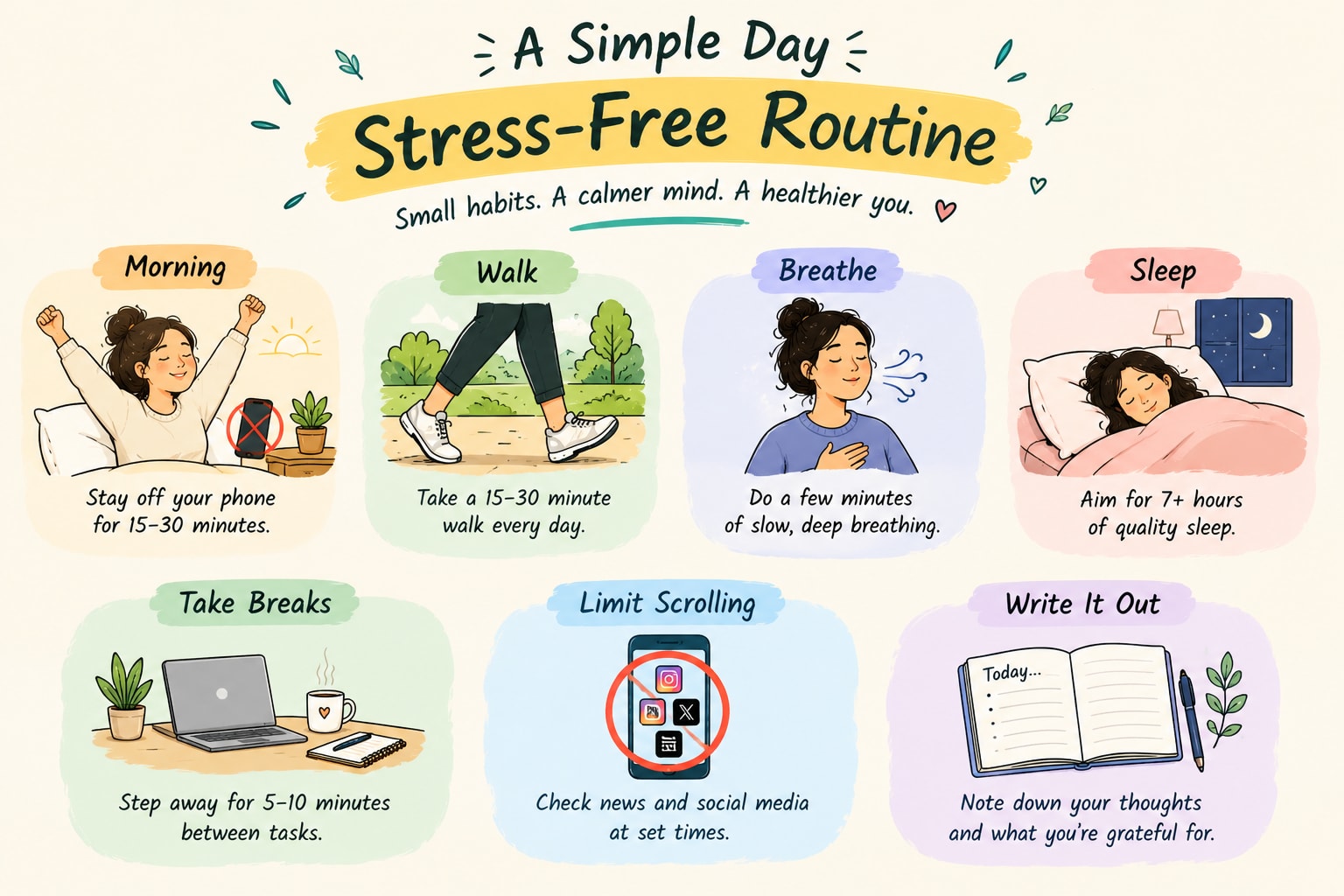
A Simple Daily Stress-Reset Routine
Final Thoughts
Reducing stress naturally isn't about creating a perfect lifestyle. It's about giving your body and mind regular opportunities to slow down.
A short walk, better sleep, five minutes of breathing, less scrolling, a conversation with someone you trust, or simply taking a proper break may seem small on its own. But when these habits become part of your everyday routine, they can make stressful days easier to handle.
And remember, stress management isn't a replacement for professional help. If stress feels overwhelming, lasts for a long time, interferes with daily life, or is becoming difficult to cope with, consider speaking with a qualified healthcare or mental-health professional.