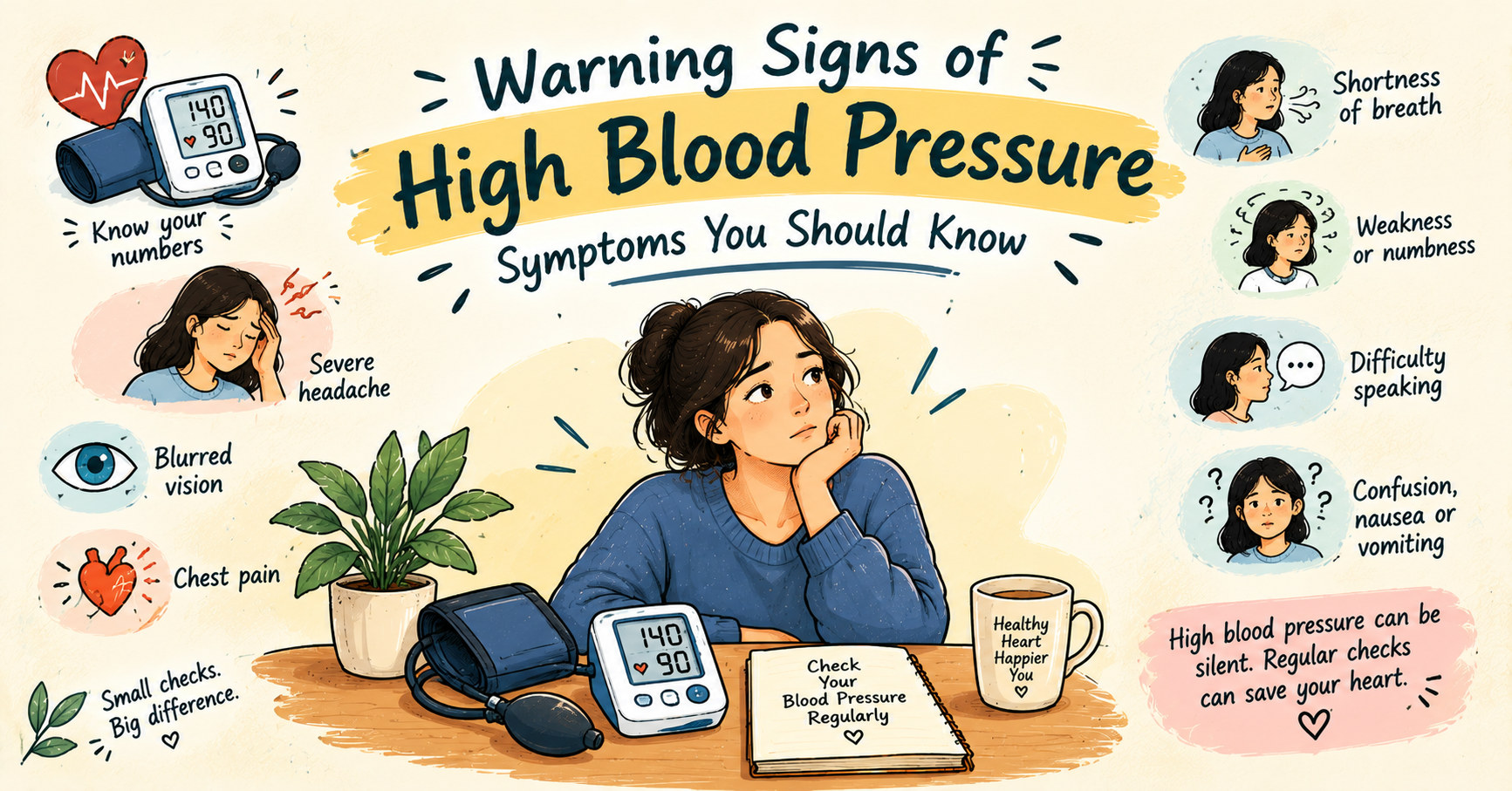

High blood pressure is one of those health problems that can quietly develop without making you feel sick. You might feel completely normal while your blood pressure remains higher than it should be.
That is why high blood pressure, also called hypertension, is often described as a “silent” condition. The CDC says that high blood pressure usually has no warning signs or symptoms, and measuring your blood pressure is the only reliable way to know whether it is high.
Still, very high blood pressure can sometimes cause noticeable symptoms. Knowing what they are, and knowing when a reading requires urgent attention, can be important.
What Is High Blood Pressure?
Blood pressure measures the force of blood pushing against the walls of your arteries as your heart pumps.
It is written as two numbers:
- Systolic pressure: the top number, measured when the heart contracts.
- Diastolic pressure: the bottom number, measured when the heart relaxes between beats.
According to the American Heart Association's current categories, a reading below 120/80 mmHg is considered normal. High blood pressure begins at 130/80 mmHg, with Stage 1 hypertension at 130–139 systolic or 80–89 diastolic, and Stage 2 at 140 or higher systolic or 90 or higher diastolic.
WHO uses a diagnostic threshold of 140/90 mmHg or higher when measurements are taken on two different days, so definitions can differ between guidelines and clinical settings.
The important point is that one unusual reading does not necessarily mean you have hypertension. A healthcare professional can assess repeated readings and your overall health.
The Most Important Warning Sign: There May Be None
This is the part many people find surprising.
High blood pressure often causes no noticeable symptoms, even when it has been present for a long time. Someone can work, exercise, eat normally, and go about their day without realizing their blood pressure is elevated.
So waiting for a headache or another physical symptom before checking your blood pressure isn't a reliable approach.
Regular blood pressure checks are much more useful.
Possible Warning Signs When Blood Pressure Becomes Very High
Although ordinary hypertension usually does not cause symptoms, very high blood pressure can be associated with symptoms.
Possible warning signs include:
1. Severe Headache
A severe or unusual headache can occur when blood pressure becomes extremely high. However, headaches have many possible causes, so having one does not automatically mean your blood pressure is high.
If a severe headache occurs alongside a blood pressure reading above 180/120 mmHg, it requires prompt medical attention.
2. Blurred or Changed Vision
Very high blood pressure can be associated with vision changes, including blurred vision.
Sudden changes in vision should not be ignored, particularly when they occur with other neurological or cardiovascular symptoms.
3. Chest Pain
Chest pain is a potentially serious symptom.
If someone has a blood pressure reading above 180/120 mmHg together with chest pain, the American Heart Association considers this a hypertensive emergency requiring immediate emergency medical care.
4. Shortness of Breath
Difficulty breathing can occur during a severe blood pressure episode and may also indicate another serious heart or lung problem.
If shortness of breath occurs with severely elevated blood pressure, seek emergency medical attention rather than waiting for the reading to fall on its own.
5. Weakness or Numbness
Sudden weakness or numbness, particularly on one side of the body, can be a sign of a serious neurological problem such as a stroke.
When accompanied by blood pressure above 180/120 mmHg, it requires emergency evaluation.
6. Difficulty Speaking
Sudden trouble speaking or understanding speech is another emergency warning sign.
It can occur with stroke and should be treated as an emergency, especially when accompanied by very high blood pressure.
7. Confusion, Nausea or Vomiting
Very high blood pressure can sometimes be accompanied by confusion, nausea, or vomiting. WHO lists these among symptoms that may occur with very high blood pressure.
These symptoms are not specific to hypertension, however. They can have many other causes and need to be interpreted in context.
When Is High Blood Pressure an Emergency?
A blood pressure reading higher than 180/120 mmHg is considered severe and needs immediate attention.
If your reading is above 180/120:
- Wait at least one minute.
- Take your blood pressure again.
- If it remains that high, check whether you have concerning symptoms.
If you have chest pain, shortness of breath, back pain, numbness, weakness, vision changes, or difficulty speaking, seek emergency medical care immediately.
If the reading remains above 180/120 but you have none of those symptoms, contact a healthcare professional promptly for advice rather than ignoring the result.
Why High Blood Pressure Shouldn't Be Ignored
Even when you don't feel anything, consistently high blood pressure can put extra stress on blood vessels and organs.
Over time, uncontrolled hypertension can increase the risk of:
- Heart disease
- Heart attack
- Stroke
- Kidney disease
- Heart failure
- Other cardiovascular complications
WHO estimates that 1.4 billion adults aged 30–79 worldwide had hypertension in 2024, and around 44% of adults with hypertension were unaware that they had it.
That's one reason regular blood pressure checks matter.
How Can You Know If Your Blood Pressure Is High?
The simplest answer is: check it.
Blood pressure measurement is quick and painless and can be done at a healthcare facility or, when appropriate, with a validated home monitor.
If you monitor your blood pressure at home, keep a record of your readings instead of focusing on a single number. Your healthcare professional can use those readings to identify patterns and determine whether further evaluation is needed.
What Can Help Keep Blood Pressure Healthy?
Lifestyle habits can play an important role in preventing and managing high blood pressure.
Some useful measures include:
- Eating a balanced diet with less sodium
- Staying physically active
- Maintaining a healthy weight
- Avoiding tobacco
- Limiting excessive alcohol consumption
- Getting adequate sleep
- Managing stress
- Taking prescribed blood pressure medication as directed
WHO recommends healthy eating, physical activity, reducing salt intake, avoiding tobacco, and limiting alcohol as part of hypertension prevention and management.
These habits can help, but they should not replace prescribed treatment.
Final Thoughts
The biggest warning sign of high blood pressure is often no warning sign at all.
You can feel completely healthy and still have elevated blood pressure. That's why regular monitoring is more useful than trying to identify symptoms after the fact.
Headaches, vision changes, chest pain, breathing difficulties, weakness, numbness, and difficulty speaking can occur when blood pressure becomes extremely high, but these symptoms can also have other causes. They should never be used as a way to self-diagnose hypertension.
If you haven't checked your blood pressure recently, consider making it part of your routine health checks. And if you ever have a reading above 180/120 mmHg with serious symptoms, seek emergency medical care immediately.
This article is for general health information and is not a substitute for medical diagnosis or treatment.