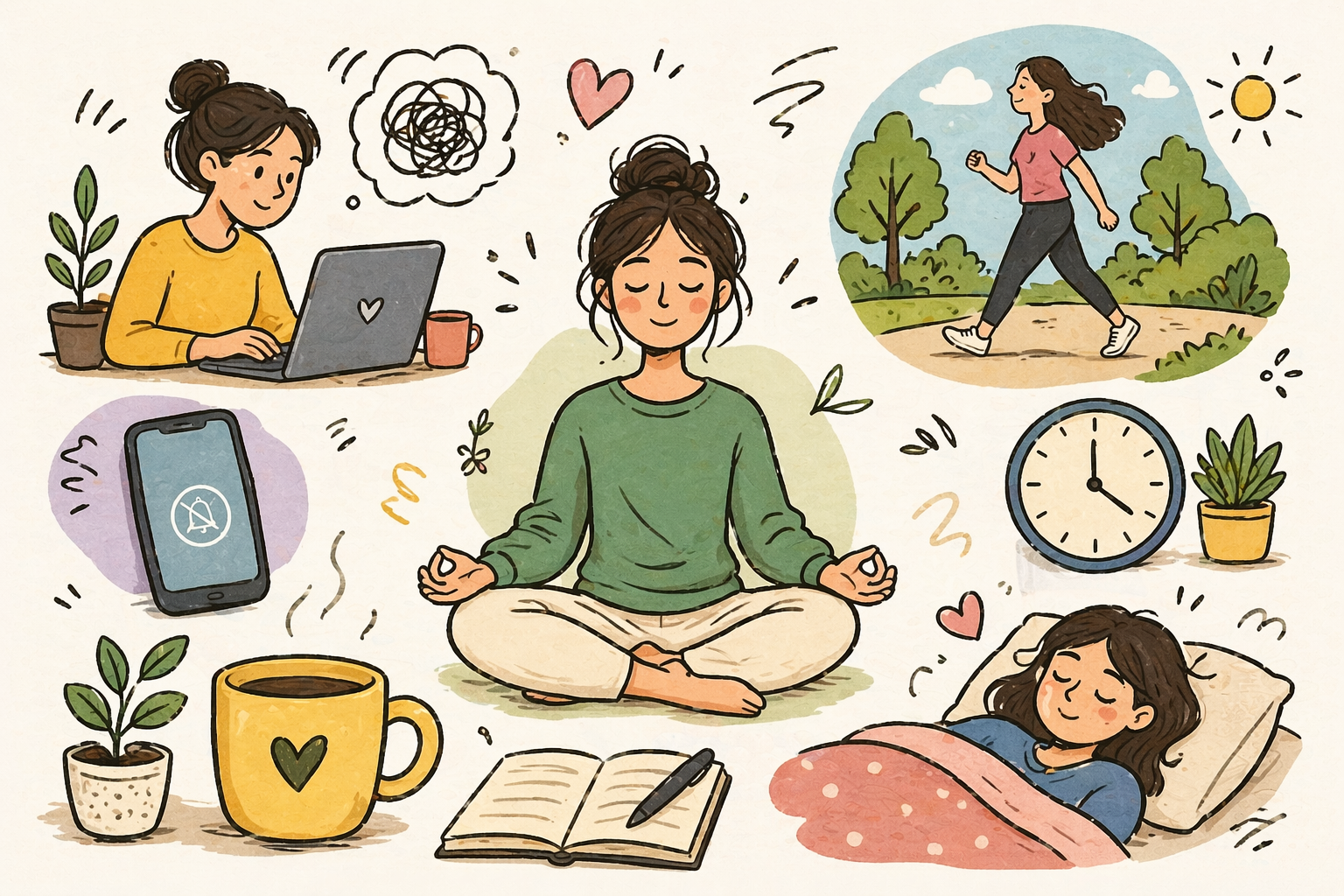

Stress isn’t always loud. It often shows up quietly—tight shoulders, shallow breathing, difficulty focusing, or that constant sense of being “on edge.”

In a busy life, the problem isn’t just the amount of work; it’s the lack of recovery between tasks. You don’t need a complete lifestyle overhaul to manage stress-you need small, repeatable habits that fit into your existing routine.
1. Break the “Always On” Cycle
Most people move from one task to another without pause—emails, meetings, scrolling, back to work. Your brain doesn’t get a moment to reset.
What to do instead:
- Take 2–5 minute pauses between tasks
- Step away from your screen
- Let your eyes and mind rest
This short reset reduces mental fatigue and helps you return with better focus.
2. Use Your Breath to Regulate Stress

When you’re stressed, your breathing becomes shallow and fast. This signals your body to stay in a heightened state.
Try this simple method:
- Inhale for 4 seconds
- Hold for 4 seconds
- Exhale for 6 seconds
Doing this for even a few minutes can calm your nervous system and reduce immediate stress.
3. Create Boundaries with Your Phone
Constant notifications keep your brain in a reactive state. You may not notice it, but it contributes significantly to stress.
Practical steps:
- Turn off non-essential notifications
- Avoid checking your phone first thing in the morning
- Set “no phone” windows during meals or before sleep
Reducing digital noise helps your mind feel less cluttered.
4. Move, Even If It’s Brief
You don’t need a full workout to feel better. Physical movement helps release built-up tension and improves circulation.
Options that work in a busy schedule:
- A 10-minute walk
- Stretching between work sessions
- Light yoga or mobility exercises
Movement shifts your body out of a stress response and improves mood naturally.
5. Focus on One Thing at a Time
Multitasking feels productive, but it actually increases cognitive load and stress. Your brain switches rapidly between tasks, which drains mental energy.

Try single-tasking:
- Work on one task for a set period (25–30 minutes)
- Complete it or reach a clear stopping point before switching
This reduces overwhelm and improves efficiency.
6. Offload Your Thoughts
When everything stays in your head, it feels heavier than it is. Writing things down creates clarity.
Keep it simple:
- List what’s on your mind
- Identify what needs action and what doesn’t
- Break tasks into smaller steps
This helps you move from feeling overwhelmed to feeling in control.
7. Protect Your Evenings
If your day ends the same way it began—on screens—your mind never fully switches off. This affects sleep, which directly impacts stress levels the next day.
Evening adjustments:
- Dim lights and reduce screen time
- Choose a calming activity (reading, light music, journaling)
- Maintain a consistent sleep schedule
Good sleep isn’t just rest—it’s recovery for your nervous system.
Small Tools That Can Help
While habits matter most, a few simple tools can support consistency:
- Wakefit Memory Foam Pillow – supports better sleep posture
- Noise Smartwatch – tracks sleep and activity patterns
- Factor Notes Journal – useful for daily mental clarity
- Organic India Chamomile Tea – calming alternative to caffeine
What Actually Makes the Difference
Stress doesn’t disappear because you take one day off or try a single technique. It improves when you reduce the constant load on your system—mentally and physically.
That means:
- Fewer distractions
- More intentional breaks
- Better sleep
- Simple routines you can maintain
The Bottom Line
A busy life doesn’t automatically mean a stressful one. The difference lies in how you manage transitions, recovery, and attention. Instead of chasing complicated solutions, focus on small adjustments that lower your baseline stress over time.
Read more about stress relief here: What Causes Low Energy and How to Fix it