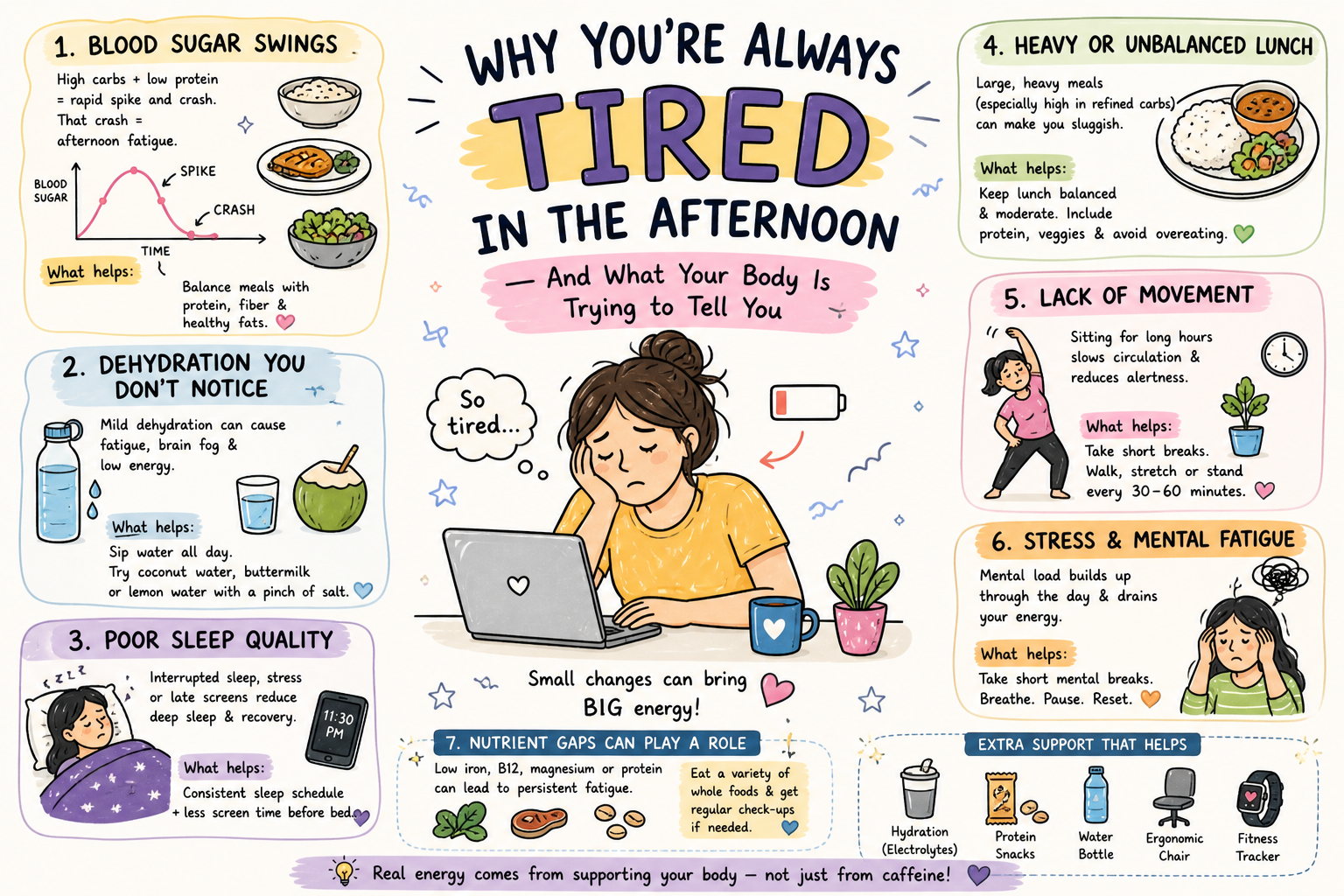

You start your day feeling fine maybe even productive. But by mid-afternoon, your energy crashes. You feel sluggish, unfocused, and tempted to reach for caffeine or sugar just to get through the rest of the day.
This pattern is so common that many people accept it as normal. It isn’t. Afternoon fatigue is often your body’s way of signaling that something in your routine, nutrition, or recovery is off.
Understanding the cause can help you fix it instead of masking it.
1. The Role of Blood Sugar Swings
One of the most common reasons for afternoon fatigue is unstable blood sugar.
If your meals—especially breakfast or lunch—are high in refined carbohydrates and low in protein or fiber, your blood sugar rises quickly and then drops just as fast. That drop is what leads to the energy crash.
You may notice:
- sudden sleepiness
- brain fog
- cravings for sweets or coffee
- irritability
What helps: Balance your meals with protein, fiber, and healthy fats. For example, instead of just rice or bread, include dal, paneer, eggs, or legumes.
2. Dehydration You Don’t Notice
Mild dehydration doesn’t always make you feel thirsty—but it can reduce energy levels, concentration, and physical performance.
By afternoon, if you haven’t been drinking enough fluids, fatigue can set in quietly.
What helps: Sip water throughout the day instead of drinking large amounts at once. You can also include coconut water, buttermilk, or lemon water with a pinch of salt for better hydration.
3. Poor Sleep Quality (Not Just Quantity)
You may be getting enough hours of sleep, but if the quality is poor, your body doesn’t fully recover.
Interrupted sleep, late-night screen use, or stress can reduce deep sleep, which is essential for energy restoration.
What helps: Maintain a consistent sleep schedule and reduce screen exposure before bed. A calmer evening routine often improves next-day energy more than sleeping longer.
4. Heavy or Unbalanced Lunch
Large, heavy meals—especially those high in refined carbs—can make you feel sluggish.
Digestion requires energy, and when your body is focused on processing a heavy meal, it can leave you feeling tired.
What helps: Keep lunch balanced and moderate:
- include protein (dal, chicken, tofu)
- add vegetables
- avoid overeating
5. Lack of Movement
Sitting for long hours slows circulation and reduces alertness.
Your body is designed to move. Without it, energy levels naturally dip.
What helps: Take short breaks:
- a 5–10 minute walk
- stretching
- standing up between tasks
Even small movement can reset your energy.
6. Stress and Mental Fatigue
By afternoon, mental load builds up. Constant focus, multitasking, and decision-making drain your cognitive energy.
This kind of fatigue feels different—it’s less physical and more like a lack of clarity or motivation.
What helps: Take short mental breaks. Step away from screens, breathe deeply, or simply pause without stimulation.
7. Nutrient Gaps Can Play a Role
Low levels of iron, vitamin B12, magnesium, or protein can contribute to persistent fatigue.
If your energy dips are consistent and severe, it may be worth looking at your overall nutrition.
Helpful Products You Can Include
- electrolyte powders for hydration
- protein chips or shakes
- insulated water bottles
- ergonomic chairs for better posture
- fitness trackers to monitor activity and sleep
The Bottom Line
Afternoon fatigue isn’t random, it’s usually the result of patterns that build throughout your day.
Instead of relying on caffeine or quick fixes, look at the bigger picture: your meals, hydration, sleep, movement, and stress levels.
Small adjustments in these areas can make a noticeable difference.
Because real energy doesn’t come from stimulants—it comes from supporting how your body functions in the first place.
Read more about health here: Why Your Mind Creates Worst Case Scenarios