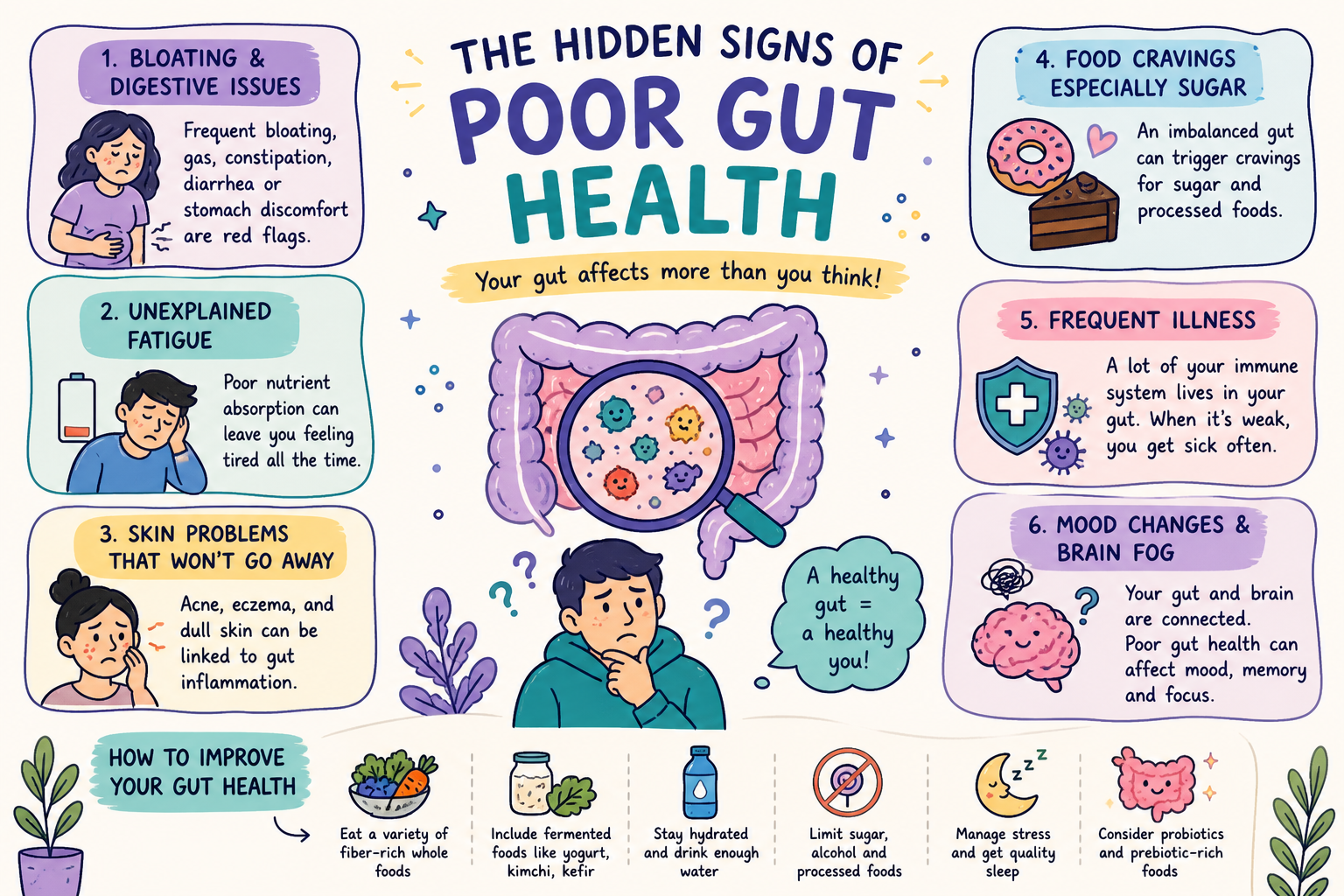

Most people associate gut health with digestion alone—bloating, constipation, acidity, or stomach discomfort. But the truth is far more complex. Your gut is deeply connected to immunity, mental clarity, skin health, energy levels, and even mood. When your digestive system is out of balance, the warning signs often appear in places you may not immediately connect to your gut.
Poor gut health does not always announce itself with dramatic symptoms. Often, the body sends quieter signals first..
1. Constant Bloating or Irregular Digestion

This is one of the most obvious signs, but it is also the most ignored. If you regularly feel bloated after meals, experience gas, constipation, diarrhea, or fluctuating digestion, your gut may be struggling to break down and absorb nutrients efficiently.
Frequent digestive discomfort can point toward an imbalance in gut bacteria, food intolerances, or a diet low in fiber diversity.
2. Unexplained Fatigue
If you feel tired even after adequate sleep, your gut could be part of the problem. A compromised digestive system may affect nutrient absorption, especially iron, vitamin B12, magnesium, and other essentials linked to energy production.
When the body is not absorbing nutrients properly, fatigue becomes a persistent issue—regardless of how healthy your meals appear on the surface.
3. Skin Problems That Won’t Go Away
Persistent acne, eczema, rosacea, or unexplained rashes may sometimes reflect internal inflammation. The gut and skin are closely linked through what experts call the “gut-skin axis.”
When gut bacteria are imbalanced, inflammation can rise and show up externally through skin irritation or sensitivity.
4. Food Cravings—Especially Sugar
An unhealthy gut environment can influence cravings. Certain gut microbes thrive on sugar and processed foods, creating a cycle that encourages more of the same.
If you constantly crave sweets or highly processed snacks, it may not just be habit—it could be a reflection of your internal microbial balance.
5. Frequent Illness

A large portion of your immune system is located in the gut. When gut health declines, immunity often weakens as well.
If you find yourself catching infections frequently, taking longer to recover, or dealing with recurring inflammation, your gut may need attention.
6. Mood Changes and Brain Fog

The gut and brain communicate constantly through the gut-brain connection. Poor gut health has been linked to anxiety, irritability, low mood, and difficulty concentrating.
If you often feel mentally sluggish or emotionally off-balance, digestive health deserves consideration.
How to Improve Gut Health Naturally

Healing the gut usually starts with consistent, practical habits rather than extreme diets.
- Eat a wider variety of plant foods
- Include fermented foods like curd, kefir, kimchi, or idli
- Stay hydrated
- Reduce excessive sugar and ultra-processed foods
- Prioritize sleep and stress management
- Avoid unnecessary antibiotic use
Small daily choices often create the biggest long-term shifts.
Helpful Products to Support Gut Health
You can consider adding these to your routine:
- probiotic supplements
- prebiotic fiber powders
- herbal digestive teas
- stainless steel water bottles for hydration tracking
- meal prep for balanced eating
The Bottom Line
Gut health is not just about digestion—it influences nearly every system in the body. The hidden signs often appear gradually, making them easy to dismiss.
If your body has been sending subtle signals—fatigue, cravings, skin issues, or irregular digestion—it may be worth looking inward. A healthier gut can create noticeable improvements far beyond the stomach.
Read more about health here: Why You Feel Bloated Even When You Eat Healthy