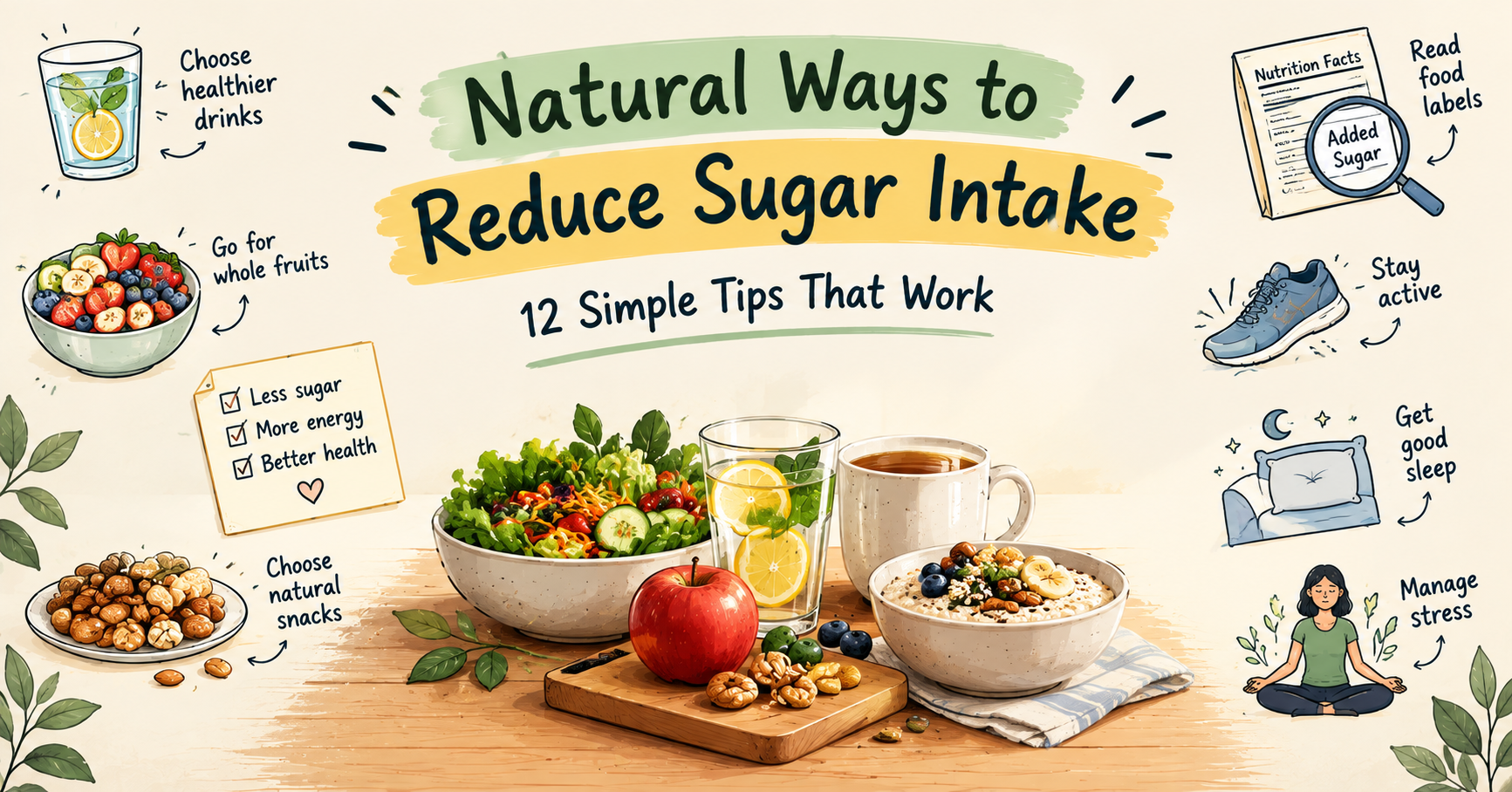

Cutting back on sugar does not mean you have to stop eating dessert forever or make every meal completely sugar-free.
For most people, the easier approach is to look at where added and free sugars are coming from and make a few realistic swaps. A sugary drink here, sweetened tea or coffee there, biscuits with an evening snack, and a dessert after dinner can add up surprisingly quickly.
The World Health Organization recommends keeping free sugar below 10% of daily energy intake, with a further reduction to below 5% potentially providing additional health benefits. For someone eating around 2,000 calories a day, 10% is about 50 grams of free sugar.
If you want to reduce your sugar intake naturally, you do not need an extreme diet. Start with these simple changes.
1. Start With Your Drinks
One of the easiest ways to reduce sugar is to look at what you drink.
Soft drinks, sweetened juices, energy drinks, flavored coffees, milkshakes and sweetened teas can add a lot of sugar without making you feel particularly full.
Try replacing them gradually with:
- Plain or sparkling water
- Unsweetened tea
- Black coffee
- Water with lemon, mint or cucumber
- Milk without added sugar
- Homemade drinks with little or no added sugar
WHO specifically recommends limiting sugary drinks, including soft drinks, syrups and other sweetened beverages.
If you regularly drink two or three sugary beverages a day, changing this habit alone can make a noticeable difference.
2. Reduce Sugar in Tea and Coffee Slowly
If you take two teaspoons of sugar in every cup of tea, suddenly switching to no sugar may make your morning cup taste terrible.
Instead, reduce it gradually.
For example, go from two teaspoons to one and a half, then one, and eventually half a teaspoon. Your taste buds can adapt over time.
You can also experiment with cinnamon, cardamom, ginger or unsweetened cocoa for extra flavor.
This is especially useful if you drink several cups of chai or coffee throughout the day.
3. Choose Whole Fruit Instead of Fruit Juice
Fruit is not the problem.
Whole fruits contain naturally occurring sugars along with fiber, water and other nutrients. Free sugars, on the other hand, include sugars added to foods and drinks as well as sugars naturally present in honey, syrups and fruit juices.
So instead of having a glass of fruit juice every morning, eat an orange, apple, guava, berries or another whole fruit.
You get the sweetness while also getting the benefits of the whole food.
4. Do Not Assume Honey Is a Sugar-Free Alternative
Honey may sound healthier than table sugar because it is natural.
But from the perspective of WHO's free-sugar guidance, sugars in honey, syrups and fruit juice are still classified as free sugars.
That does not mean you can never have honey.
It simply means that replacing several teaspoons of sugar with several teaspoons of honey does not magically remove the sugar from your diet.
Use it sparingly and focus more on reducing the overall sweetness of your meals and drinks.
5. Make Breakfast Less Sweet
Breakfast can quietly become a sugar-heavy meal.
Sweetened cereals, flavored yogurt, packaged granola, chocolate spreads and pastries can contain significant amounts of added sugar.
Try building breakfast around foods such as:
- Eggs and whole-grain toast
- Plain yogurt with fruit and nuts
- Oats with cinnamon, nuts and banana
- Vegetable poha
- Besan chilla with vegetables
- Idli with sambar
- Unsweetened whole-grain cereal with milk and fruit
You do not need to completely avoid carbohydrates. The goal is to make your overall meal more filling and nutrient-dense.
6. Learn to Read Food Labels
Sugar is not always listed simply as “sugar.”
Packaged foods may contain ingredients such as sucrose, glucose, fructose, dextrose, syrups or other sweeteners.
When buying packaged food, look at the added sugars information when it is available. The FDA notes that added sugars are listed separately from naturally occurring sugars on its Nutrition Facts label, making it easier to compare products.
Also pay attention to serving size.
A product may appear to contain a small amount of sugar, but the package could contain two or three servings.
7. Swap Sugary Snacks for Naturally Sweet Foods
When the afternoon sugar craving hits, reaching for biscuits, chocolate or a packaged dessert can become automatic.
Try keeping naturally sweet options available instead:
- Fresh fruit
- Dates in small portions
- Plain yogurt with fruit
- Apple with unsweetened peanut butter
- A small handful of nuts with fruit
- Homemade roasted snacks
This does not mean every snack needs to be “perfect.” It simply gives you alternatives when you want something sweet.
8. Be Careful With “Healthy” Packaged Foods
Some foods are marketed as healthy because they contain oats, nuts, fruit or other nutritious ingredients.
That does not automatically mean they are low in added sugar.
Granola, protein bars, flavored yogurt, breakfast cereals, instant oatmeal and packaged smoothies can sometimes contain added sugars.
The solution is not to avoid every packaged food. Compare labels and choose options with less added sugar when possible.
9. Make Desserts Smaller, Not Forbidden
Completely banning sweets can make them even more tempting.
Instead, change the portion.
Have a smaller piece of cake. Share a dessert. Buy a smaller pack rather than a large one. Have your favorite mithai occasionally instead of keeping a box at home all week.
This approach can make reducing sugar feel much more manageable.
A healthy diet does not have to mean never enjoying your favorite foods.
10. Add Protein and Fiber to Your Meals
If you are hungry shortly after eating, you may be more likely to reach for something sweet.
Building meals around protein, fiber-rich foods and minimally processed ingredients can make your meals more satisfying.
Good options include:
- Dal and beans
- Eggs
- Fish or chicken
- Tofu
- Plain yogurt
- Nuts and seeds
- Vegetables
- Whole grains
- Fruits
Current healthy-eating guidance emphasizes vegetables, fruits, whole grains, protein foods and other nutrient-dense choices while limiting added sugars and highly processed foods.
11. Keep Sugary Foods Out of Your Daily Routine
You do not necessarily need to remove sweets from your life.
The bigger issue is when they become an everyday habit.
If you have dessert after every dinner, try having it a few times a week. If you eat biscuits with every cup of tea, keep them for occasional snacks instead.
Reducing frequency can be just as useful as reducing portion size.
12. Give Your Taste Buds Time to Adjust
One of the biggest reasons people struggle to reduce sugar is that foods can taste surprisingly bland at first.
That is normal.
If you gradually reduce sweetness, foods that once tasted “normal” may eventually start tasting overly sweet.
You can make the transition easier by using naturally flavorful ingredients such as:
- Cinnamon
- Cardamom
- Vanilla
- Ginger
- Nutmeg
- Fresh fruit
- Unsweetened cocoa
- Nuts and seeds
The goal is not to replace sugar with a huge amount of another sweetener. It is to gradually become comfortable with less sweetness.
A Simple 7-Day Sugar Reduction Challenge
You do not have to change everything in one day. Try this simple approach:
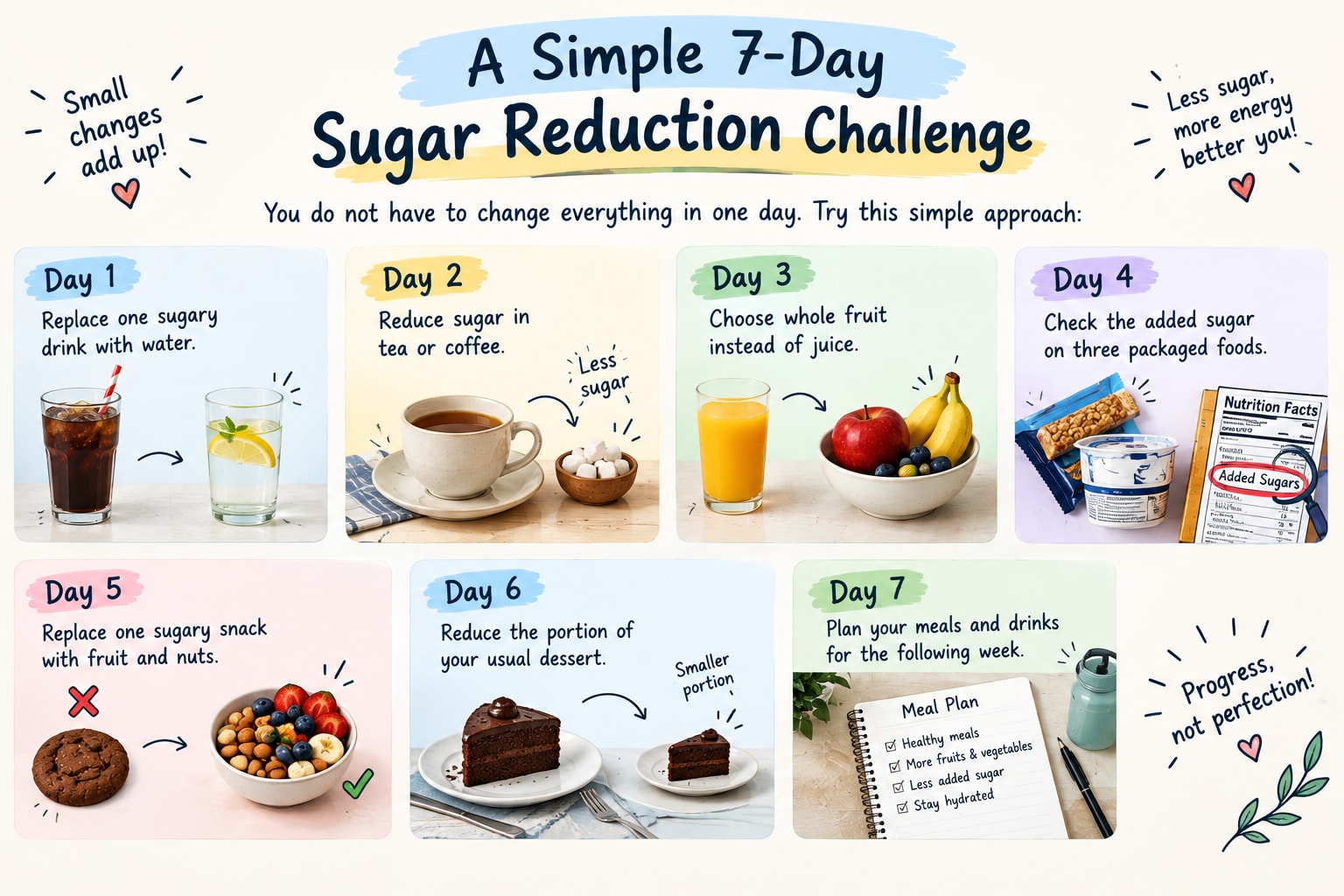
After seven days, keep the changes that felt easiest and build from there.
How Much Sugar Should You Eat in a Day?
There is no single number that applies equally to everyone because calorie needs differ.
WHO recommends keeping free sugars below 10% of total daily energy intake, with below 5% suggested as a further reduction that may provide additional benefits.
It is also important to understand that total sugar and added/free sugar are not the same thing.
The naturally occurring sugar in a whole apple is not treated the same way as the added sugar in a soft drink. The same applies to naturally occurring sugars in plain milk.
So you do not need to fear every gram of sugar on a nutrition label.
Focus on reducing the added and free sugars that provide little nutritional value.
Final Tip
Do not try to become completely sugar-free overnight.
Start with the easiest source to change. For some people, that is sugary drinks. For others, it might be sweetened tea, biscuits, desserts or packaged breakfast foods.
Once one habit becomes normal, work on the next.
The aim is not to make your diet miserable. It is to make sweetness less automatic while filling your meals with foods that actually nourish you.
Small changes repeated every day can be much more useful than a strict diet you follow for two weeks and then abandon.