
Heart health is easy to ignore when you feel fine. There is no pain, your energy seems normal, and you may assume that heart problems are something to worry about later in life.
That is exactly why prevention matters.
Cardiovascular disease often develops quietly over many years. High blood pressure, high cholesterol, high blood sugar, smoking, physical inactivity and an unhealthy diet can gradually increase the strain on the heart and blood vessels without causing obvious symptoms.
The good news is that many of the biggest heart-health risks can be changed. You do not need to completely overhaul your life overnight. A few consistent habits can make a meaningful difference.
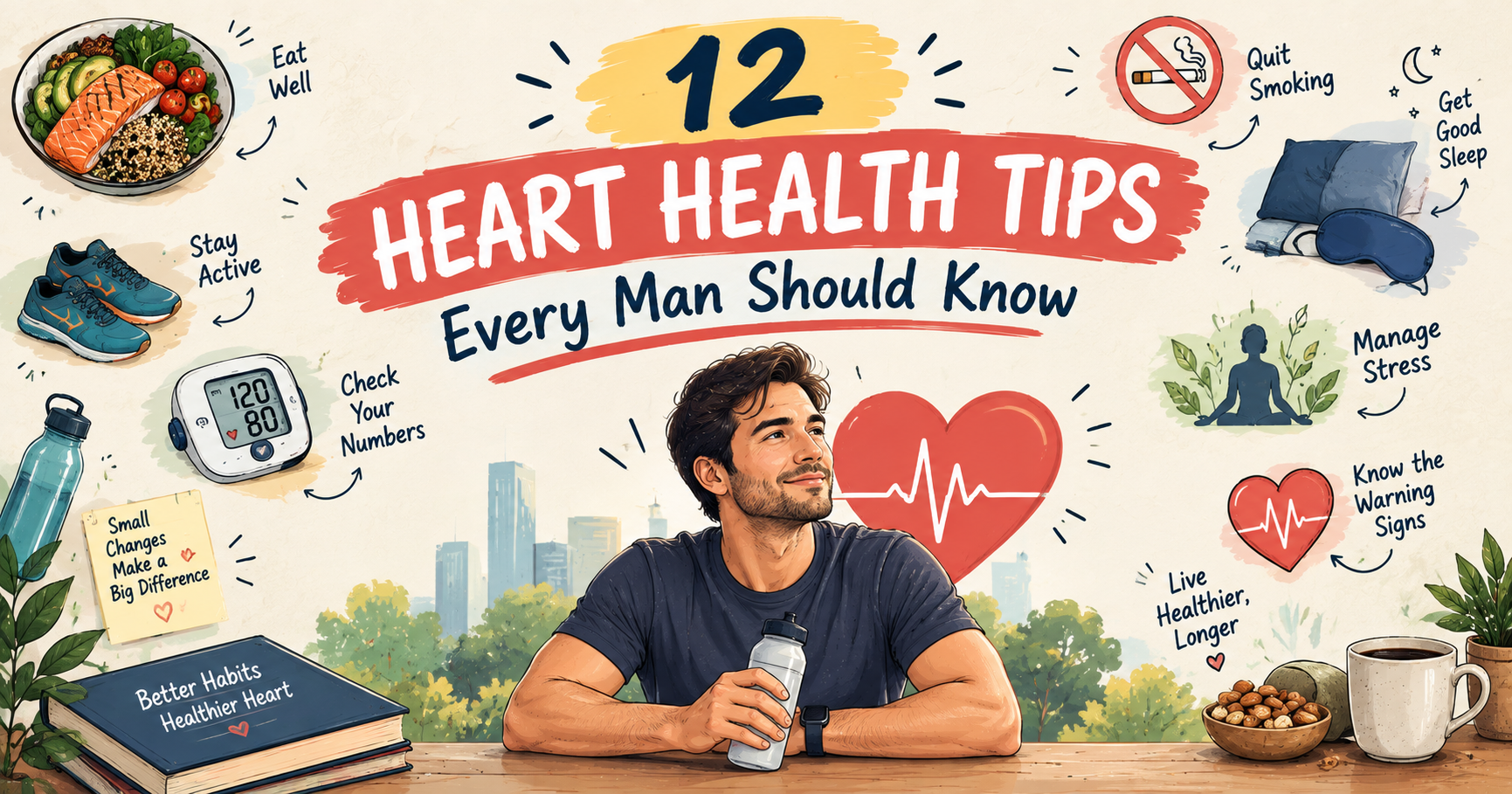
Here are some of the most important heart health tips every man should know.
1. Know Your Blood Pressure
High blood pressure is one of the biggest risk factors for heart disease, but many people do not know they have it because it often causes no noticeable symptoms.
Over time, uncontrolled high blood pressure can damage blood vessels and increase the risk of heart disease, stroke and other complications.
Make checking your blood pressure part of your routine, especially if you have a family history of hypertension, are overweight, smoke, have diabetes or rarely exercise.
Do not wait until you feel unwell to find out what your numbers are.
2. Keep an Eye on Cholesterol
Cholesterol is not automatically bad. Your body needs it for several important functions. The problem is having unhealthy levels, particularly elevated LDL cholesterol, which can contribute to plaque buildup in the arteries.
A heart-friendly eating pattern includes vegetables, fruits, whole grains, beans, nuts, seeds, unsaturated fats and lean sources of protein. Foods high in saturated fat, added sugar and sodium are better limited.
If you have not had your cholesterol checked recently, talk to your doctor about whether you need a lipid test.
3. Get Moving, Even If You Hate the Gym
You do not need to become a fitness influencer to protect your heart.
Walking, cycling, swimming, dancing, jogging, playing a sport or doing home workouts all count as physical activity.
For most adults, the World Health Organization recommends at least 150 minutes of moderate-intensity physical activity each week, or 75 minutes of vigorous activity. Muscle-strengthening activities are also recommended on at least two days a week.
If you are currently inactive, start smaller.
A 20 to 30-minute brisk walk most days is far better than waiting for the “perfect” workout routine.
4. Do Not Ignore Your Waistline
Body weight is only one part of health, but carrying excess body fat can increase the risk of several conditions linked with cardiovascular disease, including high blood pressure, abnormal cholesterol and type 2 diabetes.
Instead of chasing a particular appearance, focus on habits that support a healthy weight:
- Eat more minimally processed foods
- Include protein and fiber in meals
- Drink more water instead of sugary drinks
- Stay physically active
- Watch frequent late-night snacking
- Get enough sleep
You do not have to follow an extreme diet. A sustainable eating pattern is much easier to maintain.
5. Eat for Your Heart, Not Just Your Muscles
Men often pay attention to protein and calories while overlooking the overall quality of their diet.
A heart-friendly diet should contain plenty of vegetables, fruits, whole grains, pulses, beans, nuts and seeds. Fish, eggs, dairy and lean meats can also fit into a balanced diet.
Try to reduce your intake of foods that are consistently high in salt, added sugars, saturated fat and unhealthy fats. WHO recommends a varied diet built around minimally processed foods while limiting excess salt, free sugars and unhealthy fats.
You do not need to give up every food you enjoy. Think about what you eat most often, not what you eat occasionally.
6. If You Smoke, Quitting Is One of the Best Things You Can Do
Smoking damages blood vessels and substantially increases cardiovascular risk. Tobacco use is one of the major preventable risk factors for heart disease and stroke.
The same principle applies to avoiding secondhand smoke.
If quitting feels difficult, do not treat that as a personal failure. Nicotine dependence can be difficult to overcome, and professional support, counseling and appropriate treatment can make quitting easier.
7. Take Sleep Seriously
Sleep is not wasted time.
Adults generally benefit from around 7 to 9 hours of sleep per night, and sleep quality is part of overall cardiovascular health. The American Heart Association includes healthy sleep among the major factors associated with cardiovascular health.
If you regularly sleep too little, work late every night or have an inconsistent sleep schedule, start by fixing one thing at a time.
A consistent bedtime and wake-up time can be a good starting point.
If you snore heavily, wake up gasping or remain exhausted despite getting enough time in bed, speak with a healthcare professional.
8. Keep Blood Sugar Under Control
Diabetes and high blood sugar can increase cardiovascular risk.
Even if you do not have diabetes, knowing your blood glucose status can be useful, particularly if you have excess weight, a family history of diabetes, high blood pressure or other risk factors.
Regular health checkups can help identify problems before they become harder to manage. Blood pressure, cholesterol and blood glucose are among the important numbers used to assess cardiovascular risk.
9. Be Careful With Alcohol
Alcohol is sometimes discussed as though a small amount is automatically good for the heart. That is not a reason to start drinking.
Excessive alcohol consumption can contribute to cardiovascular and other health problems. WHO identifies harmful alcohol use as one of the major behavioural risk factors for cardiovascular disease.
If you drink, discuss your intake with a healthcare professional, particularly if you have high blood pressure, abnormal cholesterol, liver problems or take medications that interact with alcohol.
10. Do Not Dismiss Stress
Stress does not mean that every stressful day is damaging your heart.
The bigger concern is chronic stress combined with unhealthy coping habits, such as smoking, heavy drinking, overeating, poor sleep or becoming completely inactive.
Find ways to decompress that actually fit your life. Walking after work, exercising, spending time with friends, listening to music, meditation, hobbies or simply taking a break from your phone can help.
You do not need a complicated wellness routine. You need something you will actually continue doing.
11. Pay Attention to Erectile Dysfunction
This is a heart-health topic many men would rather avoid, but it is worth knowing.
Erectile dysfunction can sometimes be associated with cardiovascular problems because both conditions can involve problems with blood vessels. High blood pressure can also contribute to erectile dysfunction.
That does not mean erectile dysfunction automatically means you have heart disease.
However, persistent erectile problems are worth discussing with a healthcare professional rather than simply treating them as an isolated issue.
12. Know the Warning Signs of a Heart Attack
Knowing how to prevent heart disease is important. Knowing when something is seriously wrong is just as important.
Possible heart attack warning signs include:
- Pressure, squeezing, fullness or pain in the chest
- Pain or discomfort in one or both arms
- Pain in the back, neck, jaw or stomach
- Shortness of breath
- Cold sweating
- Nausea
- Lightheadedness
- An unusually fast or irregular heartbeat
Symptoms can vary and may sometimes start gradually. If you think you may be having a heart attack, seek emergency medical help immediately rather than trying to wait it out.
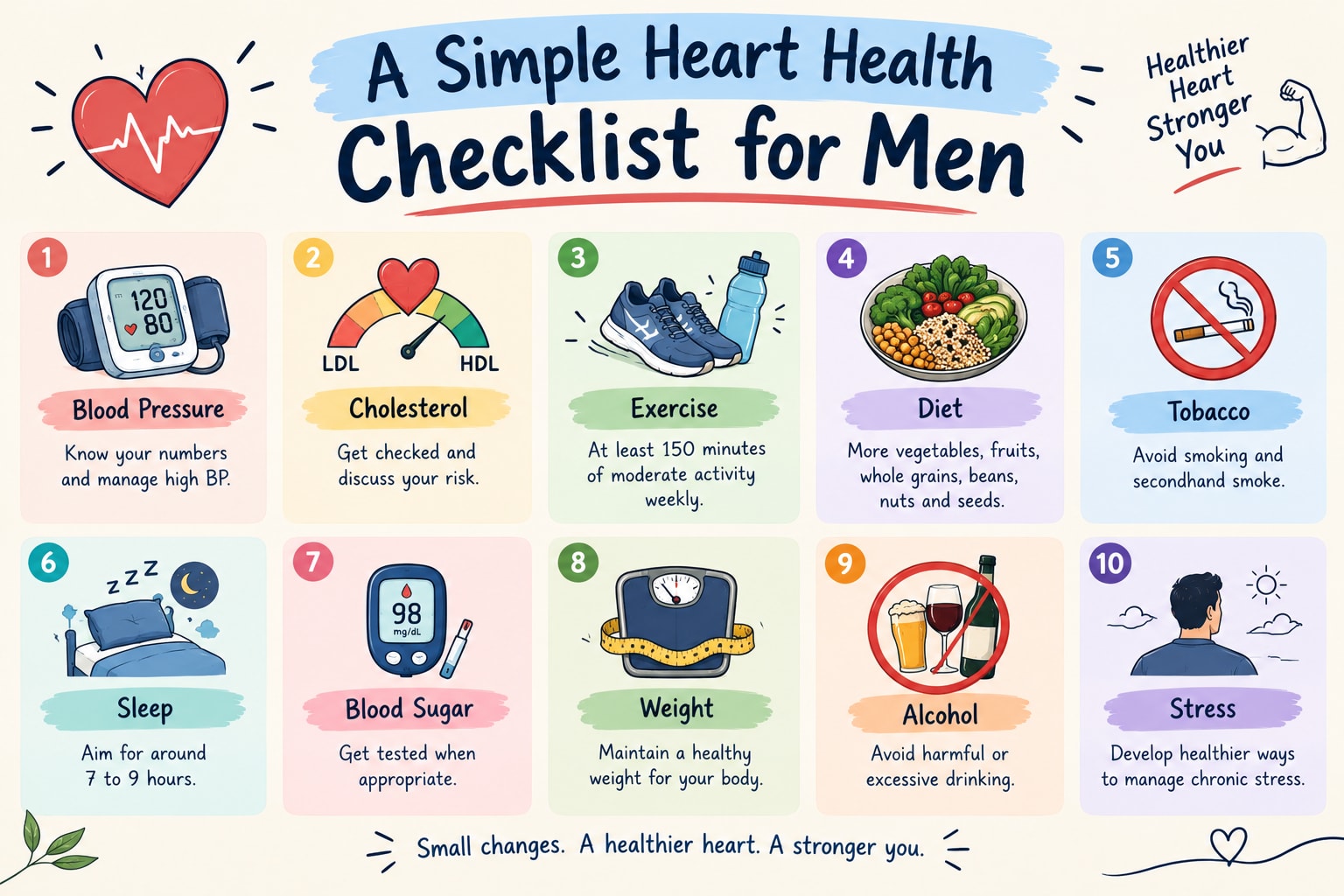
A Simple Heart Health Checklist for Men
When Should Men Start Caring About Heart Health?
Now.
Heart health is not something that suddenly becomes important at 50 or 60. The habits you build in your 20s, 30s and 40s can influence your cardiovascular risk later.
You also do not have to wait for symptoms before getting checked. Some cardiovascular risk factors can remain silent for years, which is why routine health checks are useful.
If you have a strong family history of early heart disease, high blood pressure, high cholesterol, diabetes, obesity or a history of smoking, talk to your healthcare professional about your individual risk and how often you should be screened.
The Bottom Line
The best heart health routine is not the most extreme one. It is the one you can maintain.
Walk more. Eat better most of the time. Sleep properly. Avoid tobacco. Know your blood pressure, cholesterol and blood sugar. Keep moving even when you are busy.
And perhaps most importantly, stop assuming that feeling fine means everything is fine.
Your heart can be working quietly for years before a problem becomes obvious. Taking care of it now is much easier than wishing you had started earlier.
Medical note: This article is for general health information and is not a substitute for medical diagnosis or treatment. If you have chest pain, severe shortness of breath, fainting or other possible emergency symptoms, seek urgent medical care.