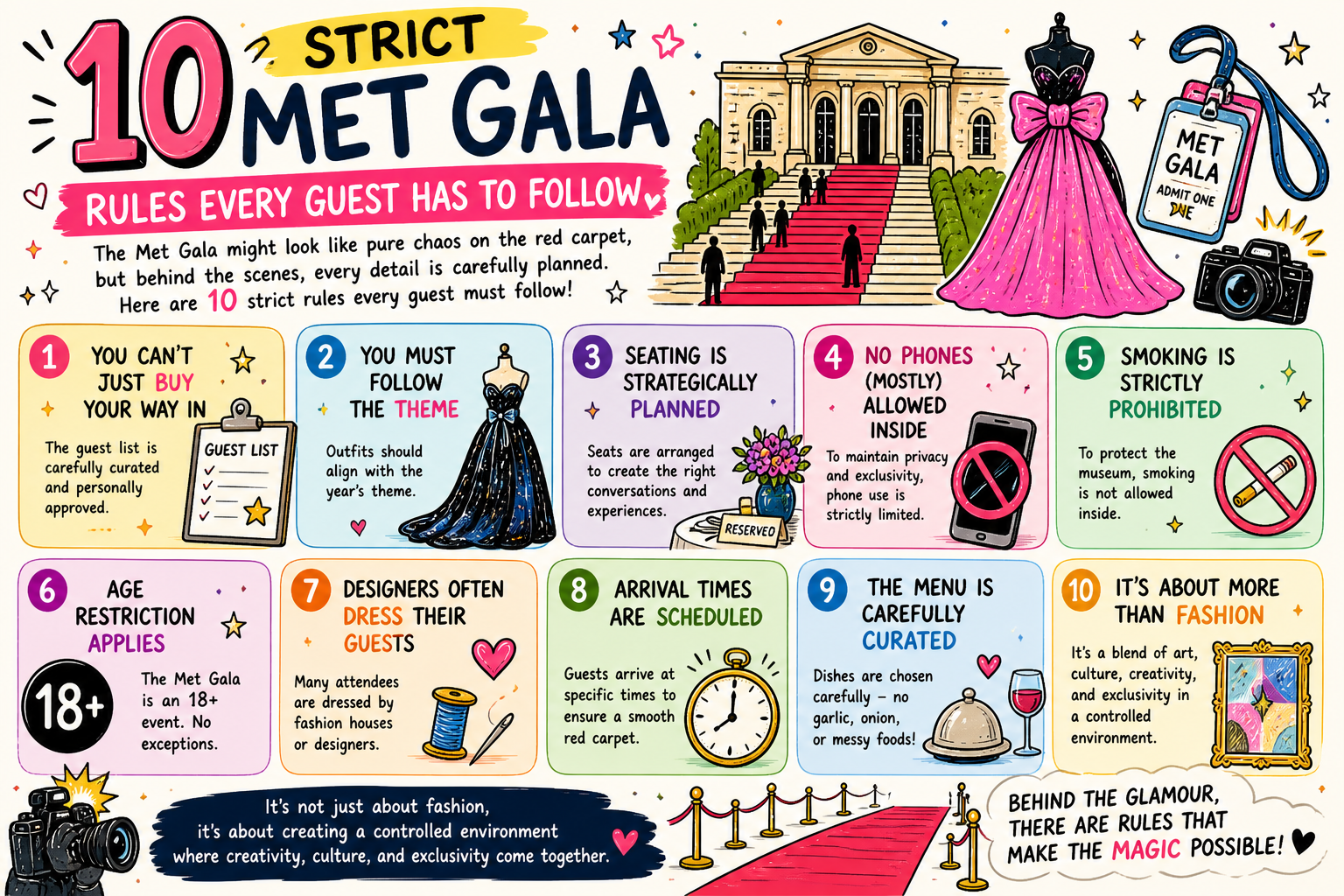

When you watch the red carpet of the Met Gala, it might feel like a whirlwind of extravagant outfits, bold statements, and unpredictable fashion risks. But behind that seemingly chaotic glamour lies a meticulously controlled system where every detail is planned to perfection.
Far from being just a celebrity party, the Met Gala is an elite, highly curated event held at the Metropolitan Museum of Art, specifically benefiting the Costume Institute. It blends fashion, art, culture, and exclusivity-under a strict set of rules that every attendee must follow.
Let’s take a closer look at the 10 strict rules that define the Met Gala experience.


1. You Can’t Just Buy Your Way In
While tickets reportedly cost tens of thousands of dollars, entry isn’t as simple as paying. The guest list is carefully curated by Anna Wintour, who personally approves every attendee. Status, influence, and relevance all play a role.
2. You Must Follow the Theme
Every year, the Met Gala revolves around a specific theme tied to the Costume Institute’s exhibition. Guests are expected to align their outfits with the theme, this isn’t optional. Ignoring it can be seen as a fashion faux pas on the world’s biggest stage.
3. Seating Is Strategically Planned
Even inside the event, nothing is random. Seating arrangements are carefully designed to encourage interesting conversations and avoid awkward dynamics. Celebrities, designers, and influencers are placed with intent.
4. No Phones (Mostly) Allowed Inside
While you might occasionally see a celebrity selfie leak online, the official rule is no phone usage inside the gala. This maintains privacy and exclusivity, making the experience feel more intimate and less performative.
5. Smoking Is Strictly Prohibited
Smoking inside the museum is banned—not just as a rule of etiquette, but to protect the priceless artworks housed within the venue.
6. Age Restriction Applies
The Met Gala is an 18+ event, meaning no minors are allowed. This ensures a mature, controlled environment aligned with the event’s tone.
7. Designers Often Dress Their Guests
Many attendees don’t choose their outfits independently. Instead, they are invited by fashion houses and dressed by designers, turning the red carpet into a collaborative showcase of creativity.
8. Arrival Times Are Scheduled
The red carpet may look spontaneous, but arrivals are carefully timed. This prevents overcrowding and ensures each guest gets their moment in the spotlight.
9. The Menu Is Carefully Curated
Even the food follows rules. Certain items like garlic, onion, or messy dishes are often avoided to maintain a polished atmosphere and prevent wardrobe mishaps.
10. It’s About More Than Fashion
At its core, the Met Gala isn’t just about bold outfits—it’s about creating a controlled environment where art, culture, and exclusivity intersect. Every rule contributes to maintaining that balance.
Why These Rules Matter
What makes the Met Gala so fascinating is not just the spectacle, but the precision behind it. The rules ensure:
- Protection of priceless art
- A seamless and luxurious experience
- A balance between creativity and discipline
Without these guidelines, the event could easily descend into chaos. Instead, it remains one of the most prestigious and talked-about nights in fashion.
Wrapping Up...
The Met Gala may appear like a dazzling, unpredictable fashion carnival, but in reality, it’s a masterclass in planning and control. Every guest, outfit, and moment is part of a bigger vision—one that celebrates creativity while maintaining exclusivity.
So the next time you scroll through red carpet photos, remember: behind every dramatic look is a carefully structured world of rules making it all possible.
Read more about Hollywood here: Who Still Remembers Peter Parker? The MCU's Biggest No Way Home Theory