Trekking isn’t just a journey through mountains—it’s a journey within yourself. Whether you're planning your first hike or preparing for a serious adventure, packing smart and understanding the basics can make or break your experience. Let’s dive into everything you need to know before you hit the trail.
Why Trekking is Worth It
Trekking connects you with nature in a way no city life can. The fresh air, breathtaking views, and sense of accomplishment when you reach the summit are unmatched. It also improves physical fitness, reduces stress, and boosts mental clarity.
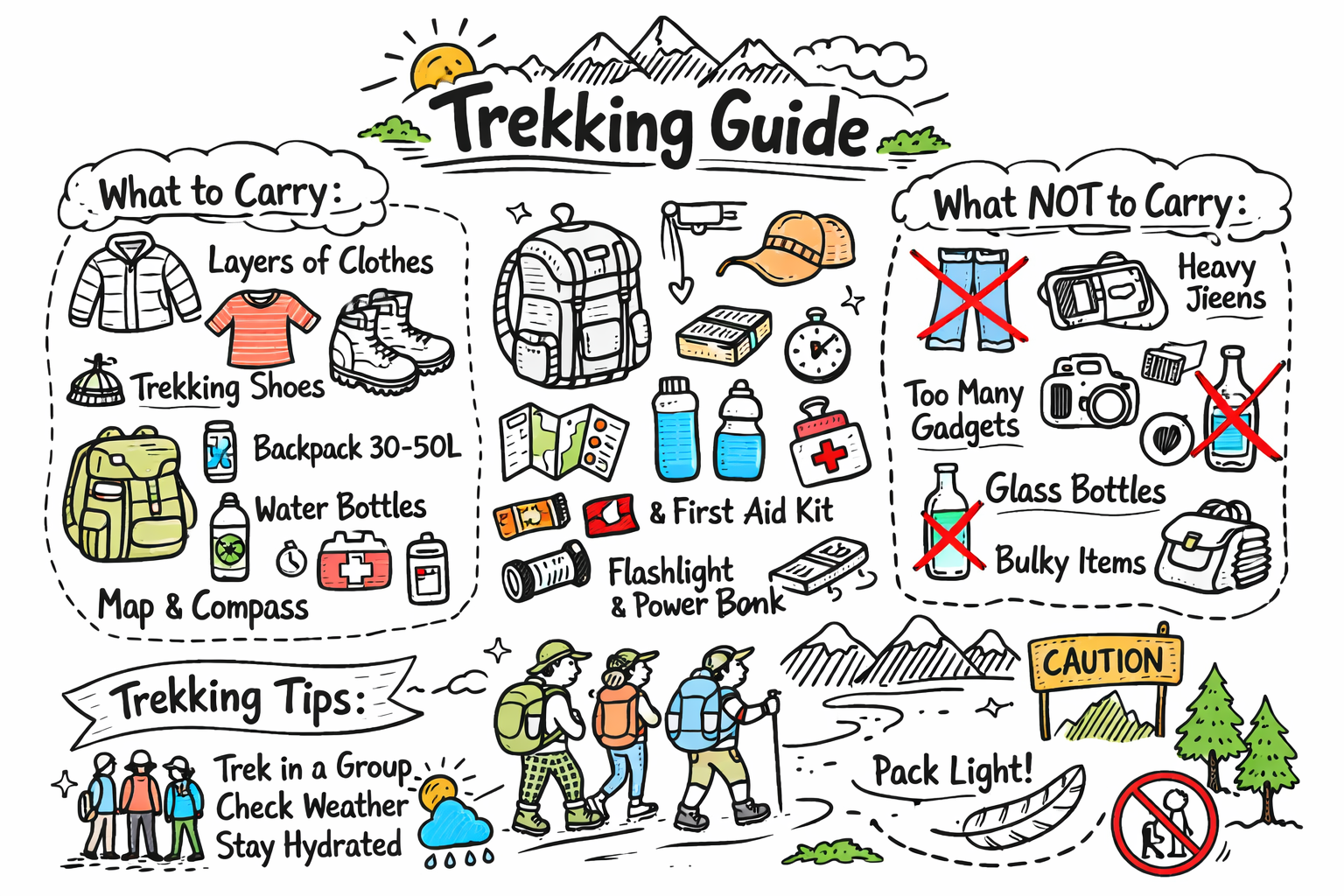
What to Carry on a Trek
Packing right is the most important part of trekking. Here’s a complete checklist:
Clothing Essentials
- Layered Clothing (base layer, mid-layer, outer jacket)
- Quick-dry T-shirts & Pants
- Thermal wear (for cold regions)
- Waterproof jacket or poncho
- Extra socks & undergarments
- Gloves, cap, and scarf
Tip: Always dress in layers—you can add/remove depending on weather.
Footwear Matters
- Good quality trekking shoes with strong grip
- Avoid new shoes—break them in before your trek
- Carry extra socks to avoid blisters
Backpack Essentials
- Backpack (30–50L depending on trek)
- Water bottles (at least 2L capacity)
- Energy snacks (nuts, protein bars, chocolates)
- First aid kit
- Flashlight/headlamp
- Power bank
- Trekking pole (optional but helpful)
- Personal toiletries (toothbrush, sanitizer, tissue)
Food & Hydration
- Carry lightweight, high-energy food
- ORS or electrolyte powder for hydration
- Avoid heavy or oily food
Important Documents & Extras
- ID proof
- Cash (limited network areas may not accept digital payments)
- Map or offline GPS app
What NOT to Carry
Many beginners overpack—this can make trekking exhausting.
Avoid These Items:
- Heavy jeans or cotton clothes (they don’t dry quickly)
- Too many gadgets (keep it minimal)
- Glass bottles (risk of breakage)
- Excessive food (carry only what you need)
- Unnecessary luxury items
Rule: If you won’t use it more than once, don’t carry it.
Safety Tips for Trekking
- Always trek with a group or guide (especially beginners)
- Check weather conditions before starting
- Inform someone about your trek plan
- Stay hydrated and take regular breaks
- Avoid shortcuts—you might get lost
Beginner-Friendly Trekking Tips
- Start with easy treks before going for difficult ones
- Train your body (walking, cardio, stairs)
- Pack light but smart
- Respect nature—don’t litter
Final Thoughts
Trekking is not about reaching the destination quickly—it’s about enjoying every step of the journey. With the right preparation and mindset, your trekking experience can become one of the most memorable adventures of your life.
So pack wisely, stay safe, and let the mountains teach you things no classroom ever can.